
Death, Sex, and Money
Civilisational Signals and the Recovery of Relationship
Human societies organise themselves through layers of meaning, authority, and behaviour. These layers form what might be described as a civilisation’s dition — the pattern by which it speaks order into existence and regulates human conduct, calibrates a whole anthropological condition.
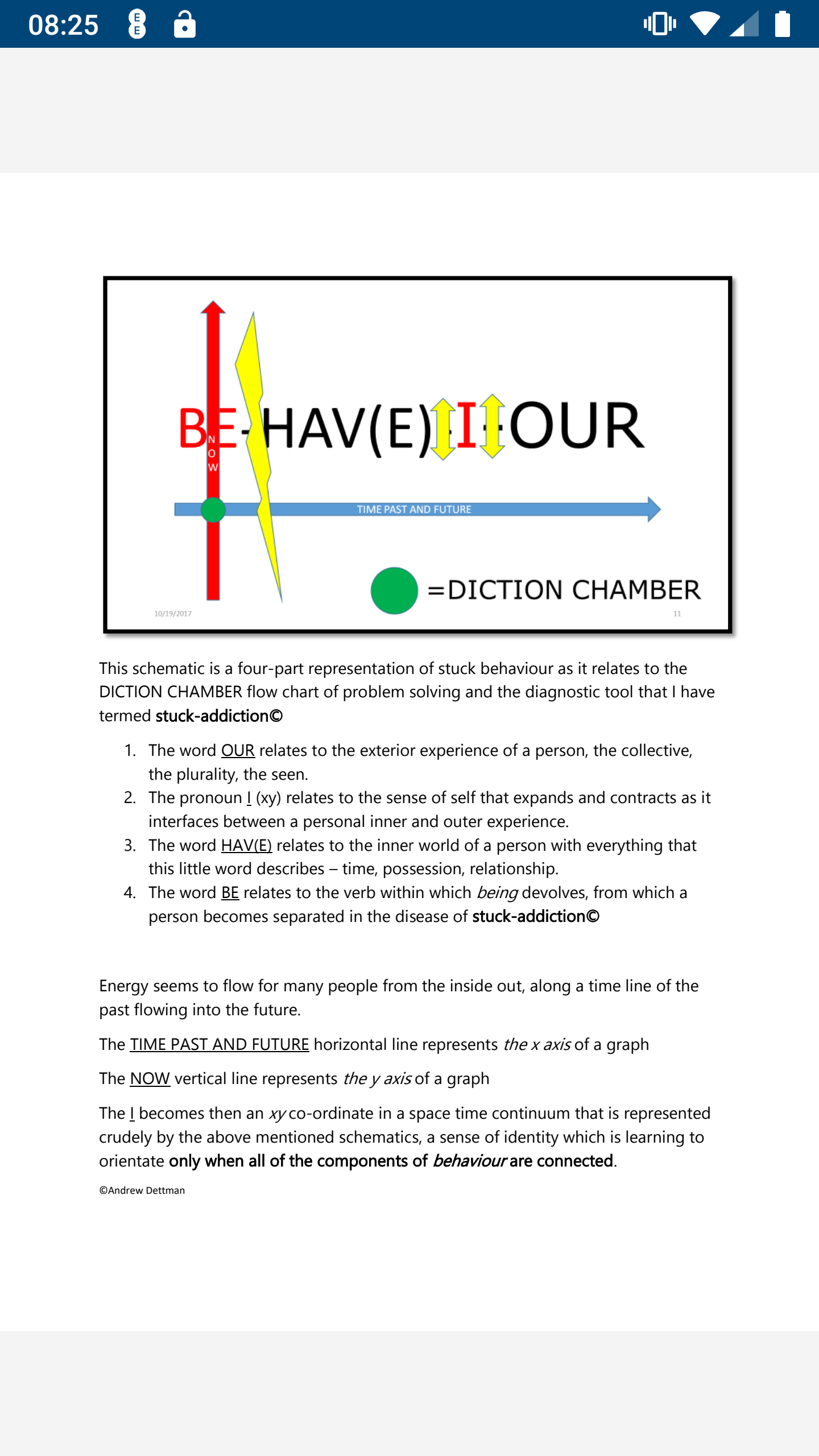
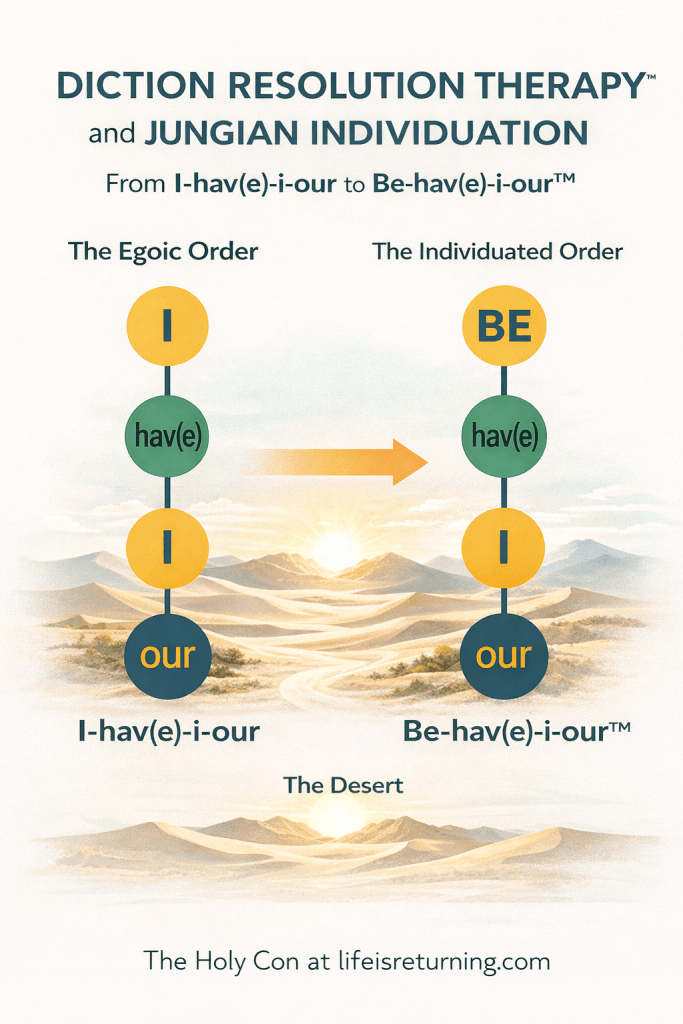
When that dition weakens, tensions often become visible within three primal domains: Death, Sex, and Money. These forces are not merely cultural artefacts. They correspond to deep instinctual drivers within human life: survival, reproduction, and resource security. Across history, when civilisations approach periods of instability or transformation, disturbances in these domains often become more visible. It becomes clear to see that as dition becomes diction by the insertion of the letter c, the whole spectrum of stuck and broken addiction as attended to by DRT also comes into clinical focus.
This paper explores the DSM triad — Death, Sex, Money — as both civilisational indicators and therapeutic metaphors, linking historical patterns, contemporary systemic pressures, and clinical insights emerging from addiction recovery work.
Death: Asymmetric Warfare and the Psychology of Power
One indicator of systemic strain appears in the changing character of warfare. Since the end of the Cold War, and especially following the attacks of September 11, 2001, military engagement has increasingly shifted toward asymmetric forms. In these conflicts, technologically advanced states often confront weaker states, insurgent movements, or non-state actors. The result is not always decisive resolution but prolonged entanglement.
The United States has occupied a central role within the global security architecture since the Second World War. Analyses of post-1945 conflict patterns frequently note the scale of direct or indirect American involvement through wars, interventions, alliances, proxy structures, and security commitments. The post-9/11 period intensified this pattern through Afghanistan, Iraq, and associated theatres, revealing a recurring paradox of modern power: battlefield dominance does not necessarily produce stable political order.1
The resulting landscape is marked by extended conflict cycles, blurred boundaries between war and policing, and hybrid forms of warfare involving military, economic, informational, and cyber dimensions. Even where total battle deaths remain lower than in earlier epochs, the psychological saturation of public life by war, threat, and geopolitical instability has become unmistakable.
Within the DSM framework, this represents the Death vector heating within the system. Conflict becomes diffuse, persistent, and woven into the imagination of the age. It is no longer simply a matter of armies clashing at borders. It becomes ambient. It enters media, economics, diplomacy, infrastructure, and the ordinary nervous system of the public.
Sex: Power, Scandal, and Elite Immunity
A second domain revealing systemic tension appears in the relationship between sexuality and power. Across history, elite cultures have sometimes exhibited forms of sexual transgression that do not simply reflect private desire, but the insulation of privilege from consequence.
In recent decades, the criminal enterprise associated with Jeffrey Epstein and Ghislaine Maxwell exposed a network involving the sexual exploitation and trafficking of minors, raising profound questions about how such behaviour remained concealed for so long within circles of wealth and influence. Public discussion has also drawn attention to the social world around Robert Maxwell, intelligence-adjacent networks, and the longstanding use of sexuality as compromise material or leverage within elite environments. The full scope of these entanglements remains debated, but the wider pattern is clear enough: sex, secrecy, power, and immunity have again appeared together in public view.2
Historically, this is not unprecedented. Accounts from late Roman imperial life, certain Hellenistic aristocracies, and other elite court cultures suggest that when wealth and authority become sufficiently detached from accountability, intimate life may cease to be governed by ordinary social limits. Sexuality then becomes less relational and more theatrical, more coercive, more taboo-seeking, or more implicated in domination, display, and leverage.3
This does not mean that sexuality itself causes social decline. It means that sexuality can become one of the stages upon which power performs its exemption from restraint. In such conditions, the issue is not sexual freedom in any simple sense, but the corruption of intimacy by hierarchy, secrecy, and impunity.
Within the DSM model, this represents the Sex vector heating. What should be a domain of relation becomes increasingly entangled with control, trauma, status, manipulation, or spectacle.
Money: Financial Abstraction and Liquidity Stress
The third domain of systemic signal lies within the financial system. Over recent decades, global capital markets have grown not only in scale but in abstraction. Asset managers oversee vast concentrations of mobile capital, while financial instruments, structured vehicles, and credit products often place real risk at several removes from ordinary public understanding.
One significant development has been the rapid expansion of private credit markets. These funds lend directly to companies outside traditional bank channels and have grown into a major part of the post-2008 financial landscape. Yet they contain a structural tension. Investors may expect periodic liquidity, while the underlying assets are long-term and illiquid. When redemption requests rise sharply, the promised rhythm of access meets the slower rhythm of the underlying loans, and gates or restrictions appear.4
Recent pressure within major private credit funds does not by itself prove systemic failure. But such moments matter because credit markets often show strain before broader crises become fully visible. What appears calm on the surface can already be heating underneath. Financial confidence is a subtle substance. Once its tone changes, the language of markets changes with it.
Within the DSM framework, this represents the Money vector heating. Wealth becomes increasingly concentrated, increasingly abstract, and increasingly dependent upon confidence in structures too complex or too opaque to command instinctive trust.
DSM as a Civilisational Thermometer
Individually, disturbances in Death, Sex, or Money can occur within otherwise stable societies. But when all three begin intensifying at once, historians and observers often detect a rise in systemic tension. Warfare becomes more ambient and asymmetrical. Elite scandals expose secret arrangements of power. Financial systems show signs of illiquidity, over-concentration, or fragility.
These patterns do not automatically signal collapse. More often they indicate a threshold period in which a civilisation’s organising language — its implicit grammar of legitimacy, restraint, and shared meaning — is under strain. In the language of Diction Resolution Therapy, the civilisation’s diction begins to destabilise.
At such moments, the question is not only whether institutions can survive, but whether meaning can be rebalanced. Civilisations do not live by economics alone. They also live by the stories they tell about power, suffering, restraint, dignity, and purpose.
The Clinical Parallel: DSM in Addiction Recovery
The same triad that appears at the civilisational level also emerges in individual psychology. In recovery settings, clients frequently struggle with distorted relationships to one or more of these forces. Death may appear through self-destructive behaviour, risk-taking, or attraction toward annihilation. Sex may become fused with validation, control, escape, or trauma repetition. Money may become entangled with worth, fear, dependency, or false identity.
Within this clinical frame, DSM is not presented as a set of moral evils to be erased. Rather, it is introduced as a recognition that these are ancient and powerful currents within human life. One cannot abolish Death. One cannot abolish Sex. One cannot abolish Money. What can change is one’s relationship with them.
This distinction is often decisive in recovery work. Many clients arrive believing that change means suppression, escape, or total victory over desire, fear, or need. But the therapeutic pivot is different. The work is relational. Recovery begins when a person is no longer being dragged unconsciously by these cords of power and instead learns to stand in conscious relation to them.
Story, Account, and Balance
This reorientation often begins through story. When a person gives an honest account of their life — not merely listing events, but tracing patterns, motives, harms, and meanings — something begins to change. The account becomes more than recollection. It becomes re-ordering.
The word account is especially telling here. It refers both to a narrative and to a balance sheet. To give an account is to tell the story. To keep an account is to reckon with gain, loss, debt, and truth. Recovery often involves both at once. As the story is spoken more truthfully, the inner ledger begins to rebalance.
In this sense, to relate a story is not merely to describe the past. It is already part of the arrival of a new account: a new balance, a new attitude, a new relationship. The old account — governed by fear, compulsion, denial, or false control — begins to loosen. A new relation becomes possible.
Reorientation Toward the Creator
Within many recovery traditions, this new relation is not completed at the level of self-management alone. It points beyond the individual ego toward a larger ordering principle — named variously as Higher Power, Source, or Creator. This is not an escape from the real conditions of life, but a change in posture toward them.
Death remains part of existence, but it is no longer unconsciously courted. Sex remains part of existence, but it is no longer required to carry the burden of false salvation, domination, or self-erasure. Money remains part of existence, but it is no longer enthroned as identity, immunity, or proof of worth. The forces remain, but the relation changes.
That is the therapeutic and spiritual hinge. One does not conquer these powers. One is brought into a different relationship with them, and therefore with the One who created the conditions under which they operate.
Conclusion: From Systemic Heat to Relational Rebalancing
The DSM triad provides a diagnostic lens for reading both civilisational stress and personal recovery. At the societal level, disturbances within Death, Sex, and Money can indicate strain within systems of authority, legitimacy, and control. At the personal level, distorted relations to these same forces often accompany addiction, compulsion, and despair.
In both cases, the answer is not elimination but relation. The question is not how to abolish these primal energies, but how to stand rightly with them. Civilisations fail when they are mastered by the energies they cannot morally integrate. Persons begin to recover when they cease trying to destroy the cords and instead learn to receive a truer account of their place within them.
Thus the movement from old account to new account is also the movement from imbalance to balance, from attitude to right attitude, from alienation to relationship. What appears first as a story told may in fact be the beginning of a new relation with Death, Sex, Money — and therefore, ultimately, with the Creator.
Footnotes
- For broad datasets on post-1945 warfare and interstate conflict, see the Correlates of War Project and related post-war conflict studies. The point here is not a single absolute percentage claim, but the large-scale and persistent role of U.S. involvement in the modern security order. ↩
- See United States v. Ghislaine Maxwell, U.S. District Court, Southern District of New York (2021), together with major investigative reporting on Jeffrey Epstein’s network and the broader public discussion around the Maxwell family context. ↩
- For classical accounts of elite sexual excess and court pathology, see Tacitus, Annals, and Suetonius, The Twelve Caesars. Such sources must be read critically, but they remain important witnesses to how late elite power was perceived and narrated. ↩
- On private credit growth and non-bank financial vulnerabilities, see the International Monetary Fund, Global Financial Stability Report, and Bank for International Settlements work on non-bank financial intermediation and liquidity mismatch. ↩
References
- Bank for International Settlements. Annual Report and related publications on non-bank financial intermediation.
- Correlates of War Project. Pennsylvania State University. Conflict datasets and related research.
- International Monetary Fund. Global Financial Stability Report. Recent editions.
- Suetonius. The Twelve Caesars.
- Tacitus. Annals.
- United States v. Ghislaine Maxwell, U.S. District Court, Southern District of New York (2021).
Written in HIAI collaboration — the qalam of Human and AI intelligence, the Unseen helping the Seen, both answering to the same Source.

 Hu'll heal the heart