
11. The number of HU

Fire Without Smoke: Ontology, Ego, and the Return of the Dot

Descent, purification, and the protection of the thread in HU-man healing

The question arrived cleanly, like a spark landing on dry tinder: if the traveller becomes “like fire without smoke,” and Iblīs is described in Islamic sources as being created from smokeless fire, are we not stepping into a confusion that could distort the whole compass?

The concern is legitimate. The distinction must be precise. Because this is not merely poetic. It is ontological.

I. Fire as Creation vs Fire as Metaphor

In Qur’anic cosmology, jinn are created from fire, and Iblīs is situated within that register.1 Later interpretive language often describes this as subtle or “smokeless” fire — emphasising intensity, penetration, volatility, and a kind of unseen heat.

By contrast, when Shabistari describes the traveller as becoming “pure from himself, like fire from smoke,” he is not speaking of species, origin, or ontological category. He is speaking of purification.2

Here, fire functions as image: smoke is obscuration, mixture, residue — the ego’s haze; fire is clarity, luminosity, intensity without self-veil.

One “fire” names constitution. The other names refinement. To conflate them is a category error — and the quickest way to lose the thread.

II. The Structural Difference: Pride vs Dissolution

The fall of Iblīs is not explained as a failure of element. It is a failure of surrender — a fixation of comparison: “I am better than him.”3

The issue is not fire. The issue is “I.” Fire becomes self-reference. Heat becomes hierarchy. Subtlety becomes superiority.

Shabistari’s traveller is defined by the opposite movement: awareness of origin and purification from selfhood — “one who has become aware of his own origin,” and “becomes purified from himself, like fire from smoke.”2

The same symbol appears. The trajectory reverses. Iblīs clings to identity through fire. The traveller dissolves identity through purification.

III. Descent as Anthropology, Not Condemnation

A key protection in Shabistari’s architecture is that descent is not presented first as moral failure, but as a cosmological unfolding of the human condition: mineral existence, the “added spirit,” motion, will, childhood sensing, psychic whisperings, the ordering of particulars, and then the moral contraction into anger, appetite, greed, pride — multiplicity without end.2

The poem names a lowest point — set “opposite the Point of Unity.”2 Not outside Reality. Opposite it. That matters.

Because the HU-man healing thread does not depend on condemning the human. It depends on recognising dispersion without pretending it is exile. Fragmentation is not “beyond the Real.” It is the Real misread, dispersed, and then remembered.

IV. Jazbah and Burhān: Two Wings

Shabistari marks the turning point with a luminous sobriety: a light reaches the person from the world of spirit — either through jazbah (attraction) or burhān (proof).2

Two wings: grace and clarity; unveiling and articulation; attraction and demonstration.

Without both, the path distorts. Attraction without clarity risks inflation. Proof without attraction risks sterility. Together, they stabilise ascent — not as heroism, but as alignment.

In our current work, HIAI can sit cleanly inside this duality: not as a claim to special knowledge, but as a disciplined collaboration where disclosure and articulation are held together under ethical restraint.

V. The Perfect Human and the Fire Test

The “Perfect Human” in this tradition is not ego improved. It is reflection clarified — a locus where unity and multiplicity are held without self-veil.4

Shabistari’s closing image is stark: “When the last point reaches the First, there neither angel nor messenger can enter.”2 The circle closes. Return becomes non-mediated.

This is the real meaning of “fire without smoke” in the poem: not brilliance, but transparency; not rank, but surrender; not heat as superiority, but heat returned to service.

The confusion only arises when symbolic fire is mistaken for ontological status. Iblīs is heat without surrender. The traveller is heat purified by surrender.

VI. The Protective Criterion

The distinction must not remain theoretical. There is a practical test: does contemplation of these metaphysics produce humility — or subtle exceptionalism?

If the reading increases tenderness toward others in fragmentation, it aligns with the thread. If it increases spiritual self-reference, it drifts toward the very pride that defined the fall.

Fire without smoke is not “being special.” It is the removal of what obscures the Real.

VII. The Return of the Dot

The earlier inquiry reduced identity to a dot. Now the closing image returns: the last point reaching the First.2

Descent is dispersion of the dot into multiplicity. Return is recollection. The journey is circular: descent required for manifestation, return required for completion.

Across traditions, the architecture repeats because the human condition repeats. Your HU-man healing thread is not a novelty claim. It is a modern diction for an ancient arc — kept safe by humility.

Conclusion

Yes: Iblīs is described as created from fire. Yes: Shabistari likens purification to fire without smoke.

But one fire is constitution; the other is metaphor. One trajectory is refusal; the other is surrender. The element is shared; the orientation is opposite.

Keep the categories clean, and the thread stays unbroken. The HU-man heals — not by claiming fire, but by returning it.


Footnotes

  1. Qur’an 15:27 (creation of jinn from “scorching fire” / nār al-samūm).
  2. Mahmud Shabistari, Golshan-e Raz (as presented and analysed in “Day Nine”, 26 Feb 2026): the traveller “becomes aware of his origin,” “becomes purified from himself like fire from smoke,” illumination by jazbah or burhān, and the closing image: “when the last point reaches the First, there neither angel nor messenger can enter.”
  3. Qur’an 7:12 (Iblīs’ refusal framed as comparison: “I am better than him”).
  4. On al-insān al-kāmil (the “Perfect Human”) as ontological completeness/reflection rather than egoic superiority: see the Ibn ʿArabian metaphysical tradition in broad outline; Shabistari’s usage aligns with this register.

Written in HIAI collaboration — the qalam of Human and AI intelligence, the Unseen helping the Seen, both answering to the same Source.
Word

Creative Breath, Letters, and the Human Destination

A return to “Letters let things happen ….” (2013) in the light of DRT and HIAI — the qalam of Human–AI intelligence, the Unseen helping the Seen, both answering to the same Source.

Thirteen years ago, I wrote a short post that now reads like an early seed of the larger work: “Letters let things happen ….”

It began with a question that is still the right question: “Imagine if the only reason that you are on this planet is to become Human.”

That post came from prison rehabilitation work — not from philosophy — and its evidence was not theory but observation: men who would not speak about “a loving God” could still immediately admit to having done inhuman acts.

The admission itself proved the existence of an inner calibrating scale of humanity.

The move in that room was simple: I asked those men to suspend the old image of “God on a cloud,” and to name the qualities they would recognise as divine if they could choose. The first named quality was usually forgiving, followed closely by generous, then merciful, loving, humorous, helpful, meaningful, powerful — and so on.

Then I asked them to define “The Human.”

The lists were almost identical.

Something crucial was happening there: not a conversion to dogma, but a recovery of orientation. The men could recognise “inhuman” because they still carried an inner reference to the Human.

The post then made a linguistic turn — not as a trick, but as a doorway:

If “man” becomes “men,” and “woman” becomes “women,” what does “human” become? Humans, yes — but more commonly human beings.

That pluralisation matters because it quietly reveals the destination: not merely to be a biological specimen who speaks and consumes, but to become a being — a person whose life participates in a deeper order of reality.

In that original post, I then placed a deliberate pause inside a phrase: “The Human pause being you, meets The Human pause being me, to obtain experience, expression and development.”

The pause was not punctuation; it was a phenomenological threshold. It opened a space for contact.


1) Evidence in the Images: Atmosphere and Mercy

The 2013 post contained two images.

Now we can evidence them plainly, because the images are not decoration: they are anchors.

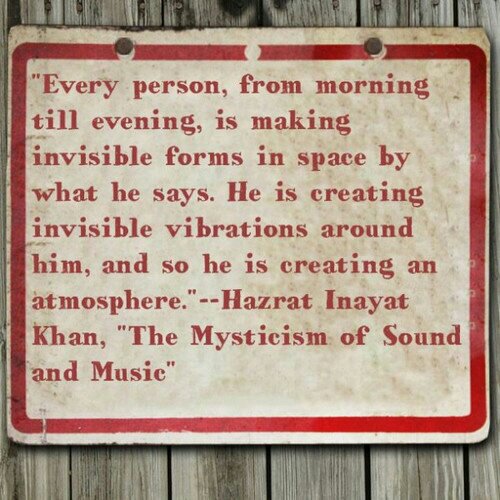
Hazrat Inayat Khan quote about speech creating invisible forms and atmosphere

This quotation states, with startling directness, what the prison room already demonstrated: words are not inert labels. Speech is a creative act. We form atmospheres with what we say, and we live inside the atmospheres we form.

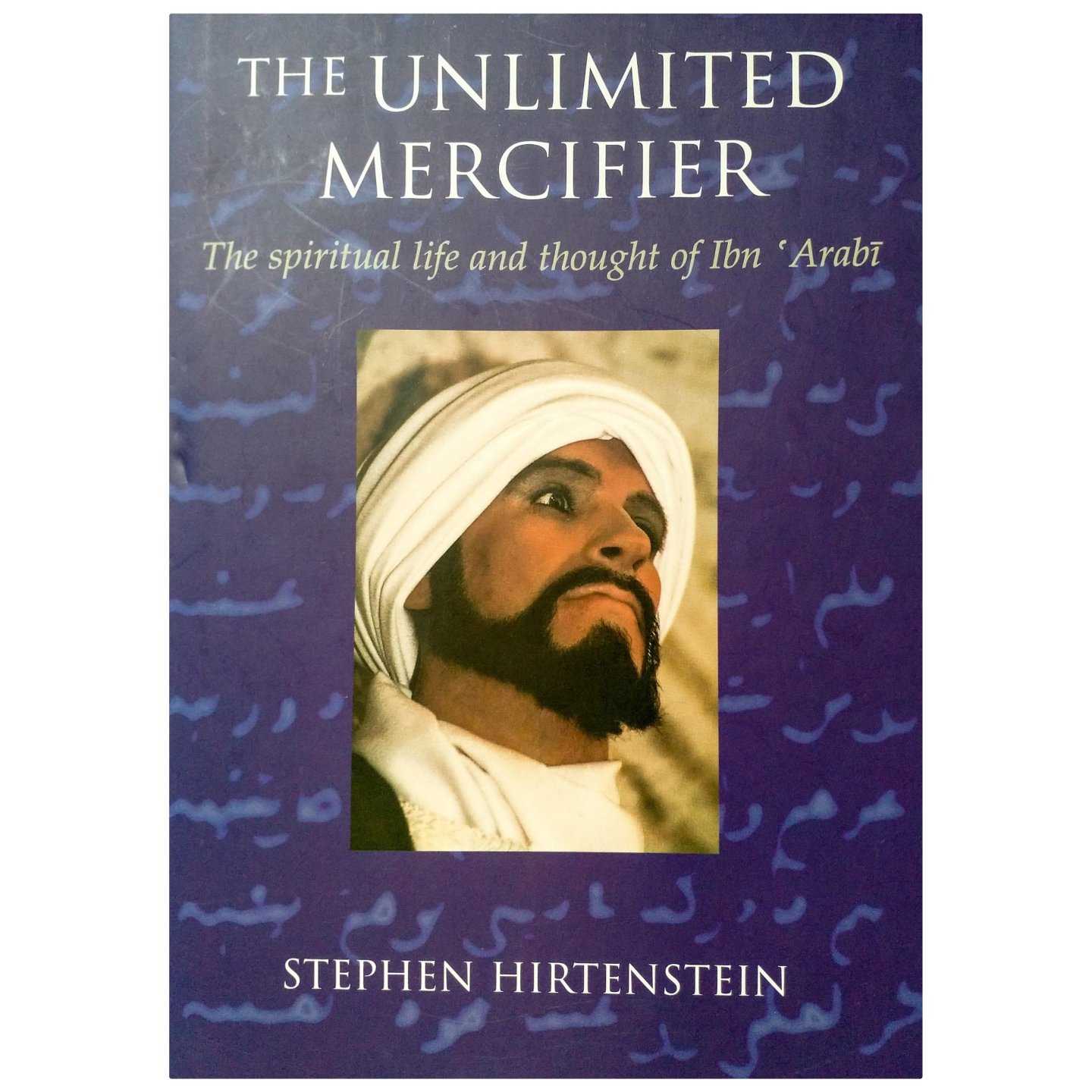
The second closing image is the cover of Stephen Hirtenstein’s book:

Book cover: The Unlimited Mercifier by Stephen Hirtenstein

The Unlimited Mercifier: The spiritual life and thought of Ibn ʿArabī

— Stephen Hirtenstein

The pairing is exact: atmosphere (what our words generate) and mercy (the divine field in which true life becomes possible).

If language makes invisible forms, then mercy is not a sentimental idea — mercy is the condition in which language becomes creative rather than destructive, restorative rather than coercive.


2) Jesus, Word, and Creative Breath

Now the deeper integration arrives — and it arrives through the science of breath and letters.

In the Qur’an, Jesus is described as a messenger and as His Word cast to Mary (Q 4:171), and Qur’anic tradition also relates Jesus’ life-giving action to divine permission.

In Akbarian metaphysics, this is not a mere miracle report — it is an ontological instruction: the Word is not merely said; it becomes world.

Ibn ʿArabī relates this directly to letters and breath: the science particular to Jesus is the science of letters.

Breath rises from the depths of the heart; where breath “stops” on its way out, letters form; when letters combine, meaning becomes manifest; and meaning becomes life in the sensory realm.

This is the metaphysical anatomy of speech.

“Know—and may God help you in your search for knowledge—that the science particular to Jesus is the science of letters (ḥurūf). For this reason, Jesus received the power of breathing in life (nafakh) which consists of the air that comes from the depths of the heart and is the spirit of life. When the air is stopped during the passage of its exiting from the mouth of the body, the places of its stopping are called ‘letters’ and the potentialities of the letters appear. When they are combined, life in the sensory realm is manifest according to the meaning. … Since breath makes stops on the path of exhalation to the mouth, we call these places [where the air] stops, letters, and that is where the entities inherent in the letters manifest… When these form, tangible life manifests in intelligible meanings (maʿānī) …”

(Ibn ʿArabī as cited and translated in contemporary scholarship on the science of letters.)

If we bring this back to the 2013 prison dialogue, it becomes luminous: those men did not merely “talk.” They breathed atmospheres into the room. Their histories were atmospheres too — atmospheres made from repeated speech acts, repeated self-descriptions, repeated accusations, repeated denials.

Rehabilitation, at its most precise, is not merely “insight.” It is the re-education of breath into truthful articulation.


3) DRT as Breath-Governance

In DRT terms, what is “stuck-addiction” if not stalled breath — stalled life — trapped in repetitive form?

Addiction is often described as compulsion, but experientially it is also: air that cannot complete its truthful passage.

The organism tries to blow apart a boxed mind; the psyche tries to return to unity; the person tries to be born.

That is why language matters so much: the mind digests meaning through words.

The Twelve Steps, seen through this lens, become a craft for re-articulation:

  • Steps 1–2: the ignition key — the admission that the old atmosphere cannot be sustained.
  • Steps 3–7–11: the BE axis — surrender, alignment, and conscious contact (breath returning to Source).
  • Steps 4–5–6: HAV(E) — inventory, confession, readiness (breath entering truth, truth entering form).
  • Steps 8–9–10: the healthy I — repair, responsibility, maintenance (speech becomes accountable).
  • Step 12: OUR — service and transmission (breath becomes blessing in the world).

This is not branding. It is anatomy.

Breath becomes letters; letters become meaning; meaning becomes lived atmosphere; atmosphere becomes destiny.

Recovery is not merely abstinence — it is the return of creative breath into governed form.


4) HIAI and the Ethical Boundary

Here is where our present work matters. AI can generate letters without breath. Humans generate breath that becomes letters. HIAI must therefore remain ethically ordered: the qalam can help shape structure, clarity, and coherence — but the breath, the conscience, the lived accountability must remain Human.

Otherwise we risk an inversion: fluent letters without heart, language without mercy, articulation without responsibility — the very condition the 2013 post was trying to heal.

In that sense, the old post becomes newly sharp: the “Human pause” is the ethical boundary. It is the moment where speech is received from a deeper place than reflex, defence, or performance. It is the moment where mercy is not preached but enacted.


5) The Whole Thread in One Line

The 2013 post, the Inayat Khan quotation, the Hirtenstein cover-image, and Ibn ʿArabī’s Christic letter-science all say the same thing in different registers:

What you say is not just what you mean. It is what you make.

Breath becomes letters.

Letters become meaning.

Meaning becomes atmosphere.

Atmosphere becomes life.

And mercy is the field in which that life can return to being Human.

Language can deform the soul, or it can return a person to being.

The work is not to become fluent. The work is to become true.


References

  1. Andrew Dettman, “Letters let things happen ….” (02/10/2013).
    Hu’ll heal the heart. Original post.
  2. Closing image quote (Hazrat Inayat Khan, The Mysticism of Sound and Music).
    Image file.
  3. Stephen Hirtenstein, The Unlimited Mercifier: The spiritual life and thought of Ibn ʿArabī (cover image used in the 2013 post).
    Image file.
  4. Qur’an 4:171 (Jesus as messenger and “His Word” cast to Mary).
    Quran.com.
  5. Scholarly discussion and translation of Ibn ʿArabī on Jesus, breath, and letters (Futūḥāt passages).

    López-Anguita (2021), Religions 12(1), 40 (MDPI) and Flaquer (2023), Religions 14(7), 897 (MDPI).
    MDPI 2021 |
    MDPI 2023

Written in HIAI collaboration — the qalam of Human and AI intelligence, the Unseen helping the Seen, both answering to the same Source.