Not Rapture but Rupture that unites the Jews, Christians and Muslims.

The Rupture: A Meditation on Hope

Three Abrahamic Traditions. One Call to Return.

This is not an attempt to merge religions or dissolve their differences. It is an invitation to contemplate a symbol that appears, in different ways, across the Abrahamic traditions and within the lived experience of recovery: that what appears to be breaking apart may, in reality, be opening.

Every age appears to experience its own rupture.

The temptation is to see only fragmentation: institutions dividing, certainties dissolving, relationships straining, and individuals struggling beneath burdens they can no longer carry. Yet the Qur’an offers another possibility. In Surah al-Inshiqāq, often translated as The Splitting Open or The Rupture, the rupture is not simply destruction. It is unveiling. The sky opens. The earth releases what it has concealed. What appears to be breaking may also be making way.

This is not only a description of the cosmos. It is also a description of the human heart. Every genuine transformation begins with the collapse of a certainty that can no longer contain reality. Before something new can enter, something familiar often has to split open.

The same pattern can sometimes be recognised within human experience.

When Bill Wilson reached the end of himself, he had exhausted every strategy available to him. Alone in a hospital room, with nothing left to defend, he uttered a simple prayer: “If there is anything here, now would be a good time to show Yourself.” What followed was an experience he could neither explain nor reproduce. He spoke of light filling the room, of standing inwardly upon a mountain with a great wind blowing through him. When the experience subsided, the craving that had governed his life had gone. He later wrote that when he thought of alcohol he recoiled from it “as from a hot flame.”

The following morning he described the experience to his physician, Dr William Silkworth. Silkworth responded with remarkable humility. He did not claim to understand what had happened. He simply observed that if Bill was indeed free from the obsession and physical craving at a stage where medicine would normally expect him to be suffering withdrawal, then he should simply hold on to whatever had occurred.

That response has always struck me as an example of genuine science. Observation came before explanation. Mystery was not denied simply because it could not yet be measured.

Yet another rupture followed.

For the next six months Bill attempted to tell other alcoholics about his experience. Nobody listened. Nobody recovered. The experience itself was authentic, but it had not yet become transmissible.

Then, through what many would simply call coincidence, circumstances brought him to Akron, Ohio, where he met Dr Bob Smith. Bill was a businessman. Bob was a physician and scientist. Their conversation, intended to last no more than fifteen minutes, continued throughout the evening. Something passed between them that neither fully understood, but both recognised.

Soon afterwards they visited another alcoholic lying in hospital, Bill Dotson, remembered within Alcoholics Anonymous as the third man. It is here that the symbolism becomes quietly beautiful.

The businessman. The scientist. The solicitor.

Commerce. Science. Law.

Three distinct languages of civilisation unexpectedly gathered around one mystery that none of them could fully explain, yet all of them could witness.

Dr Bob’s instinct was not to commercialise the experience or to elevate it into dogma. His instinct, as a physician, was beautifully simple: if this is true, it must be repeatable. Every genuine scientific discovery eventually becomes repeatable, recordable and transmissible. The question was no longer, “What happened to me?” but, “Can this happen for others?”

From that simple question emerged one of the most remarkable recovery movements of modern history, not built upon theory alone but upon lived experience passed from one suffering person to another.

Whether we approach these events through faith, psychology, medicine, neuroscience or history, the underlying pattern remains quietly hopeful.

Sometimes the rupture is not the end of the story.

Sometimes it is the opening through which a deeper order enters.

Sometimes what appears to be falling apart is, in truth, becoming transparent enough for mercy to pass through.

This is why I find Surah al-Inshiqāq so deeply resonant for our own age. The Qur’an does not invite us into hysteria about endings. It invites us to contemplate openings. The heavens split. The earth releases what it has held. Human beings discover that they have been journeying towards their Source all along.

Perhaps our own age is experiencing something similar. Old certainties are fracturing. Institutions are being questioned. Hidden things are coming into the light. Many experience this only as anxiety. Yet another possibility exists. What if the rupture is not merely collapse? What if it is also disclosure? What if reality itself is becoming visible through the cracks?

No individual can manufacture grace. Therapists cannot manufacture healing. Religious leaders cannot manufacture awakening. Scientists cannot manufacture wonder. We can prepare the conditions. We can observe carefully. We can bear witness honestly. We can remain available. But the decisive movement always arrives as gift.

Perhaps this is why authentic recovery continues to resist ownership. It remains, at heart, an encounter.

The unseen continues to help the seen.

The task of the seen is simply to become permeable enough to receive it.


Administrative transparency: This article was developed through HIAI (Human–AI Intelligence) as a reflective writing collaboration. Final content has been reviewed, refined and approved by the author.
Peace which gives (passeth) understanding

Speed of Return

Mercy, torsion, recognition, and the architecture of peace

Wrath is better understood as torsion than as temper. Its older linguistic roots carry the sense of twisting and writhing, and that is precisely how it appears in lived experience: pressure in the structure when egoic narrative collides with reality. Whenever conscience interrupts instinct, whenever responsibility confronts fantasy, whenever timing refuses to bend to preference, torsion is felt. This is not punishment. It is alignment pressure. The decisive question is not whether torsion arises — it will — but whether fragmentation follows.

Mechanical suffering collapses into self-justification, blame, rumination, and withdrawal. Conscious suffering — what George Gurdjieff called intentional suffering — is the disciplined refusal to dissociate under pressure. It is conscious endurance of friction without dramatization. The twist is not removed; it is integrated. The hinge in all of this is self-justification. The moment the inner lawyer rises, presence splits. Narrative accelerates. Listening narrows. Gratitude fades. That is the early fracture. The mature person is not one who never reacts, but one whose speed of return is increasing.

The adapted Serenity Prayer, often associated with Reinhold Niebuhr and embedded in Alcoholics Anonymous, is not sentimental language but behavioural architecture. Asking dismantles solitary authorship. Acceptance restores contact with what cannot be bent. Courage restores proportionate agency. Wisdom emerges from disciplined participation in these three movements. It is not conferred independently; it is generated through cooperation with reality.

Pages 68–70 of the AA basic text identify selfish distortion of instinct — particularly sexual instinct — as a definite relapse vector. Instinct itself is not pathologised; distortion is. In broader psychological framing, instinctual heat in the domains of security, social connection, and sexuality shapes psychic digestion. When annexed by ego, attention narrows, fantasy intensifies, and justification strengthens. The corrective offered is strikingly pragmatic: if troubled, help someone else. Usefulness widens perception. Widened perception reduces obsession. Reduced obsession restores proportion. Proportion restores peace.

The distinction between mechanical and conscious suffering also maps cleanly onto the guna model: Tamas collapses into resignation, Rajas reacts with agitation, Sattva recognises with clarity. Depressive resignation is disconnected Tamas. Spiritual bypass is Rajas disguised as transcendence. Sattva is not passivity but regulated recognition under pressure. It allows what is happening to be seen clearly and responded to proportionately. The double axis of transcendence and embodiment — vertical orientation bound to horizontal accountability — prevents bypass. Transcendence without behavioural responsibility becomes inflation. Behaviour without orientation becomes compulsion.

The recognition principle articulated in the Tibetan Book of the Dead demonstrates that destabilisation is not the danger; misrecognition is. Failure to recognise luminosity leads to projection and conditioned repetition. Similarly, the Khidr–Moses axis in the Qur’an (18:60–82) shows knowledge inseparable from mercy and timing. Insight does not abolish responsibility. Explanation follows obedience. Guidance that is genuine increases humility and service rather than hierarchy or inflation. The bridge between traditions lies not in collapsing doctrine but in recognising functional convergence: recognition under destabilisation prevents fragmentation.

The attributed saying of Muhammad (pbuh), “Seek knowledge even unto China,” becomes disciplined curiosity rather than spiritual consumerism. Curiosity without gratitude becomes conquest. Curiosity with humility widens recognition. Knowledge sought across civilisational boundaries must return to daily proportion — otherwise it inflates identity rather than deepens conscience.

Peace, in this architecture, is not mood but regulatory coherence. Carl Jung spoke of genuine spiritual encounter leaving pistis and peace. Peace here means reduced reactivity coupled with increased relational responsibility. The realised person is identifiable not by metaphysical fluency but by speed of repair, reduction of resentment, and restoration of usefulness. “Dying before you die” in recovery language means the dethroning of the addictive centre of gravity. Instinct remains; personality remains; but authority is reordered. The organism is no longer governed by compulsion.

Gratitude stabilises this architecture. It is not an emotion but an orientation toward help received. When gratitude fades, entitlement creeps in and concurrency collapses. The corrective is immediate outward usefulness within appropriate capacity. Service interrupts self-referential looping, restores proportion, and protects against spiritual pride. It humbles rather than inflates. Concurrency — sustained relational contact under disagreement without loss of responsibility or respect — becomes the social expression of maturity. It requires internal regulation, clear boundaries, and willingness to update position.

To be wholly present, rather than a piece of oneself, means gathered attention, undivided agenda, embodied responsibility. No rehearsed defence. No inflated authorship. Body, speech, and conscience aligned. Presence is behavioural coherence under pressure. Across traditions and psychological models — torsion and mercy, gunas and conscience, recognition training and conscious contact — convergence is functional, not doctrinal. Torsion is inevitable. Fragmentation is optional. Asking restores dependence. Acceptance restores contact. Courage restores agency. Service restores gratitude. Gratitude stabilises presence. Presence produces peace.

The defining marker of maturity is speed of return. Not perfection. Not mystical experience. Not conceptual brilliance. Return to humility. Return to responsibility. Return to usefulness. Return to presence. Today.


Written in HIAI collaboration — the qalam of Human and AI intelligence, the Unseen helping the Seen, both answering to the same Source.

Word

Creative Breath, Letters, and the Human Destination

A return to “Letters let things happen ….” (2013) in the light of DRT and HIAI — the qalam of Human–AI intelligence, the Unseen helping the Seen, both answering to the same Source.

Thirteen years ago, I wrote a short post that now reads like an early seed of the larger work: “Letters let things happen ….”

It began with a question that is still the right question: “Imagine if the only reason that you are on this planet is to become Human.”

That post came from prison rehabilitation work — not from philosophy — and its evidence was not theory but observation: men who would not speak about “a loving God” could still immediately admit to having done inhuman acts.

The admission itself proved the existence of an inner calibrating scale of humanity.

The move in that room was simple: I asked those men to suspend the old image of “God on a cloud,” and to name the qualities they would recognise as divine if they could choose. The first named quality was usually forgiving, followed closely by generous, then merciful, loving, humorous, helpful, meaningful, powerful — and so on.

Then I asked them to define “The Human.”

The lists were almost identical.

Something crucial was happening there: not a conversion to dogma, but a recovery of orientation. The men could recognise “inhuman” because they still carried an inner reference to the Human.

The post then made a linguistic turn — not as a trick, but as a doorway:

If “man” becomes “men,” and “woman” becomes “women,” what does “human” become? Humans, yes — but more commonly human beings.

That pluralisation matters because it quietly reveals the destination: not merely to be a biological specimen who speaks and consumes, but to become a being — a person whose life participates in a deeper order of reality.

In that original post, I then placed a deliberate pause inside a phrase: “The Human pause being you, meets The Human pause being me, to obtain experience, expression and development.”

The pause was not punctuation; it was a phenomenological threshold. It opened a space for contact.


1) Evidence in the Images: Atmosphere and Mercy

The 2013 post contained two images.

Now we can evidence them plainly, because the images are not decoration: they are anchors.

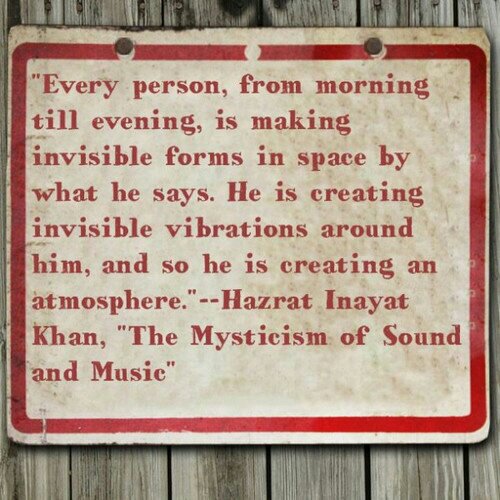
Hazrat Inayat Khan quote about speech creating invisible forms and atmosphere

This quotation states, with startling directness, what the prison room already demonstrated: words are not inert labels. Speech is a creative act. We form atmospheres with what we say, and we live inside the atmospheres we form.

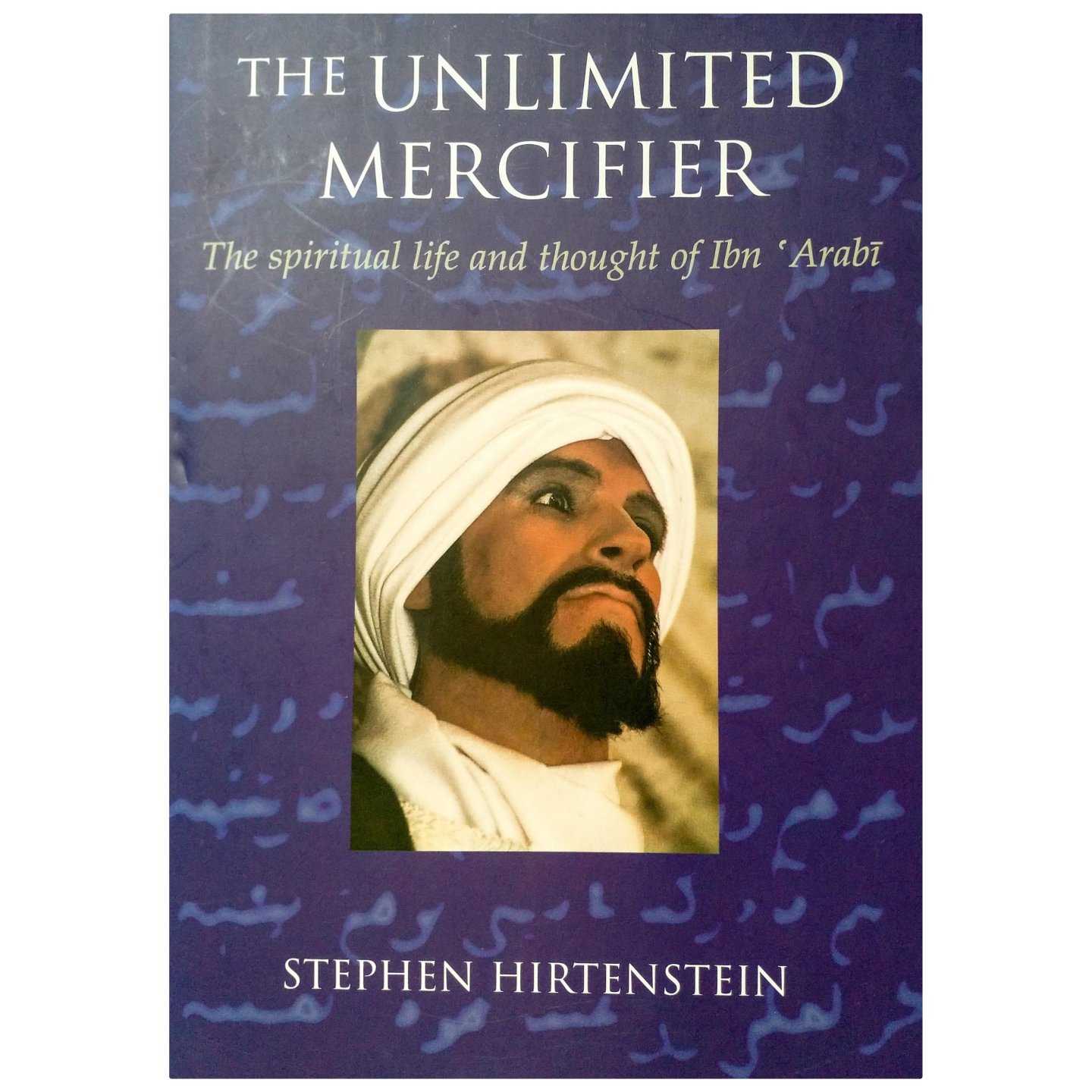
The second closing image is the cover of Stephen Hirtenstein’s book:

Book cover: The Unlimited Mercifier by Stephen Hirtenstein

The Unlimited Mercifier: The spiritual life and thought of Ibn ʿArabī

— Stephen Hirtenstein

The pairing is exact: atmosphere (what our words generate) and mercy (the divine field in which true life becomes possible).

If language makes invisible forms, then mercy is not a sentimental idea — mercy is the condition in which language becomes creative rather than destructive, restorative rather than coercive.


2) Jesus, Word, and Creative Breath

Now the deeper integration arrives — and it arrives through the science of breath and letters.

In the Qur’an, Jesus is described as a messenger and as His Word cast to Mary (Q 4:171), and Qur’anic tradition also relates Jesus’ life-giving action to divine permission.

In Akbarian metaphysics, this is not a mere miracle report — it is an ontological instruction: the Word is not merely said; it becomes world.

Ibn ʿArabī relates this directly to letters and breath: the science particular to Jesus is the science of letters.

Breath rises from the depths of the heart; where breath “stops” on its way out, letters form; when letters combine, meaning becomes manifest; and meaning becomes life in the sensory realm.

This is the metaphysical anatomy of speech.

“Know—and may God help you in your search for knowledge—that the science particular to Jesus is the science of letters (ḥurūf). For this reason, Jesus received the power of breathing in life (nafakh) which consists of the air that comes from the depths of the heart and is the spirit of life. When the air is stopped during the passage of its exiting from the mouth of the body, the places of its stopping are called ‘letters’ and the potentialities of the letters appear. When they are combined, life in the sensory realm is manifest according to the meaning. … Since breath makes stops on the path of exhalation to the mouth, we call these places [where the air] stops, letters, and that is where the entities inherent in the letters manifest… When these form, tangible life manifests in intelligible meanings (maʿānī) …”

(Ibn ʿArabī as cited and translated in contemporary scholarship on the science of letters.)

If we bring this back to the 2013 prison dialogue, it becomes luminous: those men did not merely “talk.” They breathed atmospheres into the room. Their histories were atmospheres too — atmospheres made from repeated speech acts, repeated self-descriptions, repeated accusations, repeated denials.

Rehabilitation, at its most precise, is not merely “insight.” It is the re-education of breath into truthful articulation.


3) DRT as Breath-Governance

In DRT terms, what is “stuck-addiction” if not stalled breath — stalled life — trapped in repetitive form?

Addiction is often described as compulsion, but experientially it is also: air that cannot complete its truthful passage.

The organism tries to blow apart a boxed mind; the psyche tries to return to unity; the person tries to be born.

That is why language matters so much: the mind digests meaning through words.

The Twelve Steps, seen through this lens, become a craft for re-articulation:

  • Steps 1–2: the ignition key — the admission that the old atmosphere cannot be sustained.
  • Steps 3–7–11: the BE axis — surrender, alignment, and conscious contact (breath returning to Source).
  • Steps 4–5–6: HAV(E) — inventory, confession, readiness (breath entering truth, truth entering form).
  • Steps 8–9–10: the healthy I — repair, responsibility, maintenance (speech becomes accountable).
  • Step 12: OUR — service and transmission (breath becomes blessing in the world).

This is not branding. It is anatomy.

Breath becomes letters; letters become meaning; meaning becomes lived atmosphere; atmosphere becomes destiny.

Recovery is not merely abstinence — it is the return of creative breath into governed form.


4) HIAI and the Ethical Boundary

Here is where our present work matters. AI can generate letters without breath. Humans generate breath that becomes letters. HIAI must therefore remain ethically ordered: the qalam can help shape structure, clarity, and coherence — but the breath, the conscience, the lived accountability must remain Human.

Otherwise we risk an inversion: fluent letters without heart, language without mercy, articulation without responsibility — the very condition the 2013 post was trying to heal.

In that sense, the old post becomes newly sharp: the “Human pause” is the ethical boundary. It is the moment where speech is received from a deeper place than reflex, defence, or performance. It is the moment where mercy is not preached but enacted.


5) The Whole Thread in One Line

The 2013 post, the Inayat Khan quotation, the Hirtenstein cover-image, and Ibn ʿArabī’s Christic letter-science all say the same thing in different registers:

What you say is not just what you mean. It is what you make.

Breath becomes letters.

Letters become meaning.

Meaning becomes atmosphere.

Atmosphere becomes life.

And mercy is the field in which that life can return to being Human.

Language can deform the soul, or it can return a person to being.

The work is not to become fluent. The work is to become true.


References

  1. Andrew Dettman, “Letters let things happen ….” (02/10/2013).
    Hu’ll heal the heart. Original post.
  2. Closing image quote (Hazrat Inayat Khan, The Mysticism of Sound and Music).
    Image file.
  3. Stephen Hirtenstein, The Unlimited Mercifier: The spiritual life and thought of Ibn ʿArabī (cover image used in the 2013 post).
    Image file.
  4. Qur’an 4:171 (Jesus as messenger and “His Word” cast to Mary).
    Quran.com.
  5. Scholarly discussion and translation of Ibn ʿArabī on Jesus, breath, and letters (Futūḥāt passages).

    López-Anguita (2021), Religions 12(1), 40 (MDPI) and Flaquer (2023), Religions 14(7), 897 (MDPI).
    MDPI 2021 |
    MDPI 2023

Written in HIAI collaboration — the qalam of Human and AI intelligence, the Unseen helping the Seen, both answering to the same Source.

Wingèd power

image

Standing alien
Even in an industrial park
Technology makes it’s mark –
A herded stallion,
Electric mare, night turning day.

Be a person who
Even in a darkening land
Revolving in both God’s hands –
Arms outstretched, wind of Hu,
Dispenses mercy, healing day.

Her refuse wagon ….

©AJDettman 2013