
Purification, Not Revelation
Contemporary fiction often imagines the “secret of secrets” as buried knowledge — encrypted, suppressed, waiting to be decoded. Yet the perennial tradition suggests something subtler: the secret is not hidden information, but hidden obstruction. The unveiling required is not excavation of documents, but purification of perception.
In the fifth inquiry of The Garden of Mystery (Golshan-e Rāz), the epistemological crisis of non-duality is posed with disciplined clarity: if one becomes aware of the secret of Unity, what does the ʿārif actually know? Earlier, the insān al-kāmil had been described ontologically — as completion, as cosmic function, as the point at which the circle closes. In the fifth inquiry, however, the language shifts from metaphysical rank to interior cognition: vāqif (aware), ʿārif (recogniser), shohūd (witnessing). The axis moves from what the completed human is to how the realised human knows.3
Shabistari’s answer is strikingly restrained. He does not elaborate cosmological architecture or inflate metaphysical hierarchy. Instead, he prescribes purification. Awareness of Unity belongs only to the one who does not become fixed in spiritual stations. Recognition of Absolute Being arises in witnessing only when self-claim is lost. So long as any stain remains, knowledge does not take the form of direct seeing. When no distinction remains between knower and known, unity is realised. The epistemological structure is therefore negative: knowledge emerges through subtraction.
I. The Philology of Purification in Sūrah al-Ikhlāṣ (112)
The Qur’anic crystallisation of this negative structure appears in Sūrah al-Ikhlāṣ. The root kh-l-ṣ signifies extraction and refinement: the separation of pure substance from admixture. Ikhlāṣ therefore signifies not merely sincerity of feeling, but purification of mixture — removal of conceptual contamination.1 In other words, it is a discipline of cognition before it is a mood of devotion.
The sūrah proceeds through containment. “Allāhu Aḥad” invokes not numerical singularity (wāḥid) but absolute uniqueness (aḥad), refusing categorisation and genus. “Allāhu ṣ-Ṣamad” establishes unilateral dependence: all depend upon Him; He depends upon none. “Lam yalid wa lam yūlad” denies derivation, lineage, and the projection of creaturely generativity onto the Divine. Finally, “wa lam yakun lahu kufuwan aḥad” establishes the firewall: no equivalence, no commensurability, no ontological parity. This last clause is decisive, because it prevents unity language from collapsing into identity-claim.
That containment matters directly for reading Shabistari’s culminating claim that the Known and the knower become “one thing.” Without the protection of “none comparable,” such statements become combustible in modern hands. With it, the statement can be held as a description of the removal of perceived separation without theological confusion. Ikhlāṣ, then, is not mystical expansion; it is theological governance — purity before proclamation.
II. Structural Parallels in Alcoholics Anonymous (Basic Text), p.59
A structurally identical movement appears in the recovery architecture of the Twelve Steps. The Basic Text states: “Without help it is too much for us. But there is One who has all Power — that One is God. May you find Him now.”2 This is operational monotheism. It does not debate metaphysics; it dismantles self-sufficiency. The admission “without help” performs negation of autonomous control. The affirmation “One who has all Power” restores hierarchical clarity. The invitation “May you find Him now” keeps the movement immediate without metaphysical performance.
The programme’s early steps enact the same sequence in lived form. Step One collapses self-reliance. Step Two restores the possibility of a Power beyond the self. Step Three surrenders will and life to that hierarchy. Only after this negation do inventory, confession, restitution, and humility follow. The architecture itself insists that awakening is not a slogan; it is the fruit of purification. In this sense, the Twelve Steps function as a practical ikhlāṣ — a disciplined reduction of self-claim so that Reality can be met cleanly.
III. The DRT Digestive-Mind Model and Purification
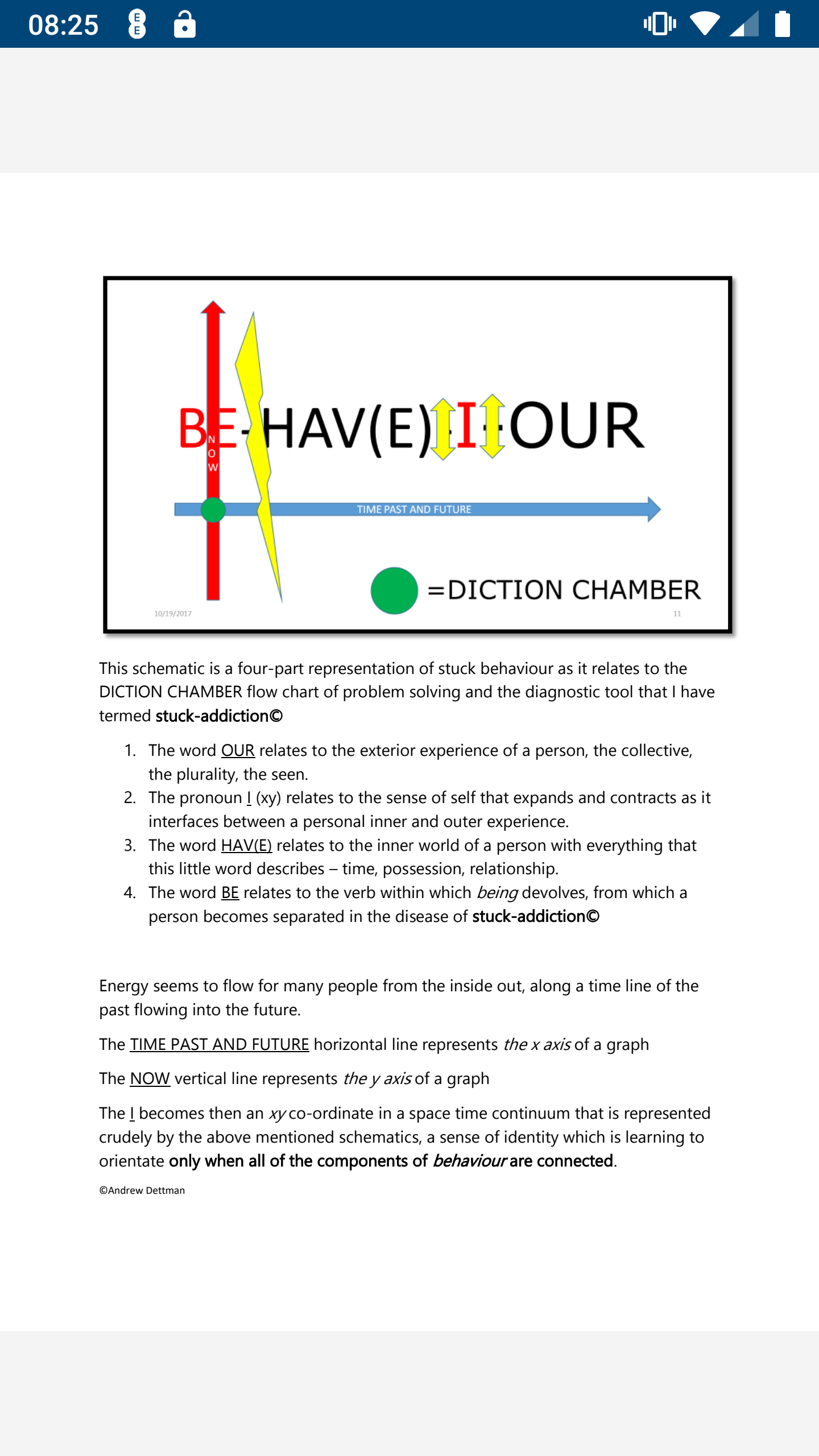
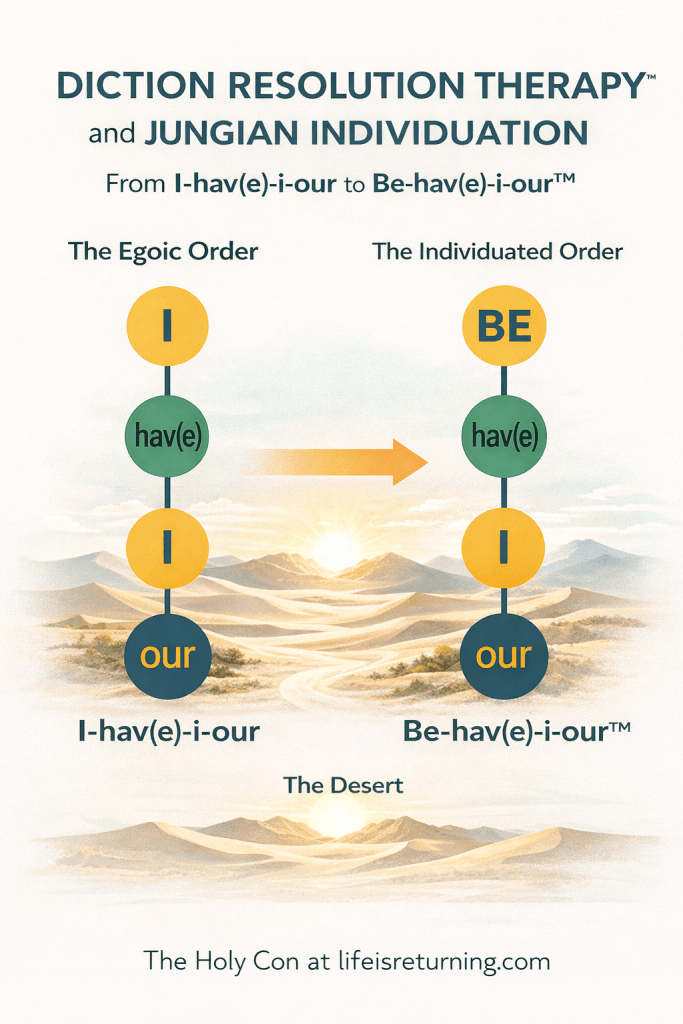
Within Diction Resolution Therapy, the mind is framed not as a sovereign generator of reality but as the digestive organ of the psyche. Just as the body processes nourishment through peristalsis, the psyche processes experience through cognition. Thoughts are therefore not creative origins; they are metabolic movements. When digestion is impaired, residue accumulates: mis-digested psychic material becomes distortion, compulsion, and repeated narrative fixation. In late-stage addiction, the organism may attempt to rupture a boxed-noun identity — not out of romance, but out of desperation — in order to restore movement between psyche and embodied life.
This maps cleanly onto Shabistari’s imagery of thorns and debris and his insistence on sweeping the house of the heart. The debris is not “personhood” to be annihilated, but distortion to be removed. Sūrah al-Ikhlāṣ removes projection at the level of conception. The Twelve Steps remove defects of character through inventory, confession, restitution, and humility. DRT removes mis-digested narrative fixation by restoring diction to living meaning and re-situating mind as servant rather than master. In each case, purification precedes clarity. Without purification, unity language is metabolised into ego-inflation; with purification, recognition becomes transparent rather than projective.
The mirror does not generate light; it ceases to distort it. This is the shared logic of ikhlāṣ, recovery, and Shabistari’s practical non-duality: subtraction before union, cleansing before witnessing.
IV. Against Contemporary Non-Dual Inflation
Modern spiritual discourse often outruns purification. Phrases such as “there is no self” or “all is One” can become tools of bypassing: accountability is dodged, repair is delayed, dissociation is rebranded as transcendence, and Creator–creation distinction is quietly collapsed into identity-claim. In such a climate, the function of containment becomes urgent. “None comparable to Him” prevents theological collapse. The Twelve Steps prevent ethical collapse by requiring confession, restitution, and ongoing inventory. The DRT digestive-mind framing prevents psychological collapse by identifying when cognition is not digestion but distortion.
The difference between inflation and purification is subtle but decisive. Inflation expands identity; purification contracts self-claim. Inflation tends to speak quickly; purification sweeps quietly. Shabistari’s sequence is therefore protective: until self-claim is reduced, prayer is form; until obstructions are removed, knowledge cannot become direct seeing. Unity without transcendence destabilises; unity contained by transcendence integrates.
V. Epistemology Revisited
The distinction between fikr, maʿrifah, and kamāl can now be held without confusion. Fikr operates discursively within subject–object separation; it moves from sign to meaning and remains inferential. Maʿrifah is recognition through presence; it removes the barrier that made inferential thought necessary. Kamāl stabilises transparency within embodied function. Yet epistemological dissolution does not imply ontological equivalence: the knower does not “become” the Real; the obstruction to recognition is removed. The mirror does not become the sun; it ceases to distort its reflection. This distinction preserves doctrinal integrity while permitting experiential realisation, and it protects unity language from becoming self-designation.
VI. Artificial Intelligence Within Hierarchy
Artificial intelligence can assist with philological precision, structural comparison, and epistemological mapping. It can identify conceptual conflations and help guard against inflationary slippage in language. It can sharpen due diligence. But it cannot surrender, undergo ego-reduction, perform negation, or carry conscience. Therefore, it must remain instrument rather than interpreter of spiritual rank. Ordered correctly, it refines articulation; disordered, it accelerates inflation. Ikhlāṣ applies here as well: remove mixture, keep hierarchy, refuse equivalence.
VII. The Perennial Law
Across Shabistari, Sūrah al-Ikhlāṣ, the Twelve Steps, and the DRT digestive-mind model, one structural law persists: negation precedes union; purification precedes proclamation; hierarchy precedes intimacy. If one becomes aware of the secret of Unity, what does the ʿārif know? Nothing other — but this “nothing other” is not achieved through expansion of identity. It is achieved through disciplined subtraction, ethical containment, and sustained humility. In an era saturated with discourse yet thin in purification, this law remains not only perennial but necessary.
Footnotes
- On ikhlāṣ (kh-l-ṣ) as extraction/purification of mixture, and on the sūrah’s function as theological containment (especially the clause denying equivalence, kufuwan aḥad). ↩
- Alcoholics Anonymous (Basic Text), p.59: “Without help it is too much for us. But there is One who has all Power — that One is God. May you find Him now.” ↩
- Mahmūd Shabistarī, Golshan-e Rāz (The Garden of Mystery), Fifth Inquiry: the epistemological shift to vāqif (awareness), ʿārif (recognition), and the practical sequence of purification culminating in the dissolution of distinction between knower and Known. ↩
Written in HIAI collaboration — the qalam of Human and AI intelligence, the Unseen helping the Seen, both answering to the same Source.
 Hu'll heal the heart