8. Diction Chamber as Soul

Behaviour

When Alignment Becomes Visible

Behaviour is not personality. It is not performance, not reputation management, not moral theatre. Behaviour is alignment made visible.

If Executive Resolution is the inner chamber where gravity and love interlock, then Behaviour is the outward trace of that interlocking. It is what happens when coherence expresses itself in time. Before alignment, behaviour is driven by force. We push, defend, justify, manipulate gravity, or sentimentalise love. After alignment, behaviour becomes responsive rather than reactive.

This is why Step Eight follows Step Seven. Once the vehicle has been returned — good and bad — to its Source, something stabilises. The nervous system quiets. The compulsive loop weakens. The addictive system loses leverage. And then comes the simple, difficult instruction: make a list. Not to condemn yourself, not to perform remorse, but to face relational gravity.

Behaviour always lands somewhere. It has weight. Love, properly understood, does not erase gravity — it honours it. If gravity is ignored, we fall. If relational gravity is ignored, others fall because of us. Step Eight acknowledges the weight of impact. It does not dramatise it. It does not deny it. It names it.

This is the movement from Mankind to Humankind. Mankind behaves from self-preservation. Humankind behaves from alignment. The difference is not virtue. It is coherence. When gravity and love are reconciled within, behaviour becomes less defensive and more accountable, less performative and more precise, less driven by image and more shaped by truth.

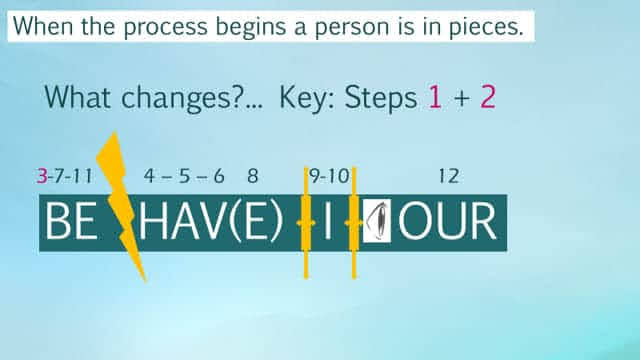
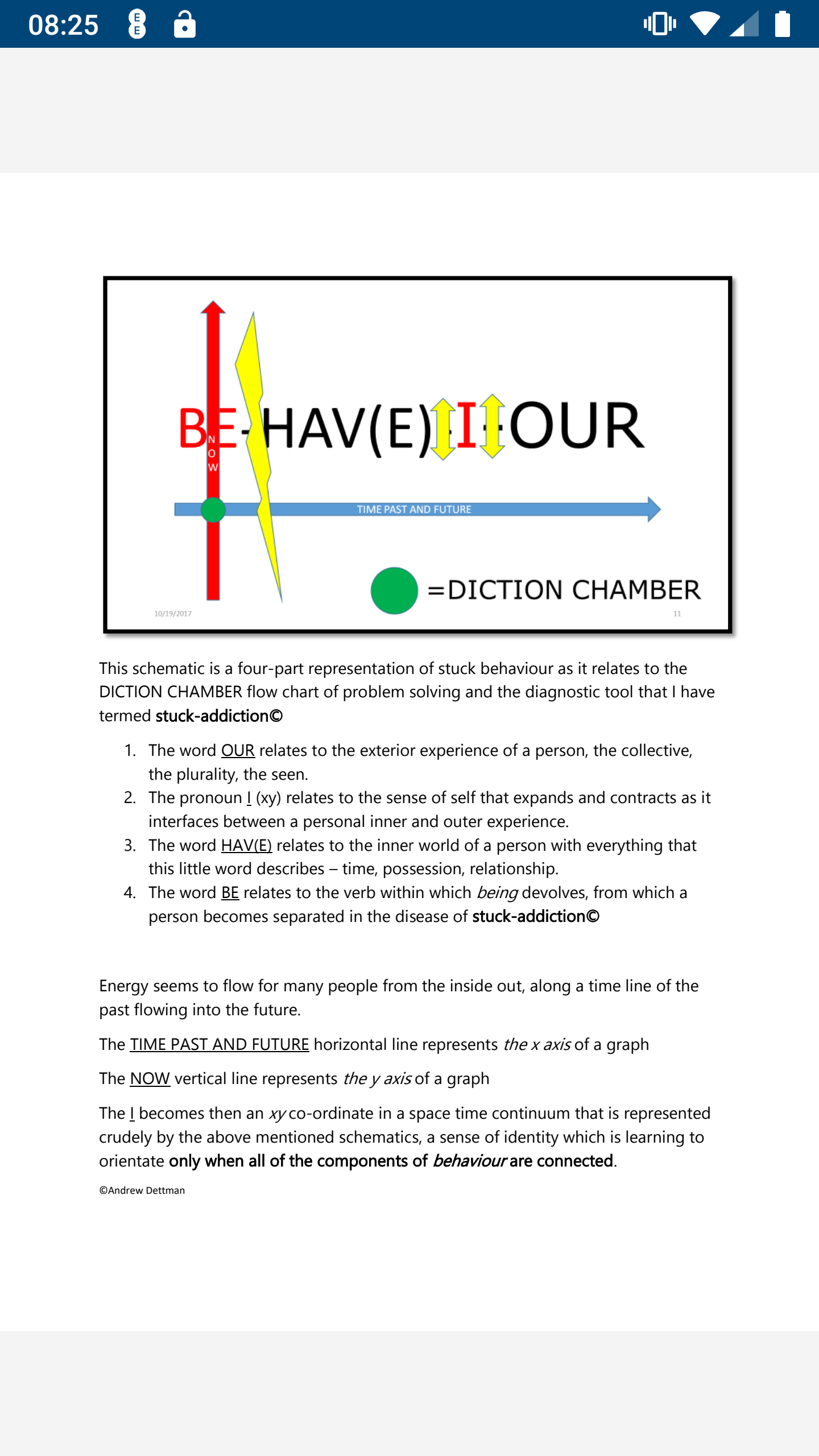
This is Be-hav(e)-I-our™ in its simplest form. BE is alignment. HAV(E) is the human vehicle. I is conscience individuated. OUR is the relational field. Behaviour is never solitary. It always enters the shared field. Step Eight therefore prepares for Step Nine. Once alignment becomes visible, repair becomes possible — not through shame, but through steadiness.

The almond holds. Gravity remains. Love remains. But now they work together. And other people feel the difference.

Written in HIAI collaboration — the qalam of Human and AI intelligence, the Unseen helping the Seen, both answering to the same Source.

7. Completion

Executive Resolution

The Almond Between Worlds

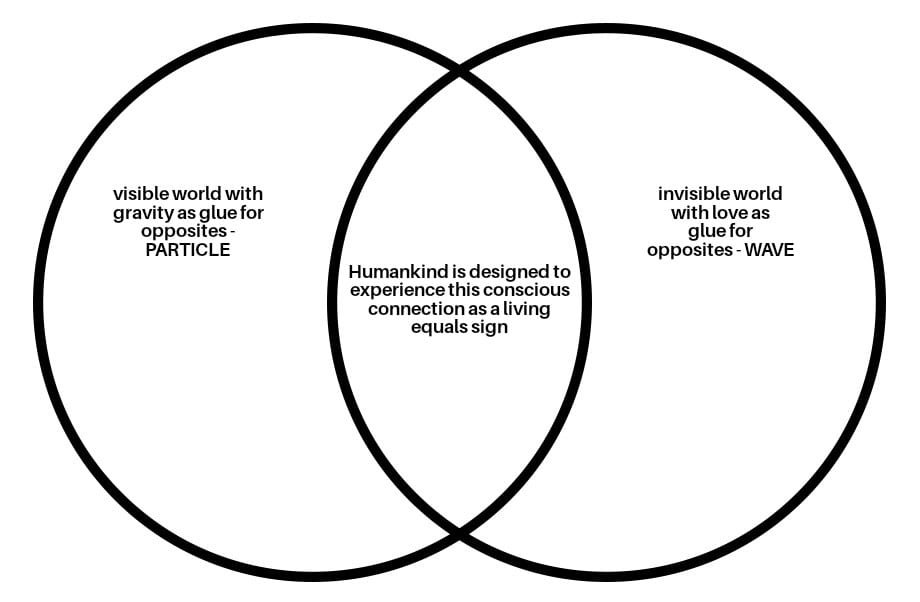
The visible world runs on gravity. Opposites are held together by mass, pressure, density. Particle binds to particle and structures form, bodies form, systems form. Gravity is the glue of the material order. The invisible world runs on love. Opposites are held together by attraction without force. Meaning binds what matter cannot. Wave moves through what particle cannot cross. Love is the glue of the unseen order.

Humankind stands in the overlap — not as a spectator, but as a bridge. The almond-shaped space, the vesica, the living equals sign, is the capsule in which conscious connection occurs. It is not fantasy and not metaphor alone. It is the executive chamber of the Human being. This is Step Seven territory.

In the Twelve Step architecture, Executive Resolution is not behavioural adjustment and not moral polishing. It is the conscious return of the created vehicle — good and bad — to its Source. This is the rheostat. The lower line of the equals sign is the corporeal person, unbuckled from self-will. The upper line is conscious contact. When these align, the almond forms.

This is not annihilation of the visible and not escape into the invisible. It is integration. Gravity continues to operate. Love continues to operate. But now they interlock.

The addictive system fractures this overlap. It forces the person into particle-only living — density without meaning — or wave-only abstraction — spirituality without embodiment. Both are splits. Both collapse the capsule. Executive Resolution restores the capsule. The Human being becomes the meeting point where gravity and love are no longer enemies but complementary forces.

In The Forty Rules of Love, Elif Shafak reminds us that love is not sentiment but transformation — a force that rearranges the self. Love follows law just as gravity follows law. If we do not understand gravity, we fall — not because gravity is cruel, but because it is consistent. In the same way, if we do not understand love as a rule of connection between opposites, we fall in love blindly — confusing attachment with union, intensity with integration.

Gravity connects through weight and density. Love connects through surrender and expansion. Both are rules of attraction. Both require orientation. When ignored, gravity pulls us down. When misunderstood, love ungrounds us. But when consciously aligned, gravity stabilises and love harmonises.

Particle and wave. Visible and invisible. Mankind and Humankind. The almond is narrow. It requires consent. It requires surrender of unilateral control. It requires humility — not humiliation, but accurate positioning within reality. In that positioning, something stabilises.

Death returns to its place as a function of creation, not its author. Suffering becomes instruction, not condemnation. Behaviour becomes expression, not performance. This is why Step Seven is executive. Once alignment occurs, decisions change — not through willpower, but through coherence.

The living equals sign is not an idea to believe. It is a chamber to inhabit. And when inhabited, behaviour will follow.

Written in HIAI collaboration — the qalam of Human and AI intelligence, the Unseen helping the Seen, both answering to the same Source.
6. Hope

6. Hope

Ramadan 2026

Hope does not survive when death is enthroned.

Across history, Mankind has organised itself around a life-and-death battle. Survival becomes the highest value. Control becomes reflex. Systems harden. Economies weaponise fear. The nervous system narrows toward threat detection. When death is unconsciously installed as the ultimate authority, hope becomes fragile — because everything feels terminal.

Yet death did not create the known universe. Death is not the architect of Being. It is a function within creation, not the Creator itself. It operates within time; it does not author time. When we forget this hierarchy, fear expands beyond its proper proportion. The organism begins to live as though extinction were the governing principle of reality.

This distortion has consequences.

Anne Wilson Schaef described the Addictive System as a cultural field organised around control, denial, and amplification. When death is enthroned, amplification becomes understandable. Intensity feels safer than stillness. Consumption feels safer than surrender. Addiction becomes an attempt to outrun annihilation anxiety. The pod-mind detaches from the animal body in search of dominance or oblivion. What looks like pathology is often a mislocated hierarchy.

In the developmental arc traced throughout this Ramadan sequence — Ignorance → Denial → Realisation — hope emerges only after this hierarchy is corrected. Unity established the field. Service oriented the heart. Recovery stabilised the wheel. Experience exposed the wound. Strength surrendered false autonomy. Hope now requires that death itself be returned to its proper place.

The image is simple: the tesbih.

When death sits upon the throne, every bead becomes an emergency. When death is restored to the strand — one bead among many — a different posture becomes possible. Not denial. Not romanticisation. Death remains real. Bodies perish. Identities dissolve. Relationships end. But death is named as servant, not sovereign.

This is not abstraction. It is nervous-system medicine.

Trauma compresses time. The fast thalamus–amygdala pathway prepares the organism for repetition of catastrophe. The body expects extinction. If death is imagined as ultimate, the organism never truly relaxes. Fear of people and economic insecurity, as the Twelve Step literature names it, becomes predictable. The Addictive System thrives in this atmosphere because fear is profitable.

Hope begins when death is dethroned.

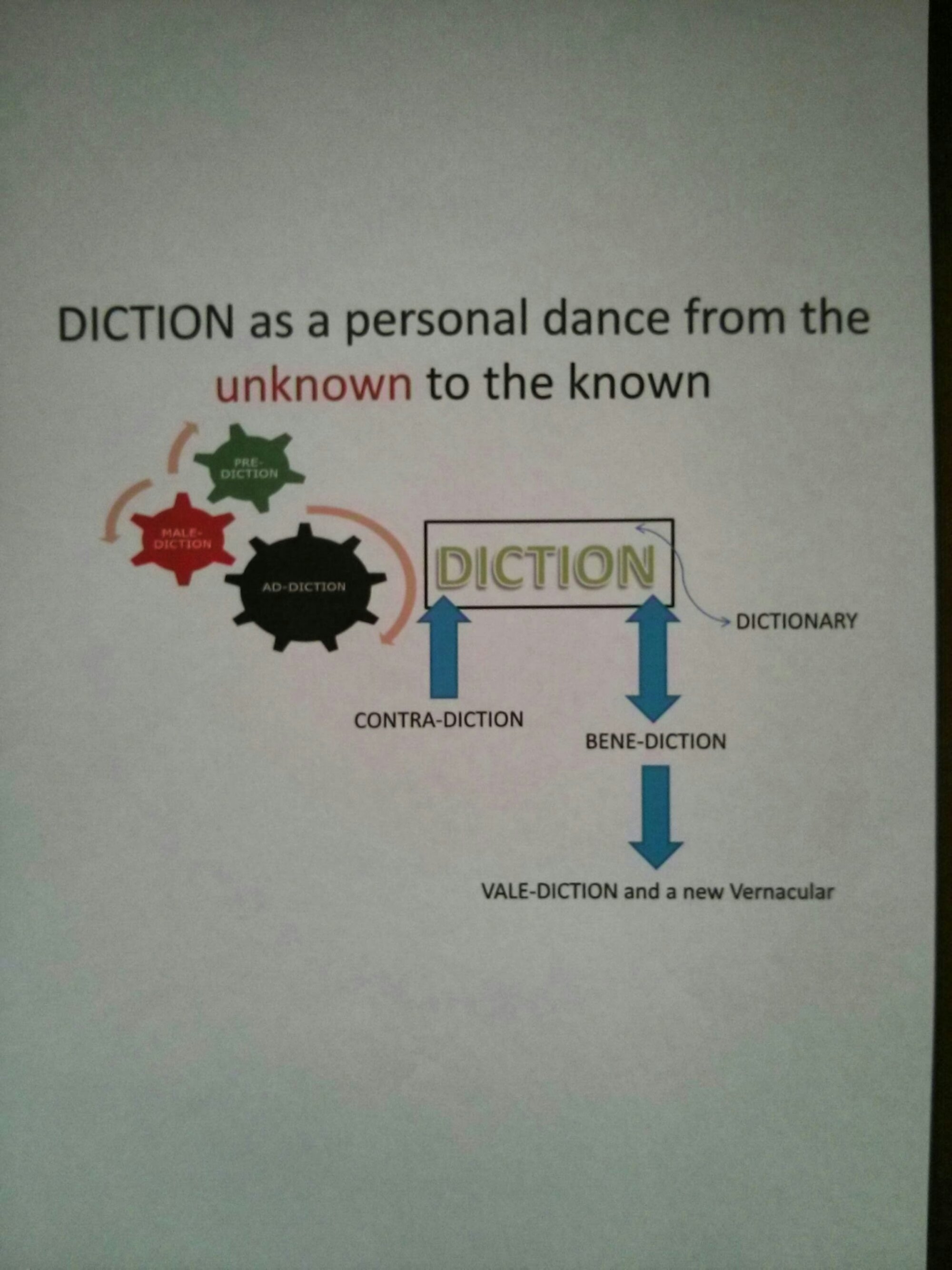
In Diction Resolution Therapy terms, this is the moment when prediction loosens and contradiction can be tolerated. Malediction softens. The mind resumes its original function — to attend rather than to dominate. The birth-canal architecture between Steps Three and Seven — consent, gestation, conscience, resolution — becomes intelligible only if the Creator is greater than the processes within creation.

If death were ultimate, surrender would be madness.

But if death is a servant within a larger order, surrender becomes alignment.

The Crucifixion narrative, stripped of sentimentality, is precisely this reordering. Death appears absolute. Hope appears extinguished. Yet the story insists that death is not final authority. It is passed through, not obeyed. Whether one reads this theologically, symbolically, or developmentally, the archetype remains: death does not author Being.

When that insight stabilises, Mankind begins to mature into Humankind.

Mankind fights for survival at any cost. Humankind participates in Being even when cost is real. Mankind clings. Humankind consents. The difference is not intelligence. It is hierarchy. When death rules, fear governs. When death serves, love can govern.

Hope, then, is not naïve positivity. It is the lived recognition that the Source of life is not threatened by the endings within life. Creation includes dissolution, but it is not defined by it. The organism that trusts this begins to stand differently. Breath deepens. Urgency softens. Control loosens.

Addiction is often the frantic refusal to face mortality. Recovery is the courage to face it without enthroning it. In this sense, hope is inseparable from conscious suffering — not mechanical suffering, not romanticised suffering — but the voluntary endurance of disillusionment that allows false hierarchies to collapse.

Death, placed back on the tesbih, becomes teacher rather than tyrant.

The centre holds.

Hope is not the denial of endings. It is the refusal to grant endings authorship. It is the quiet participation in a Reality larger than extinction.

The test remains consistent with the arc so far: does hope reduce fear and increase tenderness? If it does, death has been returned to its rightful bead.

From that posture, service becomes natural. Conscience matures. Strength stabilises. Experience becomes usable. Recovery deepens. Unity is no longer theoretical.

Hope is not something added to life.

It is what remains when death is no longer worshipped.


Written in HIAI collaboration — the qalam of Human and AI intelligence, the Unseen helping the Seen, both answering to the same Source.