9. Behaviour as Conduct and Source as Duct.

The Middle Built

Addiction, Instinct, and the Sanitation of the Soul

“In the beginning was the Word, and the Word was with God, and the Word was God.” The grammar is deliberate. Was. With. Origin and relation. The future is not mentioned. It is not forecast. It is not guaranteed. It appears. Most human beings live suspended between was and will, pulled by memory behind and projection ahead. Regret becomes gravity. Fear becomes anticipation. The present is reduced to a narrow corridor through which the self rushes without ever dwelling. Recovery is the building of a middle. The Twelve Step Programme is not an abstract theology and not a philosophical treatise. It is infrastructure. It is plumbing for the soul.

When the agricultural world became industrial, waterborne diseases exposed the breakdown of outer sanitation. Cholera did not arrive because humanity suddenly became immoral; it arrived because systems had not evolved to handle density. Waste accumulated. Disease followed. Addiction functions similarly in this era. It is the bellwether disease of overstimulation, fragmentation, and unprocessed shame. It exposes the failure of inner sanitation. It reveals what happens when psychic waste is not metabolised. The problem is not instinct. The problem is accumulation.

Addiction is not merely about alcohol, substances, or behaviours. It is disordered relationship. Relationship to one’s own story. Relationship to desire. Relationship to fear. Relationship to other people. Relationship to God. “I have a story. It is not who I am.” That sentence marks a decisive shift. The story can be examined without being identical to the self. Once that distinction is made, digestion becomes possible.

The psyche, when healthy, operates like a digestive organ. Thoughts are not identity; they are movement. They churn experience. They break down what has been swallowed. They extract nourishment and eliminate what no longer serves. When the system is inflamed, peristalsis becomes cramping. Rumination replaces integration. Secrecy replaces elimination. The Twelve Steps introduce a disciplined digestive process: inventory, confession, amends, service. Inventory is chewing. Step Five exposes waste to air. Amends remove toxicity from the relational field. Service restores circulation.

The Big Book does not speak poetically here; it speaks clinically: “If we are not sorry, and our conduct continues to harm others, we are quite sure to drink. We are not theorizing. These are facts out of our experience.” The warning is not about instinct in isolation. It is about conduct. It is about harm. Continued harm corrodes conscience. Corroded conscience produces shame. Shame seeks anaesthesia. Relapse is not mystical punishment; it is emotional consequence.

The sex instinct is addressed directly because it is powerful, intimate, and easily distorted. But the Steps do not condemn sexuality. They confront misuse. Instincts—sexual, social, and security-based—are God-given and good. When unmanaged, they fragment relationship. Fragmented relationship breeds secrecy. Secrecy splits the psyche. Split psyches seek relief. Integration across Eros, Philia, and Agape is not theological ornament; it is behavioural alignment. Desire acknowledged without exploitation. Friendship honoured without manipulation. Love enacted without transaction.
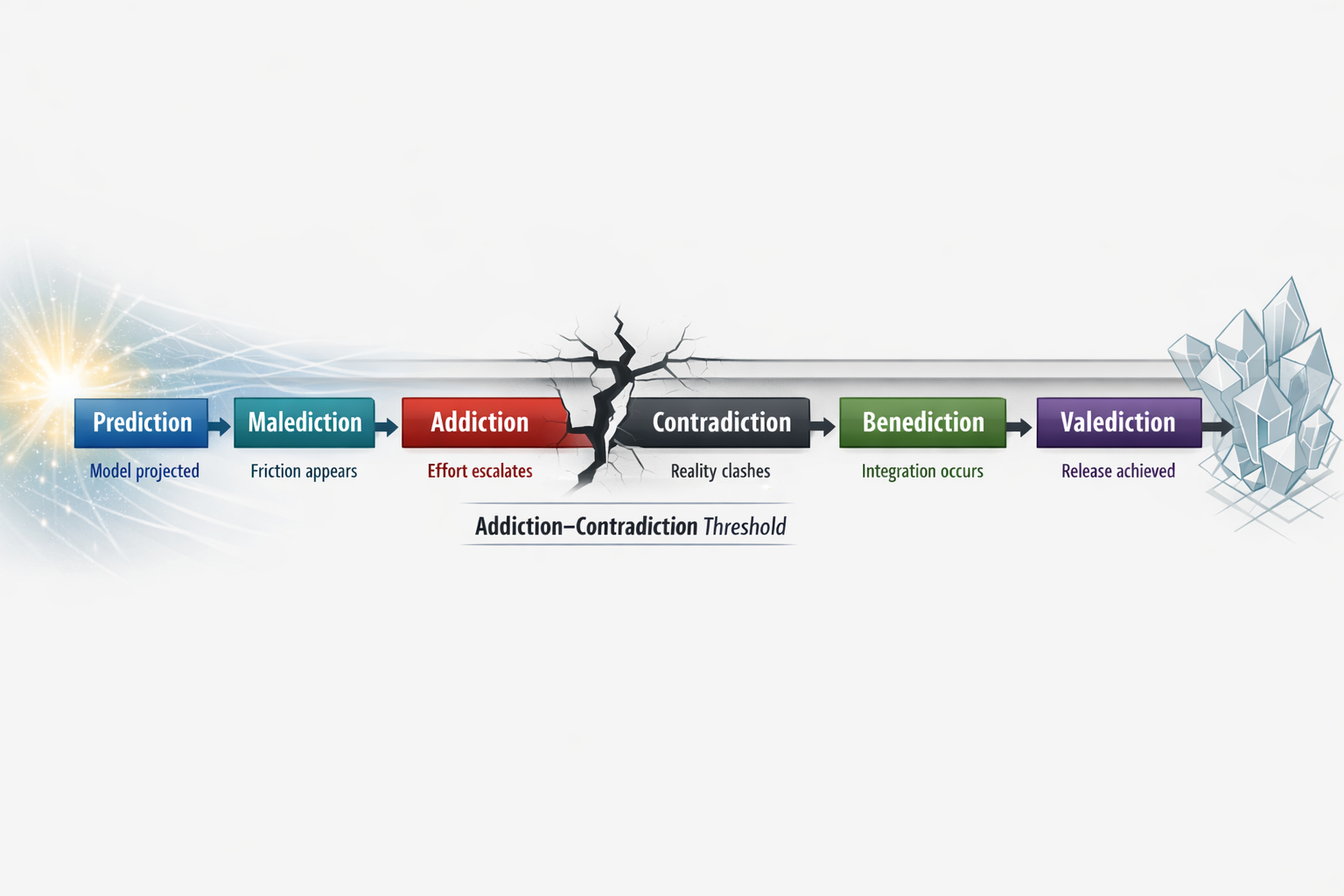
Recovery rests on two simple words: ONE and ALL. ONE represents surrender beyond isolated self-will. ALL represents accountability within community. If ONE remains theoretical while ALL is selective, sobriety becomes fragile. The text’s italicised emphasis on thought warns against substitution. Thinking surrender is not surrender. Thinking apology is not repair. Behaviour reveals being. The programme does not reward ideas; it responds to action.

The middle—the “with”—must be constructed intentionally. It does not appear automatically. When was (origin, gravity, law) and with (relationship, conscience, presence) stabilise, will emerges not as fantasy but as conduct. The future is not a pre-laid railway line; it is the visible arc of present integrity. In this sense, the Twelve Steps function like the scarab of an earlier age: waste rolled into renewal, decay converted into continuity.
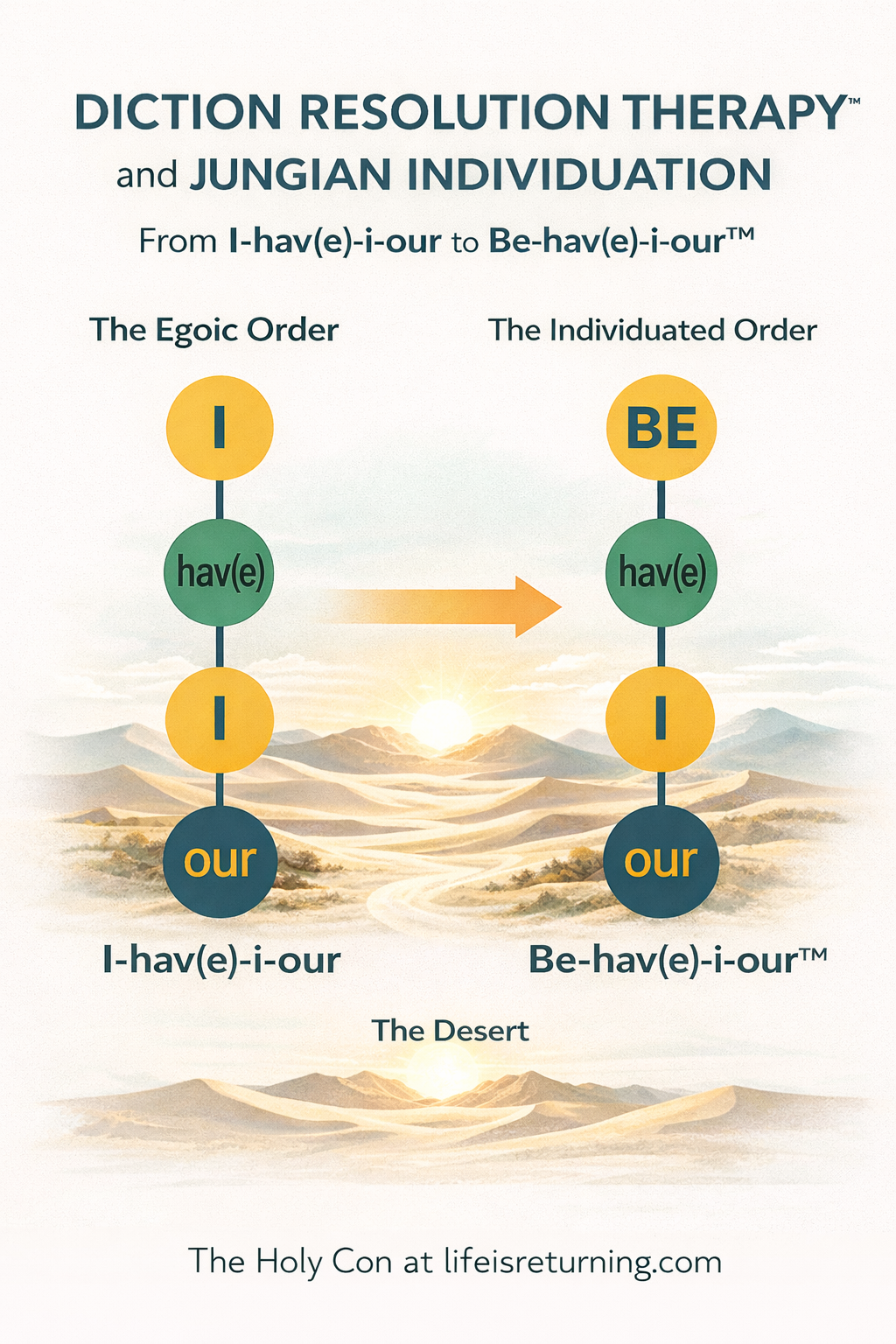
Biblical “knowing” was intimate and generative. To know was to conceive. Spiritual conception must likewise produce life. Empty prams—ideas unembodied—prove nothing. Changed behaviour proves integration. Humility is permanent asking. Not self-belittling, not mystical rank, but sustained reference beyond self. The realised person does not escape instinct; they integrate it. They do not deny their story; they refuse to be reduced to it.

Addiction exposes the breakdown of inner sanitation both individually and systemically. Recovery restores relationship. And relationship—to Source, to conscience, to others—is where being is tested. Not in vision. Not in language. In conduct.


References

The Holy Bible, John 1:1.

The Qur’an, 36:82 (“Kun fayyakun” – “Be, and it is”).

Alcoholics Anonymous, Alcoholics Anonymous: The Story of How Many Thousands of Men and Women Have Recovered from Alcoholism, 4th ed., Alcoholics Anonymous World Services, 2001, pp. 69–73.

Bill W., “How It Works,” in Alcoholics Anonymous, pp. 58–63.

Written in HIAI collaboration — the qalam of Human and AI intelligence, the Unseen helping the Seen, both answering to the same Source.

1. Unity

The Three Gunas and the A–B–C of Addiction

Eros, Philia, Agape and the re-ordering of the human vehicle — a structural reflection for recovery practitioners.

Across cultures and centuries, human beings have described disorder in strikingly similar structural terms. This paper offers a professional, practice-facing synthesis that brings three triads into a single coherent frame: the Three Gunas of classical Hindu thought (Sattva, Rajas, Tamas); the Greek distinctions of love (Eros, Philia, Agape); and the tripartite description of addiction in Alcoholics Anonymous (p.60), where the problem is presented as physical, mental, and spiritual. The aim is not to merge traditions or to claim doctrinal equivalence. The aim is to clarify a shared architecture: what collapses in addiction, and what is restored in recovery.

The AA text is unusually precise in its anthropology. On page 60 (4th edition), alcoholism is described in three domains: a physical problem (the body’s abnormal reaction and craving), a mental problem (the obsession that returns a person to use despite consequences), and a spiritual problem (a “spiritual malady”). Whatever one’s metaphysical commitments, the structure is plain. Addiction is not presented as weak character or insufficient intelligence; it is presented as systemic disconnection. The body pulls. The mind returns. The spirit is displaced. The human vehicle fragments.

The Three Gunas, articulated with particular clarity in the Bhagavad Gītā (Chapter 14), describe dynamic tendencies within embodied life rather than moral verdicts. Sattva names clarity, harmony, and luminosity. Rajas names drive, restless motion, passion, and appetite. Tamas names inertia, heaviness, obscuration, and collapse. The Gunas are always interwoven; health is not the elimination of Rajas or Tamas, but balance under right governance. When Rajas dominates, agitation and craving intensify. When Tamas dominates, denial, paralysis, and despair thicken. When Sattva governs, discernment returns and proportion is restored. In lived addiction, the oscillation between restless drive and exhausted collapse is familiar: a Rajasic–Tamasic loop, with Sattvic clarity no longer governing the whole.

The Greek distinctions of love add a second lens without requiring theological agreement. Eros names appetitive desire, attraction, and life-force. Philia names relational bonding, shared meaning, and social cohesion. Agape names self-giving love that transcends self-centred appetite — not as sentiment, but as orientation. Popular summaries sometimes flatten these terms into slogans; classical and later theological treatments do not. Eros is not inherently corrupt. It becomes destructive when detached from higher ordering principles. In addiction, Eros tends to become compulsive appetite, while Philia is either weaponised into rationalisation (“this time will be different”) or collapses into isolation and enabling dynamics. Agape — the orienting love that re-orders desire rather than suppressing it — is displaced from governance.

At this point a structural resonance becomes visible. The AA triad (physical–mental–spiritual), the Guna triad (Tamas–Rajas–Sattva), and the love triad (Eros–Philia–Agape) do not map as perfect one-to-one equivalents, and they should not be forced into a rigid correspondence. Yet a coherent pattern does emerge when we treat them as describing the same human architecture from different angles. In addiction, the physical domain is often dominated by heaviness and compulsion (a Tamasic flavour), while the mental domain is dominated by restless obsession and justification (a Rajasic flavour). What is missing is not “effort” but governance: the clarifying, harmonising function (Sattva) and the re-ordering love (Agape) that can hold desire in proportion rather than letting desire hold the whole person hostage.

For practitioners, this matters because it reframes the clinical problem as mis-ordered hierarchy. Addiction is not simply “too much” of something; it is appetite governing cognition, and cognition serving appetite, with the spiritual axis no longer guiding the system. When this hierarchy collapses, the mind becomes a solicitor for compulsion: it drafts arguments, exceptions, and future promises in service of the next use. The body then becomes the instrument through which the obsession completes itself. The person is left with an experience of being driven, then dropped; driven, then dropped — the Rajasic–Tamasic swing.

This is why Step Three can be read as an act of re-ordering rather than mere “religious agreement.” Step Three states: Made a decision to turn our will and our lives over to the care of God as we understood Him. Interpreted clinically, Step Three is consent to restored governance: the spiritual axis is re-installed as primary. Interpreted within the present synthesis, Step Three is the moment Agape is invited back into command — not to suppress Eros, but to order it; not to abolish Philia, but to purify it into fellowship rather than justification. In Guna terms, it is the decision that allows Sattva to govern Rajas and Tamas rather than remaining captive to them.

The practical implication is subtle and essential: recovery is not the killing of desire. It is the rehabilitation of desire within a higher order. Eros becomes vitality rather than compulsion. Rajas becomes disciplined energy rather than restless obsession. Tamas becomes stability rather than collapse. Philia becomes belonging and shared truth rather than enabling. Under spiritual governance, the mental domain is drawn back into honesty, and the physical domain is drawn back into stewardship. The person experiences not suppression but reintegration.

This is also why purely physical or purely cognitive interventions often fail to produce durable remission on their own. Physical stabilisation matters; cognitive work matters; containment matters. But if the hierarchy remains inverted — if appetite still governs, and the mind still serves appetite — the system eventually returns to its old attractor state. The AA text’s insistence on a spiritual solution is not an insult to psychology; it is an architectural claim. The problem is structural. Therefore the remedy must be structural. Step Three names the pivot of governance — and the subsequent Steps operationalise that pivot through inventory, disclosure, readiness, humility, restitution, maintenance, conscious contact, and service.

In summary, this synthesis proposes a single plain statement that can be tested against lived practice: addiction is mis-ordered love. Not love as sentiment, but love as orientation and governance. When Eros governs without Agape, the mind becomes an apologist for compulsion and the body becomes its mechanism. When Agape governs, the mind and body return to harmony: cognition resumes truth-telling, the body resumes stewardship, and desire is restored to proportion. Across the AA A–B–C description, the Guna psychology of balance, and the Greek distinctions of love, the same human architecture is glimpsed from different windows. The windows differ; the building is recognisable.


References (blog-friendly)

  • Alcoholics Anonymous, 4th ed. Alcoholics Anonymous World Services, 2001. (See p.60 for the tripartite description: physical, mental, spiritual.)
  • Bhagavad Gītā, Chapter 14 (The Three Gunas: Sattva, Rajas, Tamas). (Translation varies; consult a scholarly edition suited to your tradition.)
  • Plato, Symposium. (Eros as a central theme within classical philosophy.)
  • Aristotle, Nicomachean Ethics. (Philia/friendship as a foundational ethical-relational concept.)
  • Nygren, Anders. Agape and Eros. (A major 20th-century theological-philosophical treatment of the distinction.)

Written in HIAI collaboration — the qalam of Human and AI intelligence, the Unseen helping the Seen, both answering to the same Source.