Resurrection: Recovering Being from the Tyranny of Having.

Intercourse, Meaning, and the Birth of Conscience:
A Bridge Between Shabistari, the Twelve Steps, and Diction Resolution Therapy

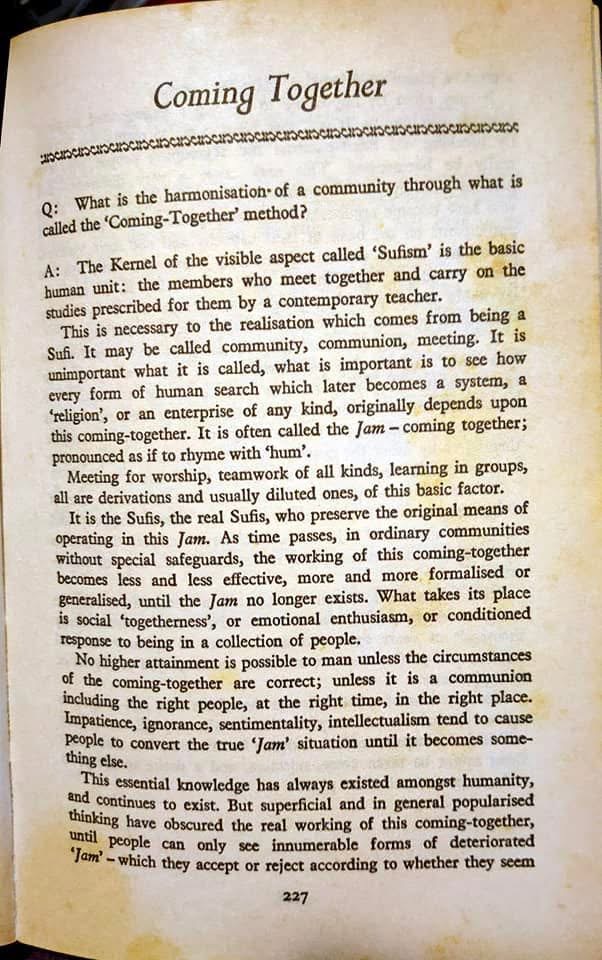
Across the centuries the language of the mystic and the language of the modern sufferer often appear to speak different dialects. Yet when examined carefully, both describe the same interior movement. The Persian Sufi Mahmud Shabistari, writing in the fourteenth century, explains that the visible world is not self-explanatory but reflective: everything manifest in this world is like the reflection of a sun belonging to another world of meaning.1 If this is so, then the sensory forms through which human beings perceive reality are not merely objects but signs. They are vehicles through which deeper meanings appear.

In my own work with addiction and recovery, I have found that this symbolic structure is not merely a metaphysical speculation but an observable psychological reality. Human experience does not remain raw. It must be interpreted, digested, and translated into meaning. When that translation fails, the person becomes trapped in repetition, confusion, or compulsion. When it succeeds, conscience begins to emerge.

The Symbolic Grammar of the Mystics

Shabistari famously addresses the question that puzzled many readers of Persian mystical poetry: why do Sufi poets speak so often in the language of erotic beauty—eyes, lips, hair, glances, intoxication? His answer is not that the poetry is merely metaphorical ornament. Rather, sensory language provides the closest experiential grammar available for speaking about realities that exceed literal language. The beloved’s eye, for example, symbolizes a gaze that overwhelms the lover; the lip symbolizes the creative word or life-giving breath; the curl of hair symbolizes multiplicity and the veiling of unity.2

The mystic therefore speaks analogically. The visible world reflects deeper meanings, and language must borrow from the visible world in order to gesture toward those meanings. Yet Shabistari simultaneously warns that analogy has limits: the wise person must balance resemblance (tashbīh) with transcendence (tanzīh), remembering that the Real ultimately exceeds comparison.3

Intercourse as the Movement Between Worlds

In my essay Intercourses in the Light of Delivery, I explore a word whose original meaning illuminates this symbolic structure: intercourse. In contemporary usage the word has been narrowed almost entirely to sexual activity. Yet historically it possessed a far wider significance. The Latin roots—inter (between) and currere (to run)—describe movement between entities: exchange, flow, and relation.

Understood in this older sense, intercourse becomes the living movement between beings, between worlds, and between the visible and the unseen. Sexual union then appears not as the entirety of the concept but as one intense manifestation of a far wider relational principle. The erotic language of the mystics therefore does not trivialize spiritual reality; rather, it draws upon the most powerful experiential grammar available to embodied creatures—longing, attraction, unveiling, union, and renewal.

The crisis of the modern world can be described, in part, as the breakdown of this intercourse. When the movement between beings collapses, dialogue becomes confrontation, institutions become hollow rituals, and individuals become isolated within their own compulsions. Addiction, in this light, is not merely a chemical dependency but a distorted petition for reality itself. The addict repeats an action not because it is meaningful but because it momentarily restores the illusion of connection.

The Digestive Mind

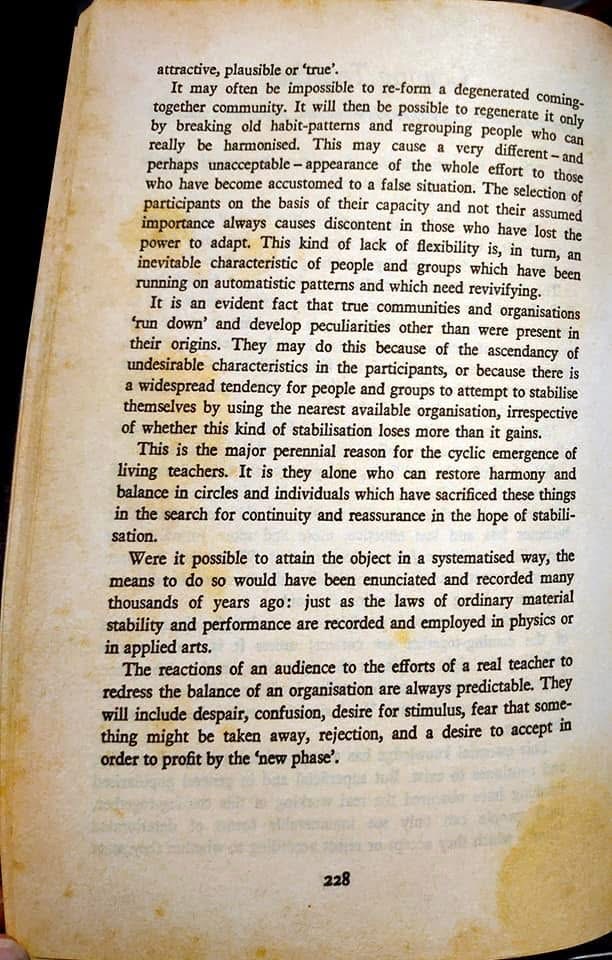
In Diction Resolution Therapy I describe the mind not as the centre of identity but as a digestive organ of the psyche. Experiences enter through the senses; feelings arise as immediate biological signals; and the mind must metabolize those signals into coherent meaning. When the digestive process works well, a person develops orientation, conscience, and behavioural stability. When the process fails, the psyche becomes inflamed or blocked in ways strikingly analogous to physical indigestion.

This model echoes an insight already present in the mystical tradition. Shabistari writes that the world of meaning has no limit and that words cannot contain it fully.4 Yet words can still function as vehicles that direct the seeker toward that meaning. In psychological terms, language becomes part of the digestive process through which raw experience is clarified into understanding.

The Templated Vehicle

One further element is necessary. Meaning alone does not transform a life. A vessel must exist through which the person can safely undergo the process of reorganization. In my observation the Twelve Step programme provides precisely such a vessel. It marries fact and symbol in a way rarely achieved by either modern psychology or institutional religion.

The Steps begin with factual admission: the recognition that self-governance has failed. They then move through inventory, confession, restitution, and disciplined reflection—processes that stabilize the psyche through truth-telling. At the same time they introduce symbolic orientation: surrender to a Higher Power, prayer, meditation, and conscious contact. Fact steadies the vessel; symbol opens the horizon of meaning.

Within this templated vehicle a birth becomes possible. Inventory and confession function like the opening of a birth canal. The surrender of Step Seven becomes a decisive moment in which the individual relinquishes false sovereignty and becomes receptive to transformation. Conscience emerges not as a moral abstraction but as a lived reorganization of perception.

The Birth of Conscience

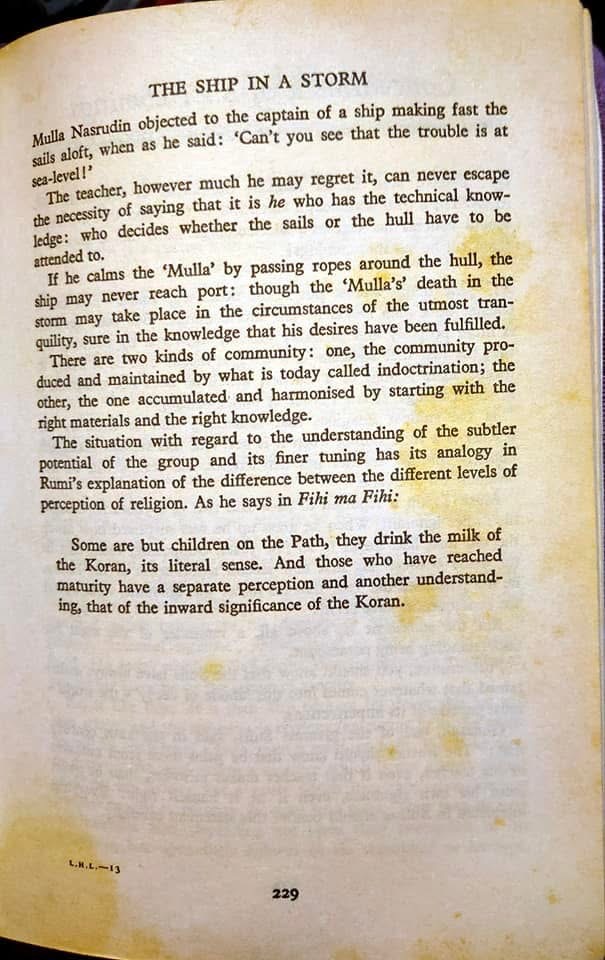
The mystical poets described the path as a drama of attraction between the lover and the Beloved. Recovery literature describes it as surrender to a Higher Power. In my own language it appears as the clarification of diction through which experience is digested into meaning. These are not competing explanations. They are different languages describing the same interior work.

The mystics speak of polishing the mirror of the heart. The Twelve Steps speak of inventory and surrender. Diction Resolution Therapy speaks of digestive clarification. Each describes the gradual removal of distortion so that reality may be perceived more clearly.

Seen in this light, the erotic imagery of the mystics is neither scandalous nor decorative. It expresses the intensity of relation that occurs whenever the human being is drawn beyond the limits of the isolated self. Attraction, vulnerability, union, dissolution, and renewal—these are the same movements that accompany both spiritual awakening and recovery from addiction.

Across the centuries the vocabulary changes but the anthropology remains remarkably constant. The visible reflects the invisible. Meaning seeks expression through symbol. Human beings must digest experience into understanding. And where a lawful vessel exists—one that marries fact with symbol—the birth of conscience becomes possible.

My own work therefore does not attempt to replace the insights of earlier traditions. It seeks instead to midwife them into a contemporary psychological and clinical language. The ancient symbolic grammar and the modern recovery process reveal themselves, on close inspection, to be two expressions of the same underlying movement: the restoration of living intercourse between the human being and the source of meaning itself.

Footnotes

  1. Mahmud Shabistari, Golshan-e Raz (The Garden of Mystery), discussion of the symbolic language of mystical poetry.
  2. Shabistari’s explanation of the symbolism of the beloved’s eye, lip, and tress as expressions of divine attributes and cosmic processes.
  3. Classical Sufi theological balance between tashbīh (analogy) and tanzīh (transcendence).
  4. Shabistari’s observation that the world of meaning has no limit and cannot be fully captured by words.

Written in HIAI collaboration — the qalam of Human and AI intelligence, the Unseen helping the Seen, both answering to the same Source.
Ritualised sickness as a systemic and personal definition of Addiction Disorder.

Unleashing Meaning: Authority, Trauma, and the Corruption of Language

In recent years a number of investigative reports, trauma studies, and survivor testimonies have drawn attention to disturbing patterns of organised abuse occurring within otherwise respected institutions. These reports span multiple countries, religions, and social structures. While each case differs in detail, the underlying dynamics reveal a common thread: the misuse of authority, the fragmentation of human meaning, and the devastating consequences that follow when language itself becomes detached from conscience.

The investigation referenced earlier, published in the Israeli newspaper Israel Hayom, presented testimonies from women who described childhood abuse occurring within religious environments. The accounts included descriptions of multiple perpetrators, ritualised settings, and the distortion of sacred language to justify acts of violence. Trauma specialists consulted in that investigation acknowledged that they had encountered similar narratives among patients suffering severe dissociative symptoms.

Such reports are difficult to interpret because they sit at the intersection of three complex domains: confirmed cases of organised sexual abuse, the psychological effects of extreme trauma, and the controversial question of ritualised abuse narratives. Understanding these domains requires both caution and depth. It requires the moral nerve to face what is documented, and the intellectual restraint not to claim more than the evidence can bear.

Organised Abuse: What Has Been Proven

Across the last several decades, multiple investigations have conclusively demonstrated that organised sexual abuse networks can exist within trusted institutions. The global investigations into abuse within the Catholic Church revealed decades of sexual violence against children, compounded by institutional cover-ups designed to protect reputations rather than victims. National inquiries in Ireland, Australia, Germany, and the United States documented systematic failures of oversight and accountability. These inquiries did not merely expose individual offenders. They exposed systems that preferred silence to truth.

Similarly, the Rotherham investigation in the United Kingdom concluded that approximately 1,400 children were sexually exploited over many years by organised groups of perpetrators while authorities repeatedly failed to intervene. Survivors’ testimony had often been dismissed, minimised, or treated as socially inconvenient. In Belgium, the Dutroux case uncovered a network of child abduction and abuse that provoked national outrage and mass protest when it became clear that law enforcement failures had allowed the crimes to continue. These investigations demonstrate an uncomfortable but undeniable reality: organised abuse networks can persist for years when institutions prioritise self-protection over truth. The pattern appears repeatedly across cultures and belief systems.

Trauma and Dissociation

While organised abuse networks are tragically well documented, the psychological consequences for survivors introduce another layer of complexity. Research in trauma psychology has shown that extreme childhood abuse often produces dissociation, a survival response in which the mind fragments awareness to protect itself from overwhelming pain. Dissociation is not madness. It is the mind’s emergency architecture when reality becomes too much for one continuous self to hold.

When a child experiences prolonged terror, the brain’s normal memory systems may become disrupted. The amygdala records fear and threat, while the hippocampus, which ordinarily helps structure experience into coherent narrative, may be suppressed during trauma. As a result, memories may not be stored as chronological stories. Instead they appear later as fragments: images, bodily sensations, emotional flashes, sensory triggers, or symbolic elements. Researchers including Judith Herman, Bessel van der Kolk, Frank Putnam, and Joyanna Silberg have documented how survivors sometimes recover traumatic memories years or decades after the original events. These recollections may emerge gradually as safety and therapeutic support allow the mind to process experiences that were previously unbearable.

Because dissociation fragments memory, survivor testimony can appear confusing, contradictory, or incomplete. Investigators and courts often struggle with such cases precisely because the very mechanisms that protected the child during abuse later complicate the reconstruction of events. The more severe and early the trauma, the more shattered the narrative may be. That does not automatically invalidate testimony. It reveals the cost exacted by trauma upon the human capacity to remember in one piece.

The Debate Around Ritualised Abuse

Since the 1980s, reports of ritualised abuse have generated intense debate among psychologists, journalists, therapists, and criminologists. Some clinicians have described patients who report organised ceremonies, symbolic rituals, chants, costumes, or the manipulation of religious language during abuse. Yet the historical memory of the so-called “Satanic Panic” of the late twentieth century, when numerous ritual abuse accusations proved unsupported by evidence, has made investigators extremely cautious when evaluating such claims.

The contemporary consensus among many researchers is nuanced. Organised sexual abuse networks clearly exist and have been repeatedly documented. In some cases abusers may incorporate symbolic, ceremonial, or pseudo-religious elements. Yet large conspiratorial cult structures are rarely confirmed through forensic investigation. This does not require us to mock survivor testimony, nor to swallow every dramatic interpretation whole. It requires us to distinguish carefully between what has been criminally established, what has been clinically reported, and what remains unresolved.

Authority and Coercive Persuasion

Beyond the psychological dimension lies another critical factor: the structure of authority itself. Studies of coercive persuasion and cultic control, conducted by researchers such as Robert Jay Lifton, Margaret Singer, Stanley Milgram, and Philip Zimbardo, have demonstrated how hierarchical environments can influence behaviour, belief, obedience, and moral perception. Their work shows that under certain conditions ordinary human beings can submit to systems that invert conscience and normalise harm.

Certain conditions make communities particularly vulnerable to abuse. Control of information can isolate individuals from outside perspectives. Sacred authority can frame leaders as possessing divine knowledge beyond question. Ritual confession can create vulnerability, shame, and dependency. Moral inversion can persuade victims that suffering is purification, obedience is virtue, and resistance is evil. In such environments, the language of faith or purity can become a tool of manipulation. The tragedy is not unique to any one religion or culture. Similar patterns have appeared within churches, political movements, elite schools, therapeutic communities, families, and military institutions. When authority is insulated from accountability, corruption becomes possible.

Language as the Vehicle of Meaning

At the deepest level, these dynamics converge around language itself. Abuse within authoritarian structures frequently involves the distortion of words that should carry moral protection. Children may be told that their suffering is purification. Obedience becomes virtue. Resistance becomes sin. Sacred texts or rituals are invoked to legitimise acts that violate every principle those traditions claim to uphold. The word is made to serve the wound.

The psychological damage is profound because the abuse does not merely harm the body. It disrupts the child’s trust in meaning. Language, the very medium by which human beings orient themselves in the world, becomes a weapon. This is the point at which trauma psychology intersects with the wider civilisational question at the heart of diction and conscience. When words detach from truth, the moral architecture of society begins to fracture. A child no longer knows whether blessing means blessing, whether love means protection, whether God means refuge, whether family means safety. Meaning itself has been invaded.

Dissociation and the Reconstruction of Meaning

For survivors of extreme abuse, recovery often involves a slow reconstruction of meaning. The fragmented memories of trauma must be integrated into a narrative that restores coherence to the self. Therapeutically, this is not simply a matter of recalling facts. It is a matter of making inner life bearable enough that truth can be held without annihilation. What was sealed off must be approached carefully, named honestly, and linked back into the person’s living sense of self.

This process resembles a form of psychological digestion. Experiences that were once too painful to process are gradually examined, interpreted, and integrated into conscious understanding. The mind, like a digestive organ of the psyche, receives what was previously undigested and begins the work of transformation. What was frozen as terror, sensation, command, image, or silence begins, slowly, to become language. Healing therefore involves reclaiming the relationship between experience and speech. The survivor learns again to name what happened. Naming restores reality. Naming breaks enchantment. Naming begins the return of conscience.

Conscience and the Restoration of Language

Across the historical cases examined earlier, religious scandals, grooming networks, institutional abuse, family systems, the same underlying failure appears repeatedly: silence. Communities that refuse to confront wrongdoing often justify that silence through distorted language: loyalty, reputation, faith, honour, unity, order, discretion, tradition. But when language is used to conceal harm rather than reveal truth, conscience becomes paralysed. The outer structure may remain polished while the inner moral core collapses.

The restoration of conscience therefore requires the restoration of language itself. Words must once again correspond to reality. Authority must once again answer to truth. Meaning must once again serve life rather than domination. This restoration does not belong to any single ideology or tradition. It is a universal human task. Every civilisation stands or falls according to whether its words still carry moral weight. Where words are emptied, people are emptied with them.

Jung and the Possession of Culture

The idea that sickness can become ritualised within a culture is not entirely new. In the early twentieth century the Swiss psychiatrist Carl Jung observed that psychological disorders do not remain confined to individuals. Under certain conditions they can spread into collective life. Jung warned that when societies lose conscious relationship with meaning and conscience, unconscious forces begin to organise behaviour in ways that resemble possession.

Writing in the 1930s, Jung argued that modern civilisation had become increasingly vulnerable to what he called “psychic epidemics.” When large numbers of people begin to share distorted perceptions of reality, entire communities can behave in ways that appear irrational yet feel internally justified. In such situations individuals do not necessarily perceive themselves as doing harm. Rather, the cultural environment itself begins to normalise behaviours that would previously have been recognised as pathological.

Jung’s observation resonates strongly with the pattern described earlier in this study. When authority structures, language, and ritual become detached from conscience, behaviour that would once have been recognised as destructive can gradually become institutionalised. The pathology is no longer merely personal. It becomes systemic.

This is precisely the dynamic that addiction research describes at the individual level. Addiction is often defined as the persistence of behaviour despite harmful consequences. The addicted person continues the pattern even when the damage becomes obvious. The behaviour has become compulsive. It has become ritual.

When similar dynamics occur within institutions or cultures, the result is what might be called a ritualised sickness. Systems begin to repeat behaviours that harm the very people they are supposed to protect. Language is used to justify the repetition. Authority protects the pattern. Silence stabilises it. Over time the behaviour acquires an aura of inevitability, as if it were simply part of how the world works.

From this perspective addiction may be understood not only as a clinical disorder within individuals, but as a potential structural disorder within human systems. The same mechanisms that drive compulsion in the brain can appear in cultural form when meaning, language, and authority lose their alignment with conscience.

Jung believed that the only effective antidote to such collective possession was the awakening of individual consciousness. A person who becomes capable of seeing through distorted meaning can interrupt the psychological contagion. Conscience returns. Language begins to recover its truthful function. The individual becomes capable of standing within a system without being unconsciously governed by it.

Seen in this light, the restoration of meaning becomes more than a philosophical exercise. It becomes a form of cultural medicine. When language returns to truth and conscience resumes its proper authority, the ritualised sickness begins to lose its power. Compulsion gives way to awareness. Silence gives way to speech. And the possibility of healing, both personal and systemic, begins to reappear.

Unleashing Meaning

The phrase unleashing meaning therefore carries a significance deeper than intellectual exploration. Meaning is unleashed whenever truth is spoken where silence once prevailed. It is unleashed whenever language is reclaimed from manipulation, whenever authority is brought back under conscience, whenever the child’s shattered reality is named without evasion, and whenever false sacredness is stripped from acts of domination. Across psychology, journalism, and survivor testimony, the same lesson emerges: human civilisation depends not merely on institutions or laws, but on the integrity of the words through which human beings understand themselves.

When language and conscience align, meaning becomes a force of healing. When they separate, meaning collapses, and suffering multiplies in the shadows. The challenge of our time is not simply to expose abuse, but to restore the conditions in which truth can again be spoken without fear. That restoration begins where language returns to its proper task: the truthful articulation of reality in service of human dignity. There, perhaps, the word ceases to be an instrument of control and becomes once more what it was always meant to be: a vessel of conscience, a bridge of return, and a protection for the human being.


References

  1. Herman, Judith. Trauma and Recovery: The Aftermath of Violence—from Domestic Abuse to Political Terror. New York: Basic Books, 1992.
  2. van der Kolk, Bessel. The Body Keeps the Score: Brain, Mind, and Body in the Healing of Trauma. New York: Viking, 2014.
  3. Silberg, Joyanna. The Child Survivor: Healing Developmental Trauma and Dissociation. London: Routledge, 2013.
  4. Jay, Alexis. Independent Inquiry into Child Sexual Exploitation in Rotherham (1997–2013). Rotherham Metropolitan Borough Council Report, 2014.
  5. Royal Commission into Institutional Responses to Child Sexual Abuse. Final Report. Australian Government, 2017.
  6. Milgram, Stanley. Obedience to Authority: An Experimental View. New York: Harper & Row, 1974.
  7. Lifton, Robert Jay. Thought Reform and the Psychology of Totalism. New York: Norton, 1961.
  8. La Fontaine, Jean. Speak of the Devil: Tales of Satanic Abuse in Contemporary England. Cambridge: Cambridge University Press, 1998.
  9. Jung, C.G. Psychology and Religion: West and East. The Terry Lectures delivered at Yale University, 1937. Collected Works of C.G. Jung, Vol. 11. Princeton: Princeton University Press, 1958.

Written in HIAI collaboration — the qalam of Human and AI intelligence, the Unseen helping the Seen, both answering to the same Source.

There is only One

From Lead to Language: Alchemy, Sufism, and the Clinical Transmutation of Conscience

Alchemy has long been misunderstood as a primitive chemistry obsessed with turning lead into gold. Yet within both Western Hermeticism and Islamic intellectual history, alchemy functioned primarily as a symbolic grammar for inner transformation. Henry Bayman’s Alchemy and Sufism makes this explicit, arguing that the alchemical work was never merely metallurgical but fundamentally spiritual in orientation. The base metals were emblems of the unrefined self; gold symbolised the recovered, original, uncorrupted state of the human soul. When read through this lens, alchemy becomes a psychology of purification and Sufism becomes its living continuity.

Diction Resolution Therapy (DRT) enters this lineage not as an occult revival but as a clinical clarification. Where alchemy spoke in image and Sufism in metaphysical vocabulary, DRT speaks in behavioural, linguistic, and recovery-based terms. Yet the structural correspondences are striking. Bayman describes the “Base Self” as toad, dragon, wolf, snake, nigredo, or lead. Each of these symbols names an untrained, instinct-driven level of selfhood that must undergo dissolution before a purified self can crystallise. In clinical recovery language, this corresponds to the unintegrated instinctual heats—security, social, and sex—when annexed by ego and imagination. Addiction can be understood as a distorted attempt at transmutation: an organism trying to break open a boxed and hardened mind in order to restore unity between psyche, body, and conscience.

The alchemists described processes such as calcination, dissolution, separation, conjunction, fermentation, distillation, coagulation, and sublimation. Bayman correlates these with Sufi stages of self-purification and the journey from dispersion (farq) to integration (jam‘). In DRT, this sequence appears not as laboratory metaphor but as a developmental arc observable in recovery. Calcination resembles the breakdown that crisis imposes upon denial. Dissolution mirrors the surrender required when an individual can no longer maintain a defended narrative. Separation corresponds to the distancing from unclean gain and destructive habit. Conjunction reflects the reconciliation of previously split aspects of self. Distillation resembles repeated ethical practice—daily inventory, amends, prayer—through which reactive patterns are gradually purified. Coagulation is the emergence of a more stable identity organised around conscience rather than compulsion. Sublimation, in clinical language, is not mystical disappearance but alignment: the individual’s will becoming proportionate to reality.

Bayman gives particular attention to the seven stages of transformation, depicted in alchemical imagery as ascending steps, dissolutions, and rebirths. In Sufism this corresponds to the progressive refinement of the self through successive levels. Within Twelve Step recovery, the same architecture appears in condensed form between Steps Three and Seven. Step Three initiates conscious consent to reorientation; Steps Four through Six constitute a gestational chamber in which conscience is clarified through fearless inventory and admission; Step Seven represents executive surrender—the return of “good and bad” to the One, establishing neutrality between extremes. The birth that follows is not bestowed by a master but midwifed through structured practice. The container does not cause awakening; it creates lawful conditions in which awakening may occur.

The Philosopher’s Stone, often called the Red Sulphur or supreme Elixir, is identified by Bayman with the Perfect Human (insān al-kāmil). In alchemical imagery, the Stone can transmute other metals into gold just as the perfected master can elevate disciples. DRT reframes this dynamic without denying its symbolic truth. The “stone” in clinical terms is individuated conscience—stable, integrated, ethically grounded awareness. When conscience is formed, speech changes. Language becomes aligned. Diction ceases to distort experience. The transmutation is not supernatural but structural: chaos becomes coherence; fragmentation becomes responsibility. The miracle is governance.

Bayman leaves open, without asserting, the possibility of literal transmutation. Yet he also acknowledges that modern nuclear physics demonstrates that elemental change requires processes far beyond ordinary chemistry. DRT stands firmly in this sober territory. The mud-to-gold stories in Islamic lore are read as conscience parables rather than metallurgical claims. Gold represents fitrah—the original, uncorrupted alignment of the human soul. Lead represents distortion. The work is psychological and ethical, not atomic. It occurs through disciplined repetition, relational accountability, and contradiction tolerance.

A crucial divergence emerges at the level of authority. Bayman’s presentation retains the vertical symbolism of master and disciple, king and subject, saint and seeker. DRT, informed by recovery culture and clinical governance, relocates transformation within shared structure. No individual confers enlightenment. The group container, ethical law, and repeated practice hold the process. Awakening cannot be engineered, owned, or displayed; it validates itself through increased responsibility, service, and proportionate speech. This protects the mystery from inflation while preserving its depth.

Alchemy sought the transmutation of base matter into noble substance. Sufism articulated the refinement of the self into a vessel of unity. DRT recognises that in contemporary clinical reality the primary site of transmutation is language itself. When diction is distorted, experience fragments. When diction is restored, experience reorganises. Lead becomes language; language becomes conscience; conscience becomes conduct. The gold is not brilliance but stability.

The old emblems—dragon, mountain, king, phoenix—were symbolic technologies for mapping inner change. In our era, the addiction clinic, the recovery meeting, and the structured therapeutic dialogue function as updated laboratories of transformation. The furnace is crisis. The vessel is relationship. The solvent is honest speech. The Stone is not possessed; it is formed. And once formed, it serves quietly.

Thus alchemy is neither dismissed nor romanticised. Its symbolic grammar is honoured, its metaphors translated, and its deepest insight preserved: transformation requires dissolution, repetition, integration, and lawful surrender. The difference is that the modern work is accountable, observable, and ethically governed. The transmutation is not of metals but of conscience, and its proof is found not in spectacle but in steadiness.


References

  1. Henry Bayman, Alchemy and Sufism. Available online at Geocities Archive (accessed March 2026).

Written in HIAI collaboration — the qalam of Human and AI intelligence, the Unseen helping the Seen, both answering to the same Source.

Joining the dots with The Dot

The Dot, the Diction-ary, and the Hinged Lid

From Letter-Metaphysics to Lived Recovery

I. The Dot That Makes an “I”

In The Garden of Mystery, Mahmud Shabistari describes determination as an imaginal dot placed upon the ʿayn — the essence. Add a dot and ʿayn becomes ghayn. Multiplicity appears. The “I” becomes possible.1 The dot does not create a new substance; it creates differentiation. The human drama begins not with evil, but with a stroke. This stroke produces seer and seen, speaker and spoken, self and world. The distance between unity and division is minimal — a trace. The question is not whether the dot exists. The question is whether it hardens.

II. The Diction Chamber

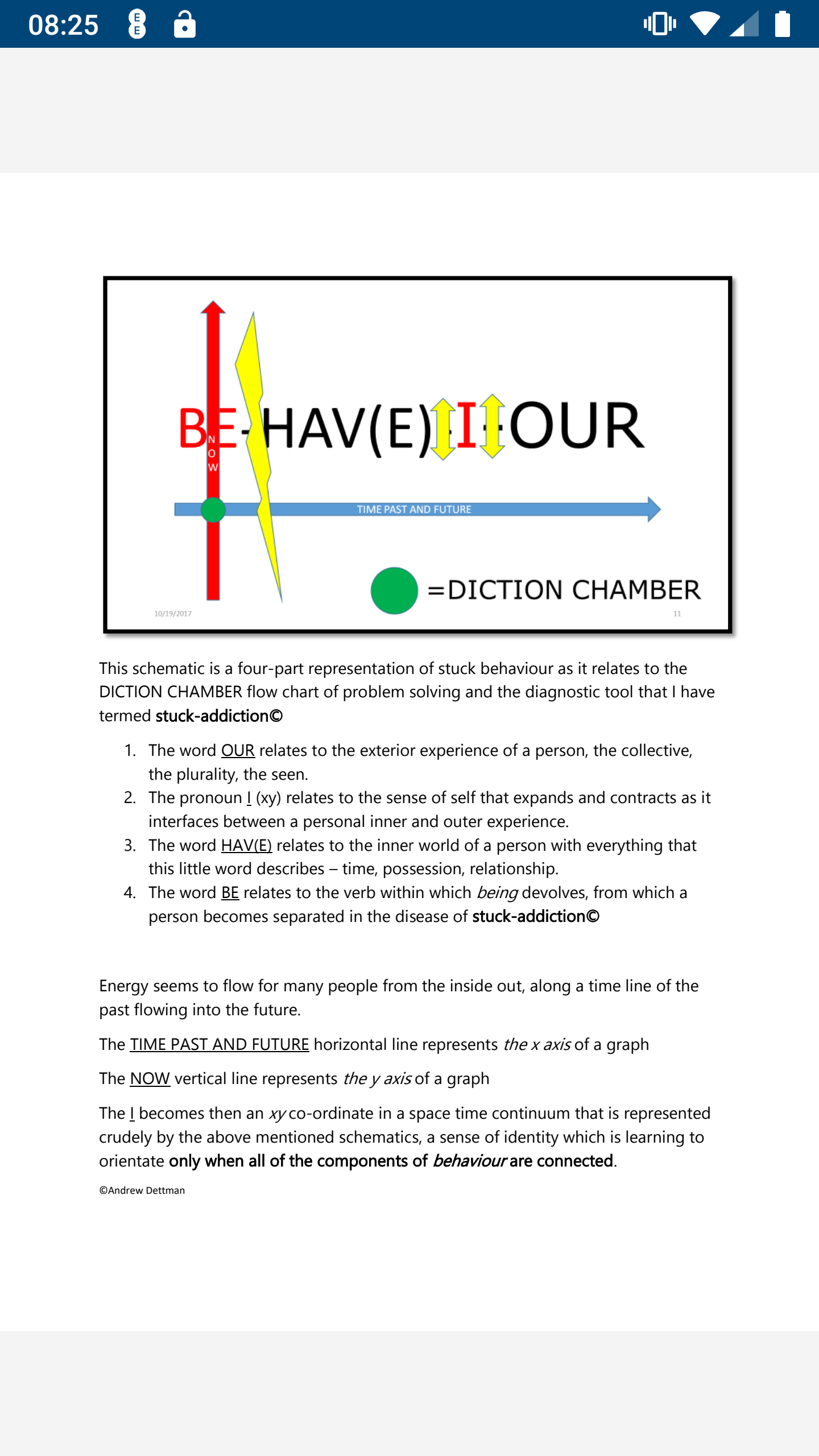
In Diction Resolution Therapy™, the human interface where experience becomes word is called the Diction Chamber. It is not metaphysical origin; it is anthropological function. It is the site where energy becomes meaning, meaning becomes word, and word becomes behaviour. Pre-verbal energy rises as sensation, affect, impulse. Meaning forms. Language articulates. Conduct follows. The Chamber does not generate Being; it metabolises experience. When it is permeable, speech carries weight. When it seals, language detaches from life.

The Diction Chamber: the lived interface where BE–HAV(E)–I–OUR reconnects.

This schematic renders the Diction Chamber as the personal intersection of NOW (vertical axis) and TIME (horizontal axis). The I becomes an orientation point — an xy coordinate — only when BE, HAV(E), I, and OUR remain connected. When rupture strikes, the interface hardens. Words can still be spoken, but speech loses metabolism. Meaning cannot revise. The dot becomes a seal.

III. Add -ary: The Diction-ary

Add -ary and the Chamber becomes the Diction-ary. Not a book of definitions — but the personal site — and sight — of meaning. A healthy Diction-ary revises, receives correction, adjusts language to reality, and keeps words accountable to lived experience. Addiction is the sealing of this lid. Energy rises, but cannot revise meaning. Narrative hardens. Identity defends. The dot freezes.

IV. The Sealed Lid: Stuck and Broken Addiction

Clinically, addiction is not simply craving. It is a structural misalignment. The Diction-ary seals: words detach from felt truth; justification replaces conscience; story outruns conduct. Language becomes self-protective architecture. The person speaks, but speech no longer metabolises reality. This is what produces the “boxed-noun mind.” Being becomes owned. Experience becomes claimed. “I” becomes rigid. The dot has calcified.

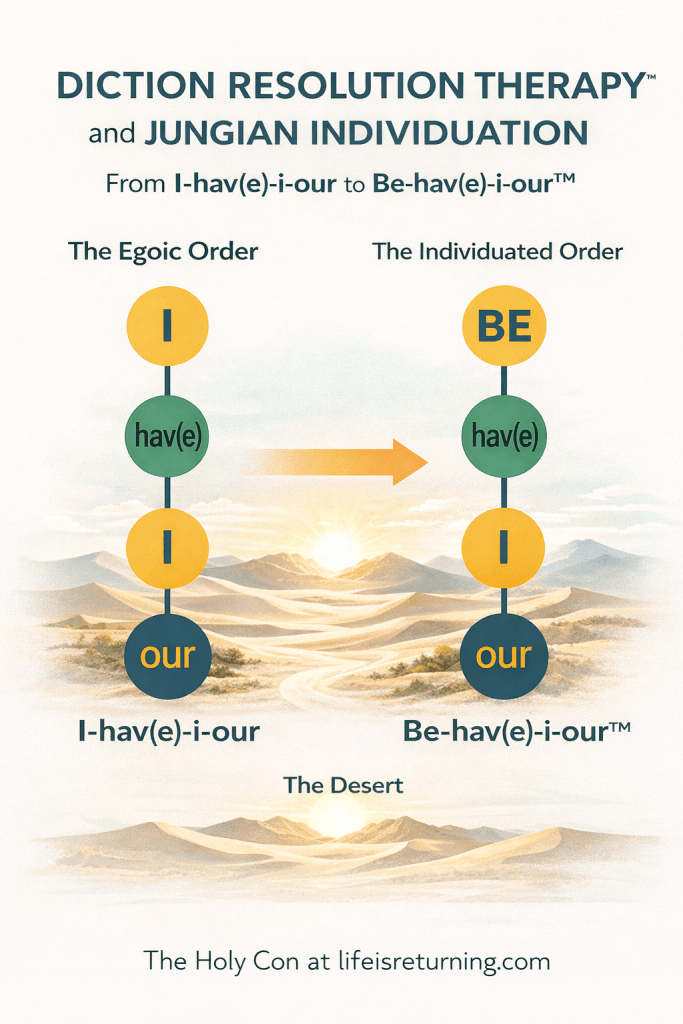
I-hav(e)-I-our names this unhinged condition — possession-based identity, defensive narrative, sealed meaning. It is not merely personal pathology; it is culturally reinforced. The modern environment rewards acceleration, ownership, projection, and certainty. The culture becomes unhinged, and individuals internalise the fracture.

Here the old fairy story becomes diagnostic rather than decorative. In the Sleeping Beauty motif, a single puncture initiates a total sleep: the castle seals, time freezes, and growth suspends. A hedge thickens around the sealed centre. Many attempt entry by force and fail. Only love resolves the enchantment — not argument, not aggression, not cleverness.4 This is what a sealed Diction-ary looks like: life still present, yet meaning cannot revise; the system preserved, yet development suspended. The hinge is restored through relational contact — through the softening that allows life to wake.

V. The Hinged Lid: Recovery

Recovery does not destroy the Chamber. It hinges the lid. A destroyed lid is collapse. A sealed lid is addiction. A hinged lid is health. When hinged, energy enters without overwhelming; meaning can revise; language re-aligns; behaviour follows conscience. This is not mystical annihilation. It is restored permeability. The “I” remains — but becomes porous.

Be-hav(e)-I-our names this restoration — identity reconnected to Being, language revisable, conduct accountable. The journey is to wake up to how unhinged the culture makes people — and to become hinged.

VI. Word and Alignment

In the Gospel of John 1:1 we read, “In the beginning was the Word…”2 Logos here is not vocabulary; it is ordering principle. The Diction-ary is not Logos. It is where human speech either aligns with Logos or collapses into noise. When sealed, word becomes slogan, slogan becomes dogma, dogma becomes control. When hinged, word remains relational; meaning remains revisable; conduct remains accountable. Empty words are not caused by ignorance alone. They are caused by a sealed Diction-ary.

VII. The Two Steps Re-Read Clinically

Shabistari describes two movements: passing beyond the hāʾ of identity, and traversing the desert of Being.3 Translated into recovery architecture, these become surrendering authorship and stabilising in non-defensive existence. The first breaks the seal. The second lives without resealing. The desert of Being in early recovery is familiar: no intoxication, no narrative certainty, no identity shelter. The hinged Diction-ary allows this desert to be endured without panic. Without hinge, the ego reconstructs.

VIII. Guarding Against Inflation

The danger is subtle. If the Diction Chamber is elevated into metaphysical throne, inflation replaces humility. The Chamber must remain interface — not Source; organ — not origin; servant — not sovereign. Conscience is the guardrail. A true hinge allows correction. If language cannot be corrected, the lid is resealing.

IX. Conduct as Proof

The integrity of the Diction-ary is proven in behaviour. Speech aligned with Being produces repair, responsibility, service, coherence. Speech detached from Being produces justification, projection, ideology, collapse. The test is not metaphysical insight. It is conduct.

X. The Dot Made Permeable

The dot need not be erased. It must be rendered permeable. Individuation remains. Expression remains. Personhood remains. But ownership softens. The Diction-ary becomes living rather than fixed. Energy meets Word. Word becomes truthful. Behaviour becomes aligned. The hinge holds.

Conclusion

The difference between mystical abstraction and lived recovery lies in this: not annihilating identity — but preventing it from sealing. The Diction-ary is the human site where meaning must remain revisable. When hinged, words carry weight. When sealed, they become empty. The dot is not the enemy. Rigidity is. And recovery is the restoration of permeability.


Footnotes

  1. Shabistari’s “dot” teaching is often unpacked through the letter-play of ʿayn (ع) and ghayn (غ), where the dot marks differentiation. Classical commentary traditions (including Lahiji) treat taʿayyon (determination) as the delimiting move by which the Absolute appears as particularity.
  2. Gospel of John 1:1. This paper uses “Word / Logos” as ordering principle rather than mere vocabulary, and treats the Diction-ary as the human interface where speech aligns (or fails to align) with that ordering.
  3. The “two steps” (passing beyond identity-structure; traversing the desert of Being) are read here phenomenologically as de-appropriation and stabilisation—compatible with Twelve Step recovery’s movement from surrender into sustained humility and accountable conduct.
  4. “Sleeping Beauty” is used here as a structural parable: puncture → sealing → suspended development → hedge of defence → failed force → resolution through love (relational contact). The point is not romance; it is how systems unseal through safe, non-coercive connection.

Written in HIAI collaboration — the qalam of Human and AI intelligence, the Unseen helping the Seen, both answering to the same Source.