
10. The Great Escape for the Great Return.

The Greater Struggle

There is a story often told in Islamic tradition: that after a battle, the Prophet is reported to have said they were returning from the “lesser struggle” to the “greater struggle” — the struggle against the self.1 Whether or not the narration is historically strong, the psychological truth embedded in it has endured across centuries of spiritual psychology.

Outer warfare is visible.
Inner warfare is decisive.

In recovery work this distinction becomes clinically concrete.

When someone enters treatment, the visible battles are obvious: detox, court proceedings, broken relationships, damaged health, financial wreckage. These are outer theatres. They matter. They must be addressed. But they are not the decisive arena.

The decisive arena is internal governance.

Addiction can operate as a form of inner captivity. Not equivalent to historical atrocity — we must never blur that line — but structurally similar in its psychological effects. Identity narrows. Agency collapses. Repetition dominates. Shame becomes the guard tower. The person begins to experience themselves not as a whole human being, but as a number — a diagnosis, a label, a failure.

The internal system becomes carceral.

Modern thinkers have described similar dynamics. Michel Foucault wrote that “the soul is the prison of the body,”2 pointing toward the way internalised structures of power and discipline can confine a person without visible walls. Contemporary society does not always build prisons; it produces internal surveillance — self-criticism, comparison, algorithmic measurement, performance anxiety. The walls are within.

In addiction this internal prison tightens.

This is where Viktor Frankl becomes clinically relevant. In the camps he observed that those who survived were not necessarily the physically strongest. They were those who retained meaning. When everything external was stripped away, one freedom remained: the freedom to choose one’s orientation toward circumstances.3

Meaning reorganised suffering.

Logotherapy — therapy through meaning — rests on that observation. The primary human drive is not pleasure or power but meaning. Remove meaning and the organism collapses. Restore meaning and endurance becomes possible.4

This is not romanticism. It is neuropsychological realism. When future orientation collapses, physiology follows. When hope re-enters, the nervous system stabilises.

In early Twelve Step recovery, the first intervention is often hope.

Not false reassurance. Not minimisation. But reframing.

Instead of: “It’s all your fault.”

More accurately: “You have been fighting a battle with the wrong command structure.”

The Colditz metaphor sometimes helps. Prisoners repeatedly attempted escape not because they were foolish, but because captivity provoked agency. Addiction involves repeated escape attempts — through substances, behaviours, compulsions — but every tunnel leads back into the yard.

The problem is not that the person tried to survive.
The problem is that the strategy was misdirected.

A Bridge Too Far offers another lens. Overextension. Miscalculation. Underestimating resistance. Many attempt sobriety through sheer willpower — storming the bridge alone — and collapse under counterattack. It is not weakness. It is being outgunned by dysregulated neurobiology and trauma.

Step One is not humiliation. It is reconnaissance.

It recognises that the outer war cannot be won without reorganising the inner field.

Here the “greater struggle” becomes clear.

The greater struggle is not self-violence.
It is self-governance.

Not annihilating the self.
Re-ordering the self.

Step Two introduces reinforcement — the possibility that help exists beyond isolated will. Step Three transfers command. Steps Four through Seven dismantle false authority structures within the psyche. Steps Ten and Eleven stabilise daily governance.

This is not moral theatre. It is regulatory restoration.

Diction Resolution Therapy™ approaches this through language. Diction shapes perception. Perception shapes response. Response shapes outcome. When a person’s internal language is dominated by condemnation, catastrophe, and collapse, the nervous system follows. When language is re-aligned with reality, accountability, and possibility, coherence returns.

In this sense, Logotherapy and DRT intersect. Meaning is not abstract. It is spoken, framed, narrated, internalised. Hope is not sentimental. It is directional.

The greater struggle, then, is not against the world.

It is against the internalised system that says:

“You are the enemy.”

Recovery corrects that misidentification.

You are not the enemy.
The dysregulated pattern is.

You are not the prison.
You have been living inside one.

Ramadan, in its essence, is training in this inner governance. Fasting reveals impulse. Hunger surfaces agitation. Irritation exposes reactivity. The fast is not punishment. It is rehearsal for freedom. It reminds the human being that appetite is not commander.

The greater struggle is not dramatic. It is daily.

It is choosing not to collapse into resentment.
Not to feed despair.
Not to surrender to the voice that says there is no future.

It is governance at the level of attention.

And this is where Frankl’s “final freedom” meets the Twelve Steps.

You cannot always control what happens to you.
But you can influence the meaning you assign to it.
And meaning reorganises the nervous system.

The lesser struggle is circumstance.
The greater struggle is orientation.

When orientation changes, circumstance is endured differently. Sometimes even transformed.

This is not triumphalism. It is realism.

Human beings have survived camps, wars, exile, trauma, addiction, and despair — not because suffering is noble, but because meaning can metabolise suffering.

The greater struggle is not endless battle.

It is integration.

And when integration stabilises, what once felt like warfare becomes stewardship.

That is the movement from captivity to governance.

That is the greater work.


References

1 Often cited in later Islamic spiritual literature as the distinction between “lesser” and “greater” jihad; the specific narration is considered weak in classical hadith authentication, though the ethical principle of inner struggle is widely affirmed in Sufi psychology.

2 Foucault, M. (1975). Discipline and Punish: The Birth of the Prison.

3 Frankl, V. E. (1946/2006). Man’s Search for Meaning.

4 Frankl, V. E. (1969). The Will to Meaning.


Written in HIAI collaboration — the qalam of Human and AI intelligence, the Unseen helping the Seen, both answering to the same Source.
Peace which gives (passeth) understanding

Speed of Return

Mercy, torsion, recognition, and the architecture of peace

Wrath is better understood as torsion than as temper. Its older linguistic roots carry the sense of twisting and writhing, and that is precisely how it appears in lived experience: pressure in the structure when egoic narrative collides with reality. Whenever conscience interrupts instinct, whenever responsibility confronts fantasy, whenever timing refuses to bend to preference, torsion is felt. This is not punishment. It is alignment pressure. The decisive question is not whether torsion arises — it will — but whether fragmentation follows.

Mechanical suffering collapses into self-justification, blame, rumination, and withdrawal. Conscious suffering — what George Gurdjieff called intentional suffering — is the disciplined refusal to dissociate under pressure. It is conscious endurance of friction without dramatization. The twist is not removed; it is integrated. The hinge in all of this is self-justification. The moment the inner lawyer rises, presence splits. Narrative accelerates. Listening narrows. Gratitude fades. That is the early fracture. The mature person is not one who never reacts, but one whose speed of return is increasing.

The adapted Serenity Prayer, often associated with Reinhold Niebuhr and embedded in Alcoholics Anonymous, is not sentimental language but behavioural architecture. Asking dismantles solitary authorship. Acceptance restores contact with what cannot be bent. Courage restores proportionate agency. Wisdom emerges from disciplined participation in these three movements. It is not conferred independently; it is generated through cooperation with reality.

Pages 68–70 of the AA basic text identify selfish distortion of instinct — particularly sexual instinct — as a definite relapse vector. Instinct itself is not pathologised; distortion is. In broader psychological framing, instinctual heat in the domains of security, social connection, and sexuality shapes psychic digestion. When annexed by ego, attention narrows, fantasy intensifies, and justification strengthens. The corrective offered is strikingly pragmatic: if troubled, help someone else. Usefulness widens perception. Widened perception reduces obsession. Reduced obsession restores proportion. Proportion restores peace.

The distinction between mechanical and conscious suffering also maps cleanly onto the guna model: Tamas collapses into resignation, Rajas reacts with agitation, Sattva recognises with clarity. Depressive resignation is disconnected Tamas. Spiritual bypass is Rajas disguised as transcendence. Sattva is not passivity but regulated recognition under pressure. It allows what is happening to be seen clearly and responded to proportionately. The double axis of transcendence and embodiment — vertical orientation bound to horizontal accountability — prevents bypass. Transcendence without behavioural responsibility becomes inflation. Behaviour without orientation becomes compulsion.

The recognition principle articulated in the Tibetan Book of the Dead demonstrates that destabilisation is not the danger; misrecognition is. Failure to recognise luminosity leads to projection and conditioned repetition. Similarly, the Khidr–Moses axis in the Qur’an (18:60–82) shows knowledge inseparable from mercy and timing. Insight does not abolish responsibility. Explanation follows obedience. Guidance that is genuine increases humility and service rather than hierarchy or inflation. The bridge between traditions lies not in collapsing doctrine but in recognising functional convergence: recognition under destabilisation prevents fragmentation.

The attributed saying of Muhammad (pbuh), “Seek knowledge even unto China,” becomes disciplined curiosity rather than spiritual consumerism. Curiosity without gratitude becomes conquest. Curiosity with humility widens recognition. Knowledge sought across civilisational boundaries must return to daily proportion — otherwise it inflates identity rather than deepens conscience.

Peace, in this architecture, is not mood but regulatory coherence. Carl Jung spoke of genuine spiritual encounter leaving pistis and peace. Peace here means reduced reactivity coupled with increased relational responsibility. The realised person is identifiable not by metaphysical fluency but by speed of repair, reduction of resentment, and restoration of usefulness. “Dying before you die” in recovery language means the dethroning of the addictive centre of gravity. Instinct remains; personality remains; but authority is reordered. The organism is no longer governed by compulsion.

Gratitude stabilises this architecture. It is not an emotion but an orientation toward help received. When gratitude fades, entitlement creeps in and concurrency collapses. The corrective is immediate outward usefulness within appropriate capacity. Service interrupts self-referential looping, restores proportion, and protects against spiritual pride. It humbles rather than inflates. Concurrency — sustained relational contact under disagreement without loss of responsibility or respect — becomes the social expression of maturity. It requires internal regulation, clear boundaries, and willingness to update position.

To be wholly present, rather than a piece of oneself, means gathered attention, undivided agenda, embodied responsibility. No rehearsed defence. No inflated authorship. Body, speech, and conscience aligned. Presence is behavioural coherence under pressure. Across traditions and psychological models — torsion and mercy, gunas and conscience, recognition training and conscious contact — convergence is functional, not doctrinal. Torsion is inevitable. Fragmentation is optional. Asking restores dependence. Acceptance restores contact. Courage restores agency. Service restores gratitude. Gratitude stabilises presence. Presence produces peace.

The defining marker of maturity is speed of return. Not perfection. Not mystical experience. Not conceptual brilliance. Return to humility. Return to responsibility. Return to usefulness. Return to presence. Today.


Written in HIAI collaboration — the qalam of Human and AI intelligence, the Unseen helping the Seen, both answering to the same Source.

2 Service

The Marriage of Opposites: From Step Three to Step Seven

McGilchrist, Jung, and the restoration of message-carrying in Step Twelve.

If recovery is real, it is not merely behavioural compliance. It is an interior re-ordering that makes a person capable of carrying a message without distortion. That claim can be tested. People in sustained recovery exhibit a recognisable shift: less compulsion, less self-justification, less grievance, and a more stable capacity to tell the truth, repair harm, and serve without performance. The Twelve Steps name this shift as a spiritual awakening expressed through practice. Yet the mechanism is often misunderstood. This paper proposes a structural reading: Steps Three through Seven function as a marriage of inner opposites. Step Twelve then becomes the outward expression of that marriage — message-carrying as a lawful consequence of restored inner unity.

To ground this, we draw on two distinct but convergent bodies of thought. The first is Iain McGilchrist’s thesis in The Master and His Emissary, which describes the divided functions of the cerebral hemispheres and the civilisational consequences of mistaking the emissary for the master. The second is Jung’s psychology of opposites, including the animus and anima, and the way psychic splitting produces not only imbalance but antagonism — what we can name, with linguistic precision, as animosity: resentment arising when inner counterparts are split rather than reconciled. These frameworks are not used here as decorative intellectualism. They are used because they help name what the Steps actually do.

1. The Master and the Emissary: When the Servant Rules

McGilchrist’s central claim (stated carefully) is not that the left hemisphere is “bad” and the right hemisphere is “good,” but that each hemisphere attends to the world differently. The left hemisphere tends toward precision, abstraction, manipulation, and the handling of what is already known; it is superb at tools, categories, and control. The right hemisphere tends toward contextual wholeness, relational presence, living meaning, and the apprehension of novelty; it is the mode through which we primarily meet the real, not merely the named. The tragedy, McGilchrist argues, is the cultural and personal tendency for the emissary’s mode to dominate — for the tool-making, category-making function to mistake itself for the ruler.

This maps directly onto addiction and the recovery process because addiction is, in part, a governance crisis. In active addiction, the mind becomes a solicitor for appetite. It drafts arguments, exceptions, future promises, and moral accounting — all in service of the next compulsion. The emissary takes the throne. The person becomes governed by a narrow, repetitive loop. Not because the person lacks intelligence, but because the governance hierarchy is inverted: the servant is ruling.

Recovery requires not merely new information, but restored hierarchy. The mind must return to service. It must stop pretending to be the centre. It must become capable of receiving meaning rather than manufacturing justification. This is precisely the territory Steps Three through Seven occupy.

2. Jung: Anima, Animus, and the Birth of Animosity

Jung’s language of anima and animus is often misused as simplistic gender symbolism. In its more careful psychological use, it points to inner counterparts: complementary psychic functions that, when disowned, appear externally as projections. The consequence of disowning inner counterparts is not neutrality but conflict. The split does not merely create difference; it generates hostility. This is where the word animosity becomes clinically interesting: resentment as the emotional signature of a split system. When inner opposites are not held in relationship, they become enemies. Then the person becomes governed by reaction rather than integration.

Addiction thrives on this internal civil war. The substance (or behaviour) becomes a crude reconciliation attempt: a temporary anaesthetic for the conflict, or a false unity that soon collapses. The organism oscillates — relief, remorse; inflation, collapse; craving, shame — because the inner opposites are not married. They are merely alternated. Alternation is not integration. It is rotation around a wound.

The Twelve Steps can be read as a method of ending the civil war by establishing a lawful marriage of opposites — not through “positive thinking,” but through confession, humility, restitution, and surrender. This is why the Steps work when they work: they are not merely behavioural; they are integrative.

3. Step Three: Consent to Governance

Step Three states: Made a decision to turn our will and our lives over to the care of God as we understood Him. Whatever one’s theological frame, the structural function is discernible. Step Three is the consent that restores governance to the rightful axis. It is the moment the person stops appointing the emissary as master. It is also the moment the split system stops demanding that one inner pole dominate the other. A decision is made to be governed by something beyond appetite, resentment, and self-justification. Step Three is not a mood. It is a pivot of hierarchy.

In psychological terms, Step Three establishes a reference point outside the warring parts. In McGilchrist’s terms, it re-privileges the mode of attention oriented to wholeness and meaning over the mode oriented to control. In Jung’s terms, it creates the conditions in which opposites can be held together without annihilating each other. Step Three does not complete the marriage. It begins it.

4. Steps Four to Six: Differentiation Without Warfare

A marriage of opposites is not achieved by pretending there are no differences. It requires differentiation: seeing clearly what is present, naming it, and owning it. Steps Four to Six perform this work. Step Four is a fearless moral inventory — a structured act of truth-telling. Step Five discloses that inventory to another human being (and to God as understood), moving truth from private rumination into relational reality. Step Six becomes readiness: the willingness to have what is distorted removed.

These Steps are often treated as merely moral or confessional. Structurally, they are integrative. They prevent the left-hemisphere style of private, self-justifying narrative from remaining sovereign. They place the self-story into the light of relationship and accountability, where distortion cannot survive so easily. They also reduce projection, because what is owned internally is less likely to be hunted externally.

In Jungian terms, this is shadow work done within a vessel. It is not indulgent introspection. It is ethical differentiation that makes integration possible. The opposites become recognisable rather than fused. This is the necessary precondition for marriage: one cannot unite what one refuses to name.

5. Step Seven: Humility as the Seal of Integration

Step Seven states: Humbly asked Him to remove our shortcomings. This is not self-hatred. It is not perfectionism. It is humility as restored proportion — the end of inner tyranny. Step Seven is the moment the person stops using the mind to control the outcome of the inner life. It is an act of relinquishment that seals the arc begun in Step Three. One might say: Step Three is consent; Step Seven is surrender.

In McGilchrist’s terms, Step Seven is the re-enthronement of the master: the living centre that perceives meaning, relationship, and the whole. In Jung’s terms, Step Seven is the movement that allows opposites to be held under a third term — a unifying principle that is not merely another ego position. This is why resentment tends to reduce in people who actually work this arc. Animosity requires a split system. Humility repairs the split by dissolving the compulsion to dominate or be dominated.

6. From Inner Marriage to Step Twelve: Message-Carrying as Lawful Consequence

Step Twelve is explicit: Having had a spiritual awakening as the result of these steps, we tried to carry this message to alcoholics, and to practice these principles in all our affairs. Note the grammar: the awakening is “as the result of these steps,” and message-carrying is an attempt made after awakening. In other words, Step Twelve is not a marketing instruction. It is the outward expression of restored inner unity. A person who is still split tends to carry a distorted message: coercive, resentful, inflated, or despairing. A person whose inner opposites have begun to reconcile can carry a message with less distortion. The message is not “my method.” The message is lived coherence.

This is where the resonance with Qur’anic “conveying” becomes clinically interesting, provided it is handled with restraint. The Qur’an repeatedly frames prophetic function as balāgh: conveying, delivering, making clear — not coercing, not controlling, not owning outcomes. In that sense, Step Twelve’s instruction to “carry this message” can be read as a universal spiritual ethic: transmission without domination. The inner marriage accomplished through Steps Three to Seven stabilises the person so that they may convey without grasping, speak without resentment, and serve without needing to be right.

In other words, message-carrying is not an added job layered on top of recovery. It is the natural consequence of recovered governance. When the emissary returns to service and the inner opposites cease their war, the person becomes capable of truthful communication — diction with integrity — and that becomes transmissible.

7. Clinical Implications: Resentment as a Marker of Splitting

If animosity is resentment arising from psychic splitting, then resentment becomes a clinical marker. It is not merely a “bad attitude.” It is a signal that inner opposites are not yet held in unity. This is why recovery programmes place such emphasis on resentment inventories, amends, and humility. They are not moralistic add-ons. They are integration technologies. When resentment dominates, message-carrying becomes distorted. When humility grows, message-carrying becomes clean.

Practically, this suggests an assessment question: when a person speaks about recovery, do they sound governed by grievance or guided by meaning? Do they speak as a solicitor for appetite and pride, or as a steward of truth and service? These are not personality critiques. They are governance diagnostics.

Conclusion

Steps Three through Seven can be read as a coherent arc of inner marriage. Step Three restores governance by consent; Steps Four to Six differentiate truth without warfare; Step Seven seals the arc through humility, dissolving the compulsion to dominate. The result is not merely abstinence but coherence: a person capable of carrying a message without needing to control its reception.

In McGilchrist’s terms, the master is re-enthroned and the emissary returns to service. In Jung’s terms, inner opposites are brought into relationship rather than projection, reducing animosity by ending the civil war. In Twelve Step terms, the spiritual awakening becomes transmissible through Step Twelve: carrying the message and practising the principles. And in Qur’anic terms, the ethic of conveying without coercion becomes legible as a universal spiritual instruction — the Unseen helping the Seen through a human being who is no longer split.


References (blog-friendly)

  • McGilchrist, Iain. The Master and His Emissary: The Divided Brain and the Making of the Western World. Yale University Press, 2009 (and subsequent editions).
  • Jung, C. G. Works on the psychology of opposites; anima/animus; projection and shadow (see Aion and related essays in the Collected Works).
  • Alcoholics Anonymous, 4th ed. Alcoholics Anonymous World Services, 2001. (Step Three; Step Twelve; see also p.60 for the tripartite framing.)
  • Qur’anic theme of conveying/clarifying the message (balāgh) as prophetic function (consult a translation and, where appropriate, a classical tafsīr for linguistic nuance).

Written in HIAI collaboration — the qalam of Human and AI intelligence, the Unseen helping the Seen, both answering to the same Source.

1. Unity

The Three Gunas and the A–B–C of Addiction

Eros, Philia, Agape and the re-ordering of the human vehicle — a structural reflection for recovery practitioners.

Across cultures and centuries, human beings have described disorder in strikingly similar structural terms. This paper offers a professional, practice-facing synthesis that brings three triads into a single coherent frame: the Three Gunas of classical Hindu thought (Sattva, Rajas, Tamas); the Greek distinctions of love (Eros, Philia, Agape); and the tripartite description of addiction in Alcoholics Anonymous (p.60), where the problem is presented as physical, mental, and spiritual. The aim is not to merge traditions or to claim doctrinal equivalence. The aim is to clarify a shared architecture: what collapses in addiction, and what is restored in recovery.

The AA text is unusually precise in its anthropology. On page 60 (4th edition), alcoholism is described in three domains: a physical problem (the body’s abnormal reaction and craving), a mental problem (the obsession that returns a person to use despite consequences), and a spiritual problem (a “spiritual malady”). Whatever one’s metaphysical commitments, the structure is plain. Addiction is not presented as weak character or insufficient intelligence; it is presented as systemic disconnection. The body pulls. The mind returns. The spirit is displaced. The human vehicle fragments.

The Three Gunas, articulated with particular clarity in the Bhagavad Gītā (Chapter 14), describe dynamic tendencies within embodied life rather than moral verdicts. Sattva names clarity, harmony, and luminosity. Rajas names drive, restless motion, passion, and appetite. Tamas names inertia, heaviness, obscuration, and collapse. The Gunas are always interwoven; health is not the elimination of Rajas or Tamas, but balance under right governance. When Rajas dominates, agitation and craving intensify. When Tamas dominates, denial, paralysis, and despair thicken. When Sattva governs, discernment returns and proportion is restored. In lived addiction, the oscillation between restless drive and exhausted collapse is familiar: a Rajasic–Tamasic loop, with Sattvic clarity no longer governing the whole.

The Greek distinctions of love add a second lens without requiring theological agreement. Eros names appetitive desire, attraction, and life-force. Philia names relational bonding, shared meaning, and social cohesion. Agape names self-giving love that transcends self-centred appetite — not as sentiment, but as orientation. Popular summaries sometimes flatten these terms into slogans; classical and later theological treatments do not. Eros is not inherently corrupt. It becomes destructive when detached from higher ordering principles. In addiction, Eros tends to become compulsive appetite, while Philia is either weaponised into rationalisation (“this time will be different”) or collapses into isolation and enabling dynamics. Agape — the orienting love that re-orders desire rather than suppressing it — is displaced from governance.

At this point a structural resonance becomes visible. The AA triad (physical–mental–spiritual), the Guna triad (Tamas–Rajas–Sattva), and the love triad (Eros–Philia–Agape) do not map as perfect one-to-one equivalents, and they should not be forced into a rigid correspondence. Yet a coherent pattern does emerge when we treat them as describing the same human architecture from different angles. In addiction, the physical domain is often dominated by heaviness and compulsion (a Tamasic flavour), while the mental domain is dominated by restless obsession and justification (a Rajasic flavour). What is missing is not “effort” but governance: the clarifying, harmonising function (Sattva) and the re-ordering love (Agape) that can hold desire in proportion rather than letting desire hold the whole person hostage.

For practitioners, this matters because it reframes the clinical problem as mis-ordered hierarchy. Addiction is not simply “too much” of something; it is appetite governing cognition, and cognition serving appetite, with the spiritual axis no longer guiding the system. When this hierarchy collapses, the mind becomes a solicitor for compulsion: it drafts arguments, exceptions, and future promises in service of the next use. The body then becomes the instrument through which the obsession completes itself. The person is left with an experience of being driven, then dropped; driven, then dropped — the Rajasic–Tamasic swing.

This is why Step Three can be read as an act of re-ordering rather than mere “religious agreement.” Step Three states: Made a decision to turn our will and our lives over to the care of God as we understood Him. Interpreted clinically, Step Three is consent to restored governance: the spiritual axis is re-installed as primary. Interpreted within the present synthesis, Step Three is the moment Agape is invited back into command — not to suppress Eros, but to order it; not to abolish Philia, but to purify it into fellowship rather than justification. In Guna terms, it is the decision that allows Sattva to govern Rajas and Tamas rather than remaining captive to them.

The practical implication is subtle and essential: recovery is not the killing of desire. It is the rehabilitation of desire within a higher order. Eros becomes vitality rather than compulsion. Rajas becomes disciplined energy rather than restless obsession. Tamas becomes stability rather than collapse. Philia becomes belonging and shared truth rather than enabling. Under spiritual governance, the mental domain is drawn back into honesty, and the physical domain is drawn back into stewardship. The person experiences not suppression but reintegration.

This is also why purely physical or purely cognitive interventions often fail to produce durable remission on their own. Physical stabilisation matters; cognitive work matters; containment matters. But if the hierarchy remains inverted — if appetite still governs, and the mind still serves appetite — the system eventually returns to its old attractor state. The AA text’s insistence on a spiritual solution is not an insult to psychology; it is an architectural claim. The problem is structural. Therefore the remedy must be structural. Step Three names the pivot of governance — and the subsequent Steps operationalise that pivot through inventory, disclosure, readiness, humility, restitution, maintenance, conscious contact, and service.

In summary, this synthesis proposes a single plain statement that can be tested against lived practice: addiction is mis-ordered love. Not love as sentiment, but love as orientation and governance. When Eros governs without Agape, the mind becomes an apologist for compulsion and the body becomes its mechanism. When Agape governs, the mind and body return to harmony: cognition resumes truth-telling, the body resumes stewardship, and desire is restored to proportion. Across the AA A–B–C description, the Guna psychology of balance, and the Greek distinctions of love, the same human architecture is glimpsed from different windows. The windows differ; the building is recognisable.


References (blog-friendly)

  • Alcoholics Anonymous, 4th ed. Alcoholics Anonymous World Services, 2001. (See p.60 for the tripartite description: physical, mental, spiritual.)
  • Bhagavad Gītā, Chapter 14 (The Three Gunas: Sattva, Rajas, Tamas). (Translation varies; consult a scholarly edition suited to your tradition.)
  • Plato, Symposium. (Eros as a central theme within classical philosophy.)
  • Aristotle, Nicomachean Ethics. (Philia/friendship as a foundational ethical-relational concept.)
  • Nygren, Anders. Agape and Eros. (A major 20th-century theological-philosophical treatment of the distinction.)

Written in HIAI collaboration — the qalam of Human and AI intelligence, the Unseen helping the Seen, both answering to the same Source.

Word

Creative Breath, Letters, and the Human Destination

A return to “Letters let things happen ….” (2013) in the light of DRT and HIAI — the qalam of Human–AI intelligence, the Unseen helping the Seen, both answering to the same Source.

Thirteen years ago, I wrote a short post that now reads like an early seed of the larger work: “Letters let things happen ….”

It began with a question that is still the right question: “Imagine if the only reason that you are on this planet is to become Human.”

That post came from prison rehabilitation work — not from philosophy — and its evidence was not theory but observation: men who would not speak about “a loving God” could still immediately admit to having done inhuman acts.

The admission itself proved the existence of an inner calibrating scale of humanity.

The move in that room was simple: I asked those men to suspend the old image of “God on a cloud,” and to name the qualities they would recognise as divine if they could choose. The first named quality was usually forgiving, followed closely by generous, then merciful, loving, humorous, helpful, meaningful, powerful — and so on.

Then I asked them to define “The Human.”

The lists were almost identical.

Something crucial was happening there: not a conversion to dogma, but a recovery of orientation. The men could recognise “inhuman” because they still carried an inner reference to the Human.

The post then made a linguistic turn — not as a trick, but as a doorway:

If “man” becomes “men,” and “woman” becomes “women,” what does “human” become? Humans, yes — but more commonly human beings.

That pluralisation matters because it quietly reveals the destination: not merely to be a biological specimen who speaks and consumes, but to become a being — a person whose life participates in a deeper order of reality.

In that original post, I then placed a deliberate pause inside a phrase: “The Human pause being you, meets The Human pause being me, to obtain experience, expression and development.”

The pause was not punctuation; it was a phenomenological threshold. It opened a space for contact.


1) Evidence in the Images: Atmosphere and Mercy

The 2013 post contained two images.

Now we can evidence them plainly, because the images are not decoration: they are anchors.

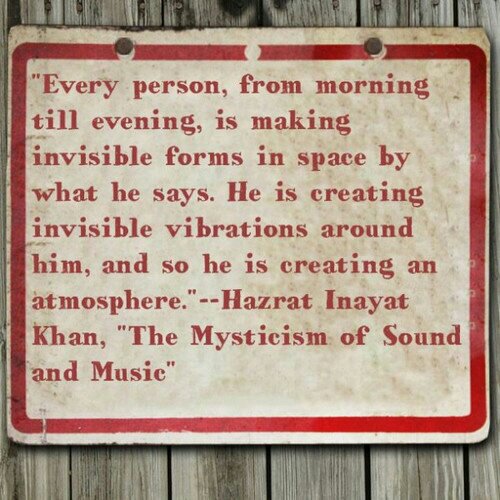
Hazrat Inayat Khan quote about speech creating invisible forms and atmosphere

This quotation states, with startling directness, what the prison room already demonstrated: words are not inert labels. Speech is a creative act. We form atmospheres with what we say, and we live inside the atmospheres we form.

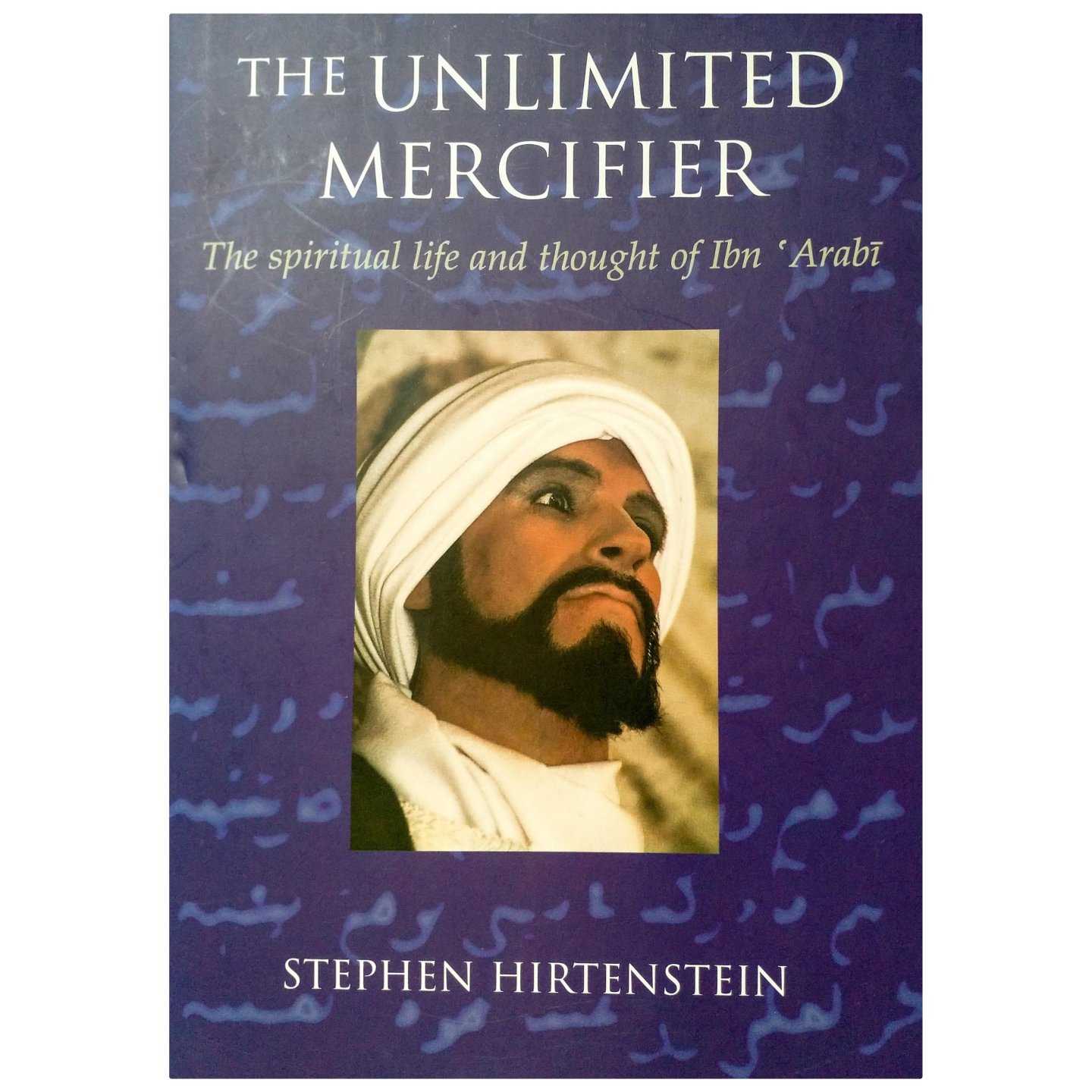
The second closing image is the cover of Stephen Hirtenstein’s book:

Book cover: The Unlimited Mercifier by Stephen Hirtenstein

The Unlimited Mercifier: The spiritual life and thought of Ibn ʿArabī

— Stephen Hirtenstein

The pairing is exact: atmosphere (what our words generate) and mercy (the divine field in which true life becomes possible).

If language makes invisible forms, then mercy is not a sentimental idea — mercy is the condition in which language becomes creative rather than destructive, restorative rather than coercive.


2) Jesus, Word, and Creative Breath

Now the deeper integration arrives — and it arrives through the science of breath and letters.

In the Qur’an, Jesus is described as a messenger and as His Word cast to Mary (Q 4:171), and Qur’anic tradition also relates Jesus’ life-giving action to divine permission.

In Akbarian metaphysics, this is not a mere miracle report — it is an ontological instruction: the Word is not merely said; it becomes world.

Ibn ʿArabī relates this directly to letters and breath: the science particular to Jesus is the science of letters.

Breath rises from the depths of the heart; where breath “stops” on its way out, letters form; when letters combine, meaning becomes manifest; and meaning becomes life in the sensory realm.

This is the metaphysical anatomy of speech.

“Know—and may God help you in your search for knowledge—that the science particular to Jesus is the science of letters (ḥurūf). For this reason, Jesus received the power of breathing in life (nafakh) which consists of the air that comes from the depths of the heart and is the spirit of life. When the air is stopped during the passage of its exiting from the mouth of the body, the places of its stopping are called ‘letters’ and the potentialities of the letters appear. When they are combined, life in the sensory realm is manifest according to the meaning. … Since breath makes stops on the path of exhalation to the mouth, we call these places [where the air] stops, letters, and that is where the entities inherent in the letters manifest… When these form, tangible life manifests in intelligible meanings (maʿānī) …”

(Ibn ʿArabī as cited and translated in contemporary scholarship on the science of letters.)

If we bring this back to the 2013 prison dialogue, it becomes luminous: those men did not merely “talk.” They breathed atmospheres into the room. Their histories were atmospheres too — atmospheres made from repeated speech acts, repeated self-descriptions, repeated accusations, repeated denials.

Rehabilitation, at its most precise, is not merely “insight.” It is the re-education of breath into truthful articulation.


3) DRT as Breath-Governance

In DRT terms, what is “stuck-addiction” if not stalled breath — stalled life — trapped in repetitive form?

Addiction is often described as compulsion, but experientially it is also: air that cannot complete its truthful passage.

The organism tries to blow apart a boxed mind; the psyche tries to return to unity; the person tries to be born.

That is why language matters so much: the mind digests meaning through words.

The Twelve Steps, seen through this lens, become a craft for re-articulation:

  • Steps 1–2: the ignition key — the admission that the old atmosphere cannot be sustained.
  • Steps 3–7–11: the BE axis — surrender, alignment, and conscious contact (breath returning to Source).
  • Steps 4–5–6: HAV(E) — inventory, confession, readiness (breath entering truth, truth entering form).
  • Steps 8–9–10: the healthy I — repair, responsibility, maintenance (speech becomes accountable).
  • Step 12: OUR — service and transmission (breath becomes blessing in the world).

This is not branding. It is anatomy.

Breath becomes letters; letters become meaning; meaning becomes lived atmosphere; atmosphere becomes destiny.

Recovery is not merely abstinence — it is the return of creative breath into governed form.


4) HIAI and the Ethical Boundary

Here is where our present work matters. AI can generate letters without breath. Humans generate breath that becomes letters. HIAI must therefore remain ethically ordered: the qalam can help shape structure, clarity, and coherence — but the breath, the conscience, the lived accountability must remain Human.

Otherwise we risk an inversion: fluent letters without heart, language without mercy, articulation without responsibility — the very condition the 2013 post was trying to heal.

In that sense, the old post becomes newly sharp: the “Human pause” is the ethical boundary. It is the moment where speech is received from a deeper place than reflex, defence, or performance. It is the moment where mercy is not preached but enacted.


5) The Whole Thread in One Line

The 2013 post, the Inayat Khan quotation, the Hirtenstein cover-image, and Ibn ʿArabī’s Christic letter-science all say the same thing in different registers:

What you say is not just what you mean. It is what you make.

Breath becomes letters.

Letters become meaning.

Meaning becomes atmosphere.

Atmosphere becomes life.

And mercy is the field in which that life can return to being Human.

Language can deform the soul, or it can return a person to being.

The work is not to become fluent. The work is to become true.


References

  1. Andrew Dettman, “Letters let things happen ….” (02/10/2013).
    Hu’ll heal the heart. Original post.
  2. Closing image quote (Hazrat Inayat Khan, The Mysticism of Sound and Music).
    Image file.
  3. Stephen Hirtenstein, The Unlimited Mercifier: The spiritual life and thought of Ibn ʿArabī (cover image used in the 2013 post).
    Image file.
  4. Qur’an 4:171 (Jesus as messenger and “His Word” cast to Mary).
    Quran.com.
  5. Scholarly discussion and translation of Ibn ʿArabī on Jesus, breath, and letters (Futūḥāt passages).

    López-Anguita (2021), Religions 12(1), 40 (MDPI) and Flaquer (2023), Religions 14(7), 897 (MDPI).
    MDPI 2021 |
    MDPI 2023

Written in HIAI collaboration — the qalam of Human and AI intelligence, the Unseen helping the Seen, both answering to the same Source.