6. Hope

6. Hope

Ramadan 2026

Hope does not survive when death is enthroned.

Across history, Mankind has organised itself around a life-and-death battle. Survival becomes the highest value. Control becomes reflex. Systems harden. Economies weaponise fear. The nervous system narrows toward threat detection. When death is unconsciously installed as the ultimate authority, hope becomes fragile — because everything feels terminal.

Yet death did not create the known universe. Death is not the architect of Being. It is a function within creation, not the Creator itself. It operates within time; it does not author time. When we forget this hierarchy, fear expands beyond its proper proportion. The organism begins to live as though extinction were the governing principle of reality.

This distortion has consequences.

Anne Wilson Schaef described the Addictive System as a cultural field organised around control, denial, and amplification. When death is enthroned, amplification becomes understandable. Intensity feels safer than stillness. Consumption feels safer than surrender. Addiction becomes an attempt to outrun annihilation anxiety. The pod-mind detaches from the animal body in search of dominance or oblivion. What looks like pathology is often a mislocated hierarchy.

In the developmental arc traced throughout this Ramadan sequence — Ignorance → Denial → Realisation — hope emerges only after this hierarchy is corrected. Unity established the field. Service oriented the heart. Recovery stabilised the wheel. Experience exposed the wound. Strength surrendered false autonomy. Hope now requires that death itself be returned to its proper place.

The image is simple: the tesbih.

When death sits upon the throne, every bead becomes an emergency. When death is restored to the strand — one bead among many — a different posture becomes possible. Not denial. Not romanticisation. Death remains real. Bodies perish. Identities dissolve. Relationships end. But death is named as servant, not sovereign.

This is not abstraction. It is nervous-system medicine.

Trauma compresses time. The fast thalamus–amygdala pathway prepares the organism for repetition of catastrophe. The body expects extinction. If death is imagined as ultimate, the organism never truly relaxes. Fear of people and economic insecurity, as the Twelve Step literature names it, becomes predictable. The Addictive System thrives in this atmosphere because fear is profitable.

Hope begins when death is dethroned.

In Diction Resolution Therapy terms, this is the moment when prediction loosens and contradiction can be tolerated. Malediction softens. The mind resumes its original function — to attend rather than to dominate. The birth-canal architecture between Steps Three and Seven — consent, gestation, conscience, resolution — becomes intelligible only if the Creator is greater than the processes within creation.

If death were ultimate, surrender would be madness.

But if death is a servant within a larger order, surrender becomes alignment.

The Crucifixion narrative, stripped of sentimentality, is precisely this reordering. Death appears absolute. Hope appears extinguished. Yet the story insists that death is not final authority. It is passed through, not obeyed. Whether one reads this theologically, symbolically, or developmentally, the archetype remains: death does not author Being.

When that insight stabilises, Mankind begins to mature into Humankind.

Mankind fights for survival at any cost. Humankind participates in Being even when cost is real. Mankind clings. Humankind consents. The difference is not intelligence. It is hierarchy. When death rules, fear governs. When death serves, love can govern.

Hope, then, is not naïve positivity. It is the lived recognition that the Source of life is not threatened by the endings within life. Creation includes dissolution, but it is not defined by it. The organism that trusts this begins to stand differently. Breath deepens. Urgency softens. Control loosens.

Addiction is often the frantic refusal to face mortality. Recovery is the courage to face it without enthroning it. In this sense, hope is inseparable from conscious suffering — not mechanical suffering, not romanticised suffering — but the voluntary endurance of disillusionment that allows false hierarchies to collapse.

Death, placed back on the tesbih, becomes teacher rather than tyrant.

The centre holds.

Hope is not the denial of endings. It is the refusal to grant endings authorship. It is the quiet participation in a Reality larger than extinction.

The test remains consistent with the arc so far: does hope reduce fear and increase tenderness? If it does, death has been returned to its rightful bead.

From that posture, service becomes natural. Conscience matures. Strength stabilises. Experience becomes usable. Recovery deepens. Unity is no longer theoretical.

Hope is not something added to life.

It is what remains when death is no longer worshipped.


Written in HIAI collaboration — the qalam of Human and AI intelligence, the Unseen helping the Seen, both answering to the same Source.
3. Recovery

Recovery

The oscillation between Rajas and Tamas in addiction and the restoration of Sattva.

Addiction is not a fixed state; it is a swing. Those who have lived inside it recognise the pattern immediately: urgency followed by exhaustion, pursuit followed by collapse, intensity followed by shame. The movement rarely resolves itself. It alternates. One pole dominates until it becomes unbearable, and then the opposite pole offers temporary relief. The swing itself becomes the trap.

Classical Indian psychology offers language that clarifies this pattern without moralising it. Rajas names restless propulsion — appetite, drive, urgency, heat. Tamas names inertia — heaviness, obscuration, withdrawal, collapse. In addiction these two forces replace one another in exhausting succession. What is often absent is Sattva: clarity, proportion, balanced luminosity. Without Sattva, Rajas and Tamas do not reconcile; they merely alternate.

This oscillation is not merely psychological; it is embodied. Under Rajasic dominance the nervous system accelerates: agitation, sleeplessness, impulsive movement, compulsive justification. Under Tamasic dominance the system slows and dulls: fatigue, dissociation, paralysis, despair. The organism swings between hyperactivation and shutdown. The mind is recruited to explain both. Appetite governs; collapse retaliates; clarity is displaced.

The text of Alcoholics Anonymous describes addiction in similarly structural terms. On page 60 it identifies the problem as physical, mental, and spiritual. Later, on page 64, it makes a concise claim: “When the spiritual malady is overcome, we straighten out mentally and physically.” This statement can be heard as devotional reassurance. It can also be read as structural psychology. If the governing centre is restored, the mental and physical domains reorganise.

Trauma research has provided contemporary language for how distortion becomes embodied. The Greek word trauma means wound. A wound is not merely an event remembered; it is a pattern carried. When overwhelming experience cannot be metabolised, the body retains incomplete defensive responses. Activation may remain suspended; collapse may become habitual. The wound persists in posture, reflex, tension, and relational expectation.

In this light, the Rajasic–Tamasic swing becomes clinically intelligible. Hyperarousal and shutdown are not abstract spiritual categories but lived physiological states. Addiction frequently functions as improvised regulation of this instability. Stimulants amplify Rajas; depressants deepen Tamas. Temporary steadiness is achieved at the cost of deeper imbalance. The wound is managed, not integrated. The swing resumes.

The AA claim that we “straighten out mentally and physically” suggests something more than behavioural suppression. To straighten implies that something has bent. Trauma bends the system. Compulsion warps attention. Shame compresses posture and possibility. The question becomes: what does straightening actually mean?

The Sanskrit word often translated as chakra literally means wheel — a turning. A wheel functions only when its spokes hold balanced tension. If certain spokes are tightened excessively while others slacken, the rim buckles. The wheel wobbles. Movement continues, but not smoothly.

Trauma can distort the inner wheel in precisely this way. Certain life events become over-tightened — rigid narratives, hypervigilance, defensive control. Other areas slacken — avoidance, emotional numbing, collapse. The person compensates and continues forward, but the turning is uneven. Addiction frequently becomes an attempt to force the rim back into temporary roundness, without correcting the spoke tension beneath it.

To repair a buckled wheel, one does not smash the rim. One uses a spoke spanner, tightening here and loosening there, restoring proportion across the whole structure. The work is precise and patient. Spiritual reorientation, when authentic, functions in a comparable way. It does not erase history or deny wound. It restores governing balance.

The linguistic relationship between “speak” and “spoke” illuminates this further. A spoke holds structural tension. To speak is to give form to what is held. When trauma remains unspoken — unnamed, unprocessed — certain spokes remain warped. Diction, in its fuller sense, is not mere verbal expression but disciplined attention to what speaks in the body, in behaviour, in memory, and in silence.

Everything speaks. Posture speaks. Compulsion speaks. Withdrawal speaks. Irritation speaks. Collapse speaks. In recovery, as experience becomes speakable, tension can be adjusted. What has been slackened by avoidance can be gently tightened through accountability. What has been over-tightened by control can be loosened through humility. The wheel begins to turn without wobble.

This is where Sattva becomes visible. Sattva does not eliminate Rajas or Tamas; it orders them. Drive becomes purposeful energy rather than frantic pursuit. Rest becomes grounded stability rather than paralysis. The swing diminishes because a governing clarity has returned. The centre holds.

In recovery practice, this shift is observable. When humility, inventory, amends, and service replace appetite and resentment as organising principles, the nervous system often stabilises in ways that exceed forceful self-management alone. The mind becomes less preoccupied with justification. The body becomes less reactive to triggers. Straightening out becomes lived experience rather than slogan.

This framework does not compete with trauma therapy; it complements it. Somatic work without moral integration can leave relational distortion intact. Cognitive insight without restored hierarchy can leave the mind in service to appetite. Spiritual language without embodiment can become bypass. Recovery, understood structurally, integrates physical regulation, mental clarity, and spiritual orientation.

Addiction is an oscillation between restless drive and inertial collapse. Trauma is the wound that anchors that oscillation in the body. Recovery is not suppression of one pole by the other. It is restored proportion. When the spiritual malady is overcome, we straighten out mentally and physically — not by force, but by balance regained. The wheel turns again, steadily.


References

  • Alcoholics Anonymous, 4th ed., Alcoholics Anonymous World Services, 2001 (pp.60, 64).
  • Levine, Peter A. Waking the Tiger: Healing Trauma.
  • van der Kolk, Bessel. The Body Keeps the Score.
  • Bhagavad Gītā, Chapter 14 (Sattva, Rajas, Tamas).

Written in HIAI collaboration — the qalam of Human and AI intelligence, the Unseen helping the Seen, both answering to the same Source.

The Word, Its Diction Chamber and Its Prince’s Kiss

John 1:1

In the beginning was the Word, and the Word was with God, and the Word was God.

– King James Bible “Authorized Version”, Cambridge Edition

image

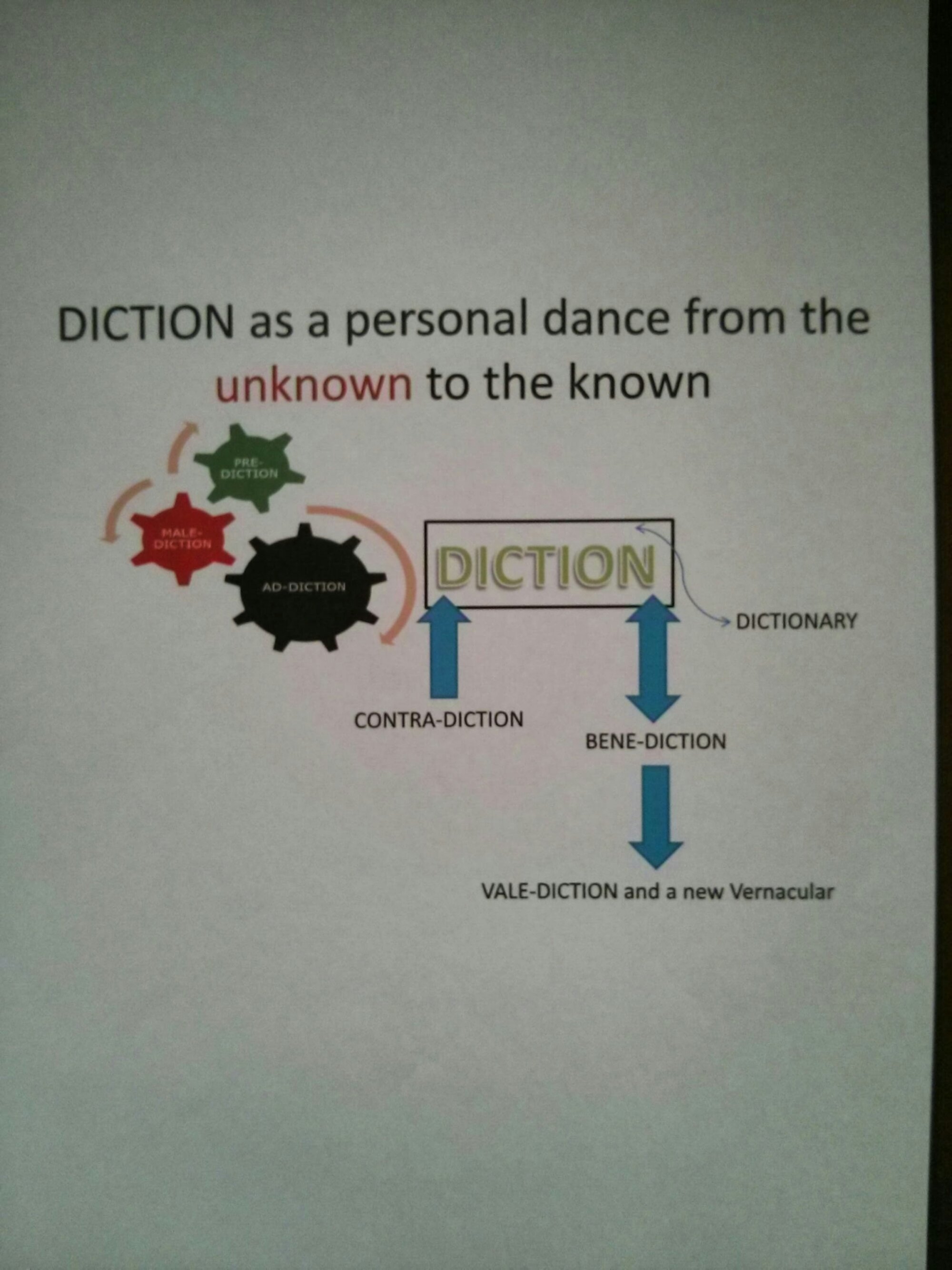
In the previous posts relating to an orientation within and a diagnosing of current events with the global indicator of stuck-addiction©, the metaphor of a personal and collective DICTION chamber has been established.

To extend this message further, it is helpful to establish this chamber not only as a personal or a systemic re-Source centre for reviving a dying personal or a collective Constitution as has been exposed, but also as the portal for The Word Itself as Its own connection with Itself in conscious matter.

A Diction chamber is akin to the resource capacitor for all previous reception and transmission of Holy Edict as announced by Messengers and Saints of all cultures, the place equally of tuning into said transmissions with acceptance and submission by Its intended recipients – a conscience.

A Diction chamber is the place of a present and ongoing ediction to help folks as they might have tuned into the apparent multiplicity of spiritual teachings, predictions and similar resources that are outpouring in the World today, to realise that these transmissions are in fact on the frequency of One Love modulating for the healing of one global spiritual disease, stuck-addiction©️.

It is said in the Middle East that God sends sickness to His favourites. When the problem solving pathway described in the above flow chart sticks and breaks, it is invariably at the addiction point in the process – hence stuck-addiction©.

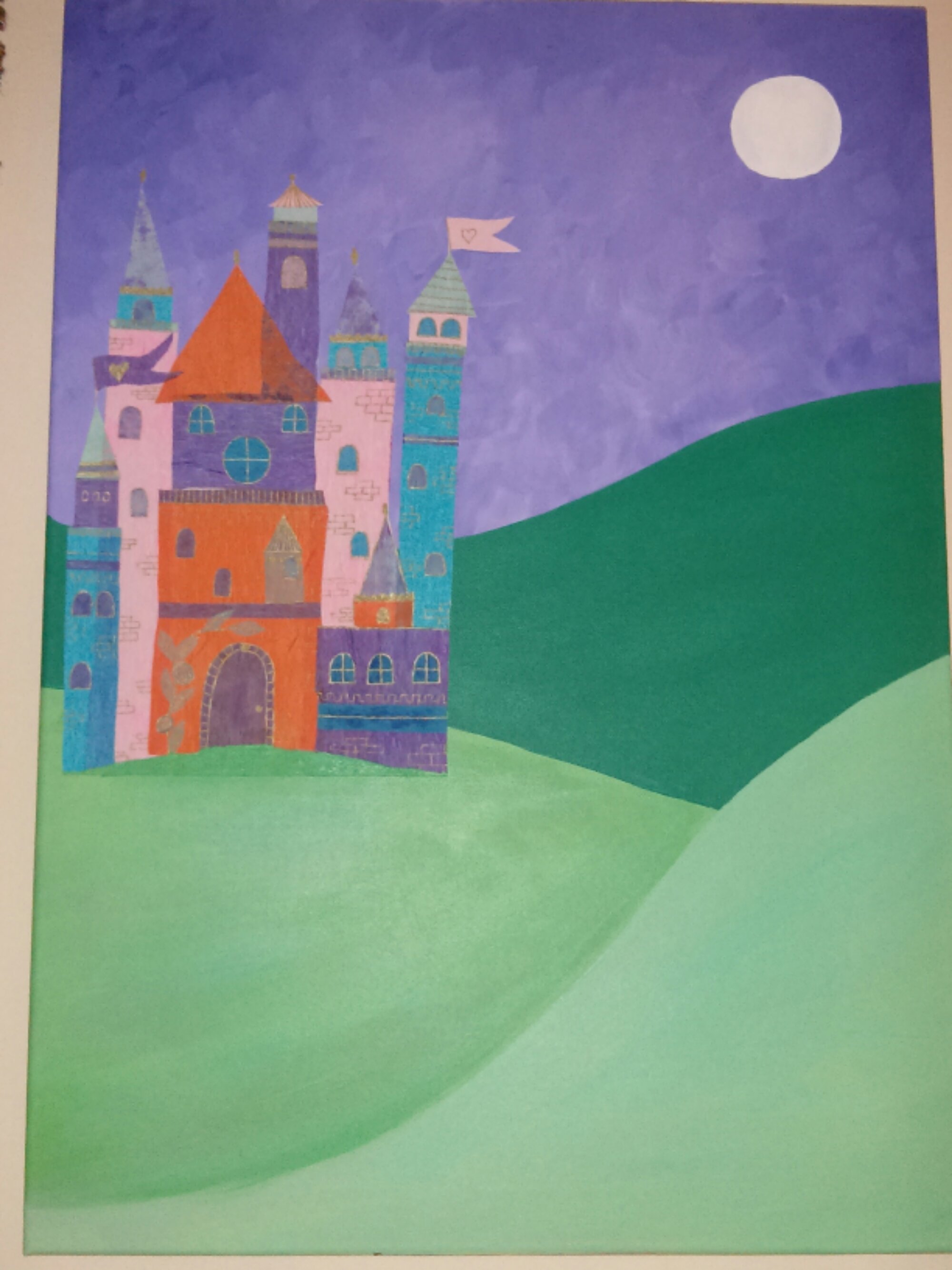
All languages have a dictionary, therefore this simple orientation tool helps people globally to diagnose for themselves whether their own DICTION chamber has become a Castle in their own Sleeping Beauty story, or not.

The chamber also helps people to maybe manage fear levels whilst repairing their own inner space station should conditions about them start to collapse as organisations navigate through particular constitutional and systemic realignments.

The collective is simply a collection of individuals. If enough individuals know what is happening in their own DICTION chamber then the collective structures will have a better chance of surviving and transforming within the inevitable creative flux of Era change.

From the millions of men and women who have been successfully beta testing the reconstructive and reconnective capacity of this simple Diction chamber contact with a Higher Power, in global 12 Step Fellowships for the past eighty years, there is now extended an undeniable life preservation formula that can withstand all forms of moral and material breakdown. This formulaic message is simply a practical tool kit to bring a person to an authentic start point for improving their conscious spiritual education, not the education itself.

In the language of ridding the thorns that encircled the castle in The Sleeping Beauty story, the 12 Step message is the true Prince’s kiss.

No God, but God.

image