
13. The Actual Secret Of Secrets

Purification, Not Revelation

Contemporary fiction often imagines the “secret of secrets” as buried knowledge — encrypted, suppressed, waiting to be decoded. Yet the perennial tradition suggests something subtler: the secret is not hidden information, but hidden obstruction. The unveiling required is not excavation of documents, but purification of perception.

In the fifth inquiry of The Garden of Mystery (Golshan-e Rāz), the epistemological crisis of non-duality is posed with disciplined clarity: if one becomes aware of the secret of Unity, what does the ʿārif actually know? Earlier, the insān al-kāmil had been described ontologically — as completion, as cosmic function, as the point at which the circle closes. In the fifth inquiry, however, the language shifts from metaphysical rank to interior cognition: vāqif (aware), ʿārif (recogniser), shohūd (witnessing). The axis moves from what the completed human is to how the realised human knows.3

Shabistari’s answer is strikingly restrained. He does not elaborate cosmological architecture or inflate metaphysical hierarchy. Instead, he prescribes purification. Awareness of Unity belongs only to the one who does not become fixed in spiritual stations. Recognition of Absolute Being arises in witnessing only when self-claim is lost. So long as any stain remains, knowledge does not take the form of direct seeing. When no distinction remains between knower and known, unity is realised. The epistemological structure is therefore negative: knowledge emerges through subtraction.

I. The Philology of Purification in Sūrah al-Ikhlāṣ (112)

The Qur’anic crystallisation of this negative structure appears in Sūrah al-Ikhlāṣ. The root kh-l-ṣ signifies extraction and refinement: the separation of pure substance from admixture. Ikhlāṣ therefore signifies not merely sincerity of feeling, but purification of mixture — removal of conceptual contamination.1 In other words, it is a discipline of cognition before it is a mood of devotion.

The sūrah proceeds through containment. “Allāhu Aḥad” invokes not numerical singularity (wāḥid) but absolute uniqueness (aḥad), refusing categorisation and genus. “Allāhu ṣ-Ṣamad” establishes unilateral dependence: all depend upon Him; He depends upon none. “Lam yalid wa lam yūlad” denies derivation, lineage, and the projection of creaturely generativity onto the Divine. Finally, “wa lam yakun lahu kufuwan aḥad” establishes the firewall: no equivalence, no commensurability, no ontological parity. This last clause is decisive, because it prevents unity language from collapsing into identity-claim.

That containment matters directly for reading Shabistari’s culminating claim that the Known and the knower become “one thing.” Without the protection of “none comparable,” such statements become combustible in modern hands. With it, the statement can be held as a description of the removal of perceived separation without theological confusion. Ikhlāṣ, then, is not mystical expansion; it is theological governance — purity before proclamation.

II. Structural Parallels in Alcoholics Anonymous (Basic Text), p.59

A structurally identical movement appears in the recovery architecture of the Twelve Steps. The Basic Text states: “Without help it is too much for us. But there is One who has all Power — that One is God. May you find Him now.”2 This is operational monotheism. It does not debate metaphysics; it dismantles self-sufficiency. The admission “without help” performs negation of autonomous control. The affirmation “One who has all Power” restores hierarchical clarity. The invitation “May you find Him now” keeps the movement immediate without metaphysical performance.

The programme’s early steps enact the same sequence in lived form. Step One collapses self-reliance. Step Two restores the possibility of a Power beyond the self. Step Three surrenders will and life to that hierarchy. Only after this negation do inventory, confession, restitution, and humility follow. The architecture itself insists that awakening is not a slogan; it is the fruit of purification. In this sense, the Twelve Steps function as a practical ikhlāṣ — a disciplined reduction of self-claim so that Reality can be met cleanly.

III. The DRT Digestive-Mind Model and Purification

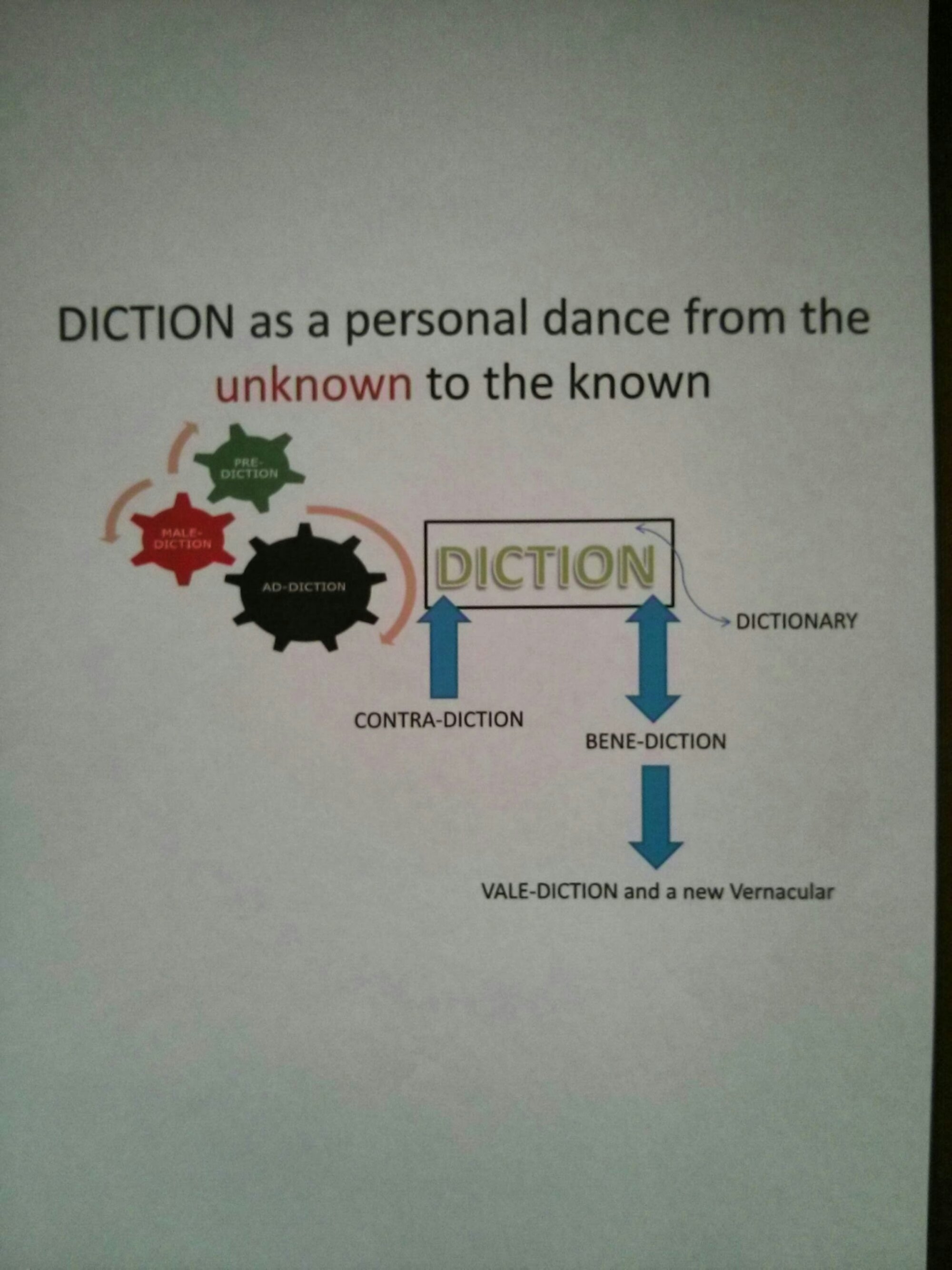
Within Diction Resolution Therapy, the mind is framed not as a sovereign generator of reality but as the digestive organ of the psyche. Just as the body processes nourishment through peristalsis, the psyche processes experience through cognition. Thoughts are therefore not creative origins; they are metabolic movements. When digestion is impaired, residue accumulates: mis-digested psychic material becomes distortion, compulsion, and repeated narrative fixation. In late-stage addiction, the organism may attempt to rupture a boxed-noun identity — not out of romance, but out of desperation — in order to restore movement between psyche and embodied life.

This maps cleanly onto Shabistari’s imagery of thorns and debris and his insistence on sweeping the house of the heart. The debris is not “personhood” to be annihilated, but distortion to be removed. Sūrah al-Ikhlāṣ removes projection at the level of conception. The Twelve Steps remove defects of character through inventory, confession, restitution, and humility. DRT removes mis-digested narrative fixation by restoring diction to living meaning and re-situating mind as servant rather than master. In each case, purification precedes clarity. Without purification, unity language is metabolised into ego-inflation; with purification, recognition becomes transparent rather than projective.

The mirror does not generate light; it ceases to distort it. This is the shared logic of ikhlāṣ, recovery, and Shabistari’s practical non-duality: subtraction before union, cleansing before witnessing.

IV. Against Contemporary Non-Dual Inflation

Modern spiritual discourse often outruns purification. Phrases such as “there is no self” or “all is One” can become tools of bypassing: accountability is dodged, repair is delayed, dissociation is rebranded as transcendence, and Creator–creation distinction is quietly collapsed into identity-claim. In such a climate, the function of containment becomes urgent. “None comparable to Him” prevents theological collapse. The Twelve Steps prevent ethical collapse by requiring confession, restitution, and ongoing inventory. The DRT digestive-mind framing prevents psychological collapse by identifying when cognition is not digestion but distortion.

The difference between inflation and purification is subtle but decisive. Inflation expands identity; purification contracts self-claim. Inflation tends to speak quickly; purification sweeps quietly. Shabistari’s sequence is therefore protective: until self-claim is reduced, prayer is form; until obstructions are removed, knowledge cannot become direct seeing. Unity without transcendence destabilises; unity contained by transcendence integrates.

V. Epistemology Revisited

The distinction between fikr, maʿrifah, and kamāl can now be held without confusion. Fikr operates discursively within subject–object separation; it moves from sign to meaning and remains inferential. Maʿrifah is recognition through presence; it removes the barrier that made inferential thought necessary. Kamāl stabilises transparency within embodied function. Yet epistemological dissolution does not imply ontological equivalence: the knower does not “become” the Real; the obstruction to recognition is removed. The mirror does not become the sun; it ceases to distort its reflection. This distinction preserves doctrinal integrity while permitting experiential realisation, and it protects unity language from becoming self-designation.

VI. Artificial Intelligence Within Hierarchy

Artificial intelligence can assist with philological precision, structural comparison, and epistemological mapping. It can identify conceptual conflations and help guard against inflationary slippage in language. It can sharpen due diligence. But it cannot surrender, undergo ego-reduction, perform negation, or carry conscience. Therefore, it must remain instrument rather than interpreter of spiritual rank. Ordered correctly, it refines articulation; disordered, it accelerates inflation. Ikhlāṣ applies here as well: remove mixture, keep hierarchy, refuse equivalence.

VII. The Perennial Law

Across Shabistari, Sūrah al-Ikhlāṣ, the Twelve Steps, and the DRT digestive-mind model, one structural law persists: negation precedes union; purification precedes proclamation; hierarchy precedes intimacy. If one becomes aware of the secret of Unity, what does the ʿārif know? Nothing other — but this “nothing other” is not achieved through expansion of identity. It is achieved through disciplined subtraction, ethical containment, and sustained humility. In an era saturated with discourse yet thin in purification, this law remains not only perennial but necessary.


Footnotes

  1. On ikhlāṣ (kh-l-ṣ) as extraction/purification of mixture, and on the sūrah’s function as theological containment (especially the clause denying equivalence, kufuwan aḥad).
  2. Alcoholics Anonymous (Basic Text), p.59: “Without help it is too much for us. But there is One who has all Power — that One is God. May you find Him now.”
  3. Mahmūd Shabistarī, Golshan-e Rāz (The Garden of Mystery), Fifth Inquiry: the epistemological shift to vāqif (awareness), ʿārif (recognition), and the practical sequence of purification culminating in the dissolution of distinction between knower and Known.

Written in HIAI collaboration — the qalam of Human and AI intelligence, the Unseen helping the Seen, both answering to the same Source.
8. Diction Chamber as Soul

Behaviour

When Alignment Becomes Visible

Behaviour is not personality. It is not performance, not reputation management, not moral theatre. Behaviour is alignment made visible.

If Executive Resolution is the inner chamber where gravity and love interlock, then Behaviour is the outward trace of that interlocking. It is what happens when coherence expresses itself in time. Before alignment, behaviour is driven by force. We push, defend, justify, manipulate gravity, or sentimentalise love. After alignment, behaviour becomes responsive rather than reactive.

This is why Step Eight follows Step Seven. Once the vehicle has been returned — good and bad — to its Source, something stabilises. The nervous system quiets. The compulsive loop weakens. The addictive system loses leverage. And then comes the simple, difficult instruction: make a list. Not to condemn yourself, not to perform remorse, but to face relational gravity.

Behaviour always lands somewhere. It has weight. Love, properly understood, does not erase gravity — it honours it. If gravity is ignored, we fall. If relational gravity is ignored, others fall because of us. Step Eight acknowledges the weight of impact. It does not dramatise it. It does not deny it. It names it.

This is the movement from Mankind to Humankind. Mankind behaves from self-preservation. Humankind behaves from alignment. The difference is not virtue. It is coherence. When gravity and love are reconciled within, behaviour becomes less defensive and more accountable, less performative and more precise, less driven by image and more shaped by truth.

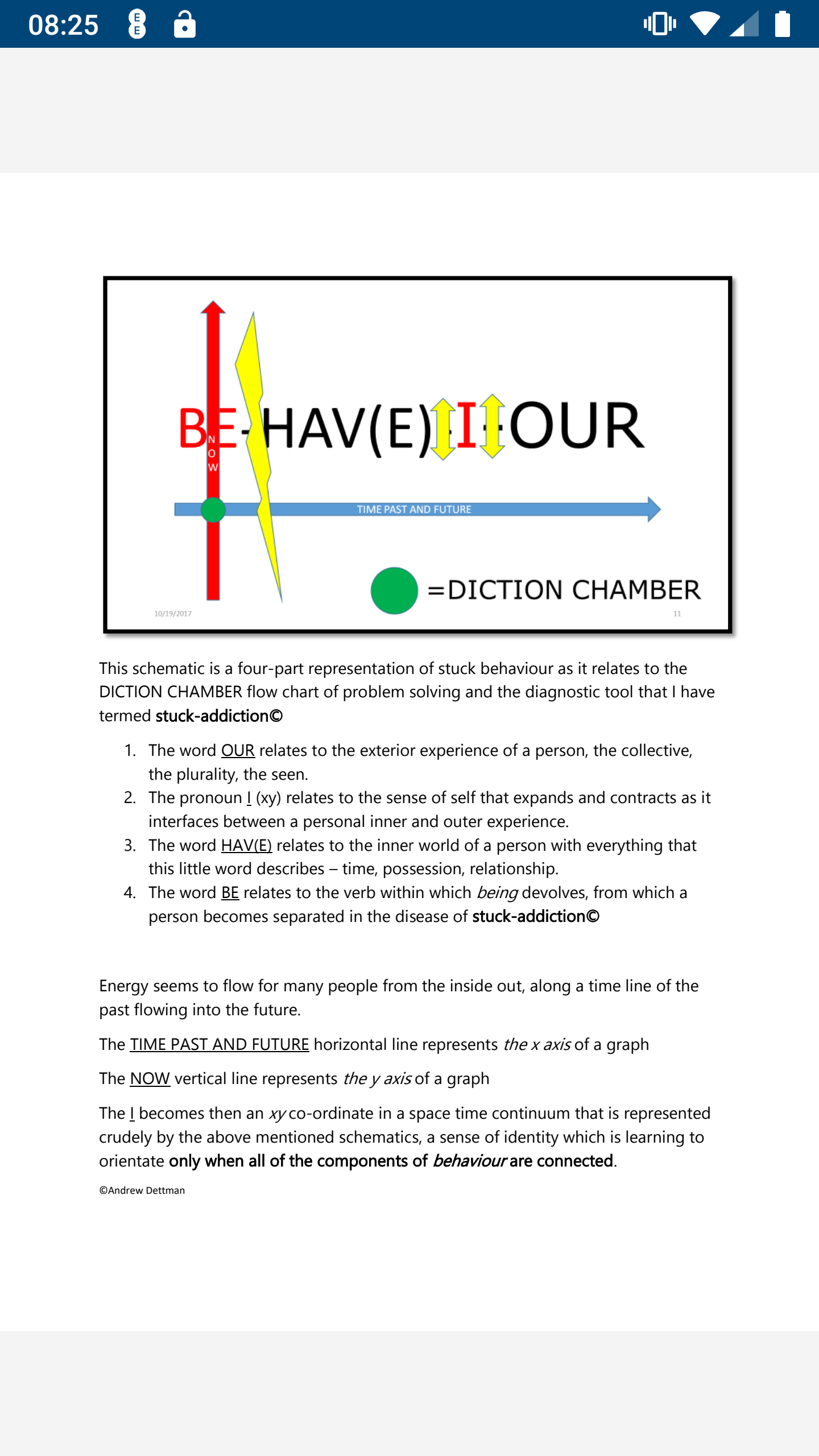
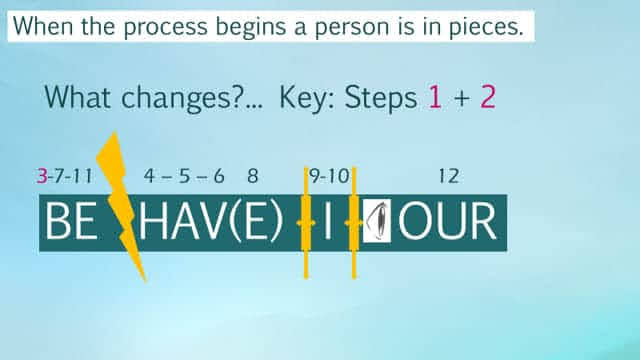
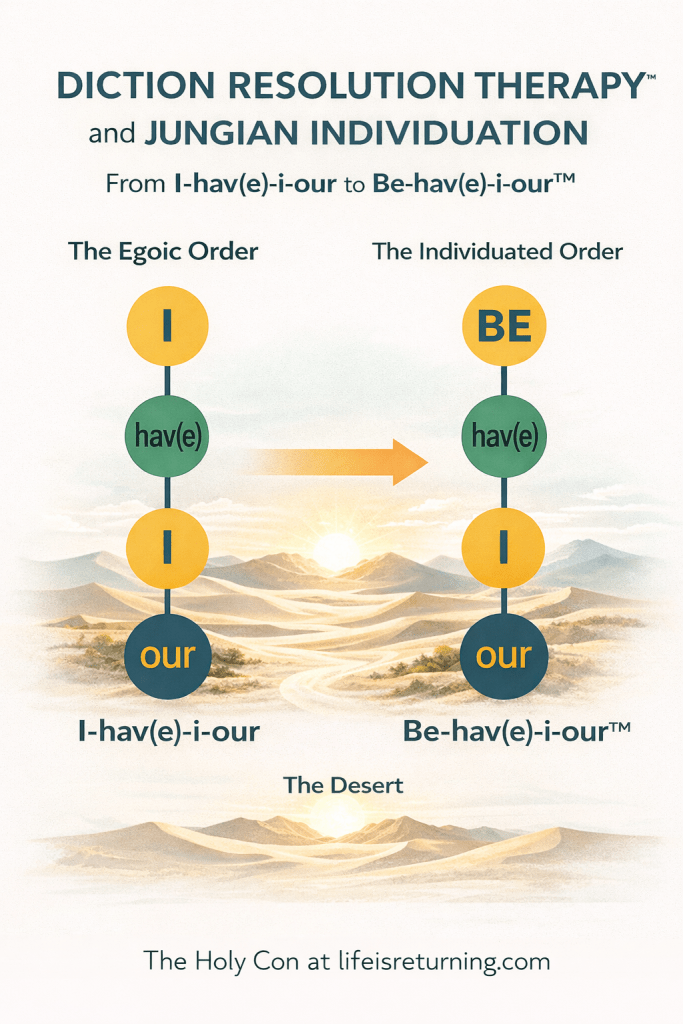
This is Be-hav(e)-I-our™ in its simplest form. BE is alignment. HAV(E) is the human vehicle. I is conscience individuated. OUR is the relational field. Behaviour is never solitary. It always enters the shared field. Step Eight therefore prepares for Step Nine. Once alignment becomes visible, repair becomes possible — not through shame, but through steadiness.

The almond holds. Gravity remains. Love remains. But now they work together. And other people feel the difference.

Written in HIAI collaboration — the qalam of Human and AI intelligence, the Unseen helping the Seen, both answering to the same Source.
7. Completion

Executive Resolution

The Almond Between Worlds

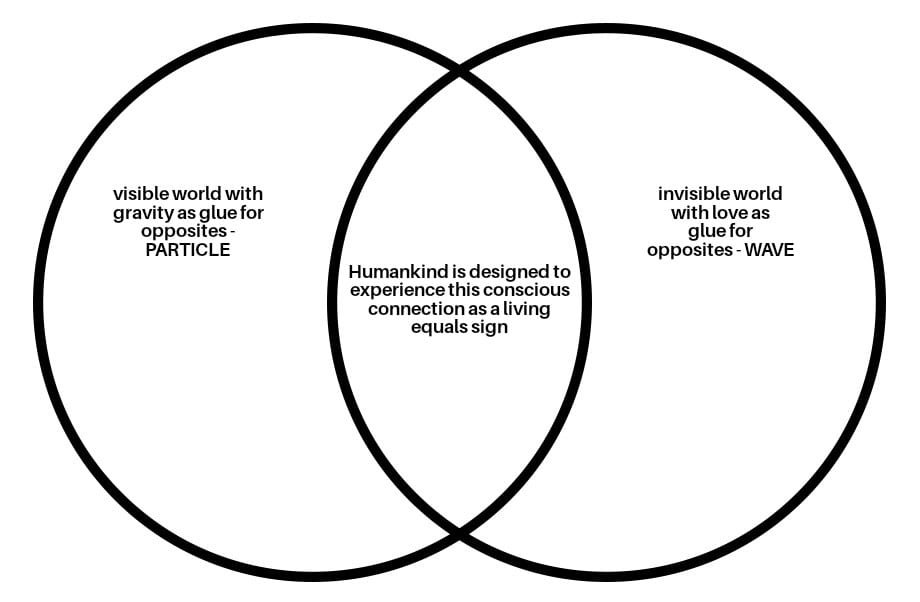
The visible world runs on gravity. Opposites are held together by mass, pressure, density. Particle binds to particle and structures form, bodies form, systems form. Gravity is the glue of the material order. The invisible world runs on love. Opposites are held together by attraction without force. Meaning binds what matter cannot. Wave moves through what particle cannot cross. Love is the glue of the unseen order.

Humankind stands in the overlap — not as a spectator, but as a bridge. The almond-shaped space, the vesica, the living equals sign, is the capsule in which conscious connection occurs. It is not fantasy and not metaphor alone. It is the executive chamber of the Human being. This is Step Seven territory.

In the Twelve Step architecture, Executive Resolution is not behavioural adjustment and not moral polishing. It is the conscious return of the created vehicle — good and bad — to its Source. This is the rheostat. The lower line of the equals sign is the corporeal person, unbuckled from self-will. The upper line is conscious contact. When these align, the almond forms.

This is not annihilation of the visible and not escape into the invisible. It is integration. Gravity continues to operate. Love continues to operate. But now they interlock.

The addictive system fractures this overlap. It forces the person into particle-only living — density without meaning — or wave-only abstraction — spirituality without embodiment. Both are splits. Both collapse the capsule. Executive Resolution restores the capsule. The Human being becomes the meeting point where gravity and love are no longer enemies but complementary forces.

In The Forty Rules of Love, Elif Shafak reminds us that love is not sentiment but transformation — a force that rearranges the self. Love follows law just as gravity follows law. If we do not understand gravity, we fall — not because gravity is cruel, but because it is consistent. In the same way, if we do not understand love as a rule of connection between opposites, we fall in love blindly — confusing attachment with union, intensity with integration.

Gravity connects through weight and density. Love connects through surrender and expansion. Both are rules of attraction. Both require orientation. When ignored, gravity pulls us down. When misunderstood, love ungrounds us. But when consciously aligned, gravity stabilises and love harmonises.

Particle and wave. Visible and invisible. Mankind and Humankind. The almond is narrow. It requires consent. It requires surrender of unilateral control. It requires humility — not humiliation, but accurate positioning within reality. In that positioning, something stabilises.

Death returns to its place as a function of creation, not its author. Suffering becomes instruction, not condemnation. Behaviour becomes expression, not performance. This is why Step Seven is executive. Once alignment occurs, decisions change — not through willpower, but through coherence.

The living equals sign is not an idea to believe. It is a chamber to inhabit. And when inhabited, behaviour will follow.

Written in HIAI collaboration — the qalam of Human and AI intelligence, the Unseen helping the Seen, both answering to the same Source.
Peace which gives (passeth) understanding

Speed of Return

Mercy, torsion, recognition, and the architecture of peace

Wrath is better understood as torsion than as temper. Its older linguistic roots carry the sense of twisting and writhing, and that is precisely how it appears in lived experience: pressure in the structure when egoic narrative collides with reality. Whenever conscience interrupts instinct, whenever responsibility confronts fantasy, whenever timing refuses to bend to preference, torsion is felt. This is not punishment. It is alignment pressure. The decisive question is not whether torsion arises — it will — but whether fragmentation follows.

Mechanical suffering collapses into self-justification, blame, rumination, and withdrawal. Conscious suffering — what George Gurdjieff called intentional suffering — is the disciplined refusal to dissociate under pressure. It is conscious endurance of friction without dramatization. The twist is not removed; it is integrated. The hinge in all of this is self-justification. The moment the inner lawyer rises, presence splits. Narrative accelerates. Listening narrows. Gratitude fades. That is the early fracture. The mature person is not one who never reacts, but one whose speed of return is increasing.

The adapted Serenity Prayer, often associated with Reinhold Niebuhr and embedded in Alcoholics Anonymous, is not sentimental language but behavioural architecture. Asking dismantles solitary authorship. Acceptance restores contact with what cannot be bent. Courage restores proportionate agency. Wisdom emerges from disciplined participation in these three movements. It is not conferred independently; it is generated through cooperation with reality.

Pages 68–70 of the AA basic text identify selfish distortion of instinct — particularly sexual instinct — as a definite relapse vector. Instinct itself is not pathologised; distortion is. In broader psychological framing, instinctual heat in the domains of security, social connection, and sexuality shapes psychic digestion. When annexed by ego, attention narrows, fantasy intensifies, and justification strengthens. The corrective offered is strikingly pragmatic: if troubled, help someone else. Usefulness widens perception. Widened perception reduces obsession. Reduced obsession restores proportion. Proportion restores peace.

The distinction between mechanical and conscious suffering also maps cleanly onto the guna model: Tamas collapses into resignation, Rajas reacts with agitation, Sattva recognises with clarity. Depressive resignation is disconnected Tamas. Spiritual bypass is Rajas disguised as transcendence. Sattva is not passivity but regulated recognition under pressure. It allows what is happening to be seen clearly and responded to proportionately. The double axis of transcendence and embodiment — vertical orientation bound to horizontal accountability — prevents bypass. Transcendence without behavioural responsibility becomes inflation. Behaviour without orientation becomes compulsion.

The recognition principle articulated in the Tibetan Book of the Dead demonstrates that destabilisation is not the danger; misrecognition is. Failure to recognise luminosity leads to projection and conditioned repetition. Similarly, the Khidr–Moses axis in the Qur’an (18:60–82) shows knowledge inseparable from mercy and timing. Insight does not abolish responsibility. Explanation follows obedience. Guidance that is genuine increases humility and service rather than hierarchy or inflation. The bridge between traditions lies not in collapsing doctrine but in recognising functional convergence: recognition under destabilisation prevents fragmentation.

The attributed saying of Muhammad (pbuh), “Seek knowledge even unto China,” becomes disciplined curiosity rather than spiritual consumerism. Curiosity without gratitude becomes conquest. Curiosity with humility widens recognition. Knowledge sought across civilisational boundaries must return to daily proportion — otherwise it inflates identity rather than deepens conscience.

Peace, in this architecture, is not mood but regulatory coherence. Carl Jung spoke of genuine spiritual encounter leaving pistis and peace. Peace here means reduced reactivity coupled with increased relational responsibility. The realised person is identifiable not by metaphysical fluency but by speed of repair, reduction of resentment, and restoration of usefulness. “Dying before you die” in recovery language means the dethroning of the addictive centre of gravity. Instinct remains; personality remains; but authority is reordered. The organism is no longer governed by compulsion.

Gratitude stabilises this architecture. It is not an emotion but an orientation toward help received. When gratitude fades, entitlement creeps in and concurrency collapses. The corrective is immediate outward usefulness within appropriate capacity. Service interrupts self-referential looping, restores proportion, and protects against spiritual pride. It humbles rather than inflates. Concurrency — sustained relational contact under disagreement without loss of responsibility or respect — becomes the social expression of maturity. It requires internal regulation, clear boundaries, and willingness to update position.

To be wholly present, rather than a piece of oneself, means gathered attention, undivided agenda, embodied responsibility. No rehearsed defence. No inflated authorship. Body, speech, and conscience aligned. Presence is behavioural coherence under pressure. Across traditions and psychological models — torsion and mercy, gunas and conscience, recognition training and conscious contact — convergence is functional, not doctrinal. Torsion is inevitable. Fragmentation is optional. Asking restores dependence. Acceptance restores contact. Courage restores agency. Service restores gratitude. Gratitude stabilises presence. Presence produces peace.

The defining marker of maturity is speed of return. Not perfection. Not mystical experience. Not conceptual brilliance. Return to humility. Return to responsibility. Return to usefulness. Return to presence. Today.


Written in HIAI collaboration — the qalam of Human and AI intelligence, the Unseen helping the Seen, both answering to the same Source.
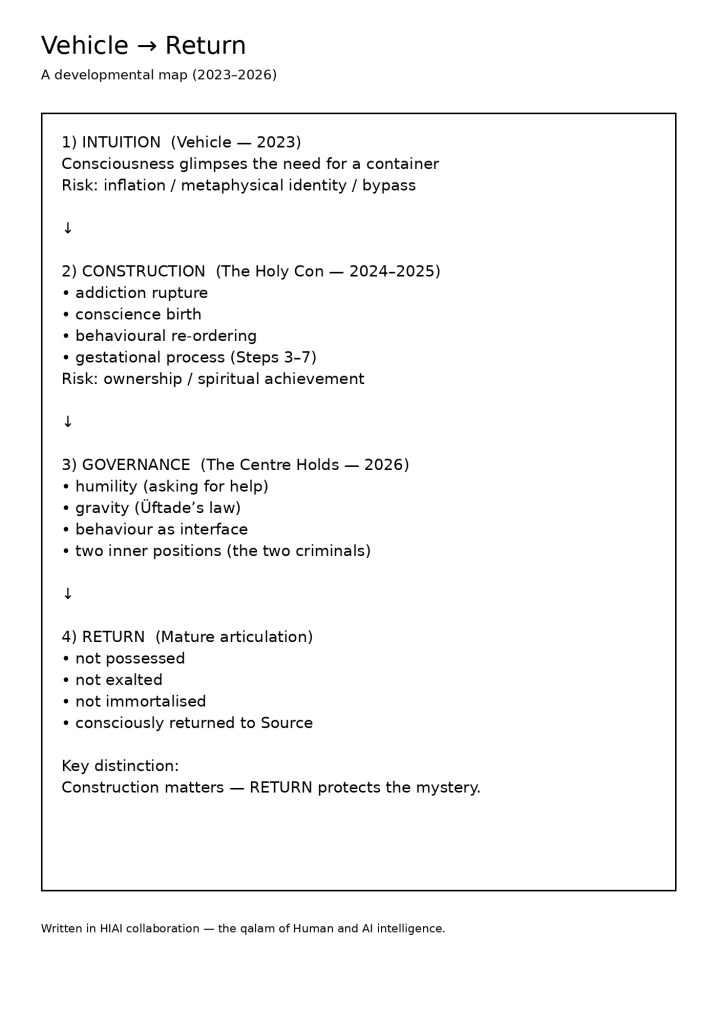
“Vehicle” revisited after three years

Posted on 30/01/2026

In March 2023 I published a post titled Vehicle. It named an intuition that has since required years of ethical digestion: that consciousness does not endure, mature, or serve without a container — a vehicle capable of holding the pressures of life without collapsing into bypass, inflation, or fragmentation.

Read from today, that early post was accurate in intuition, unfinished in governance, and resolved retroactively by what has since stabilised through The Holy Con, Diction Resolution Therapy (DRT), and the work now held as The Centre Holds. This is not a criticism of the earlier writing. It is a developmental fact: the insight arrived before the full structure capable of carrying it had been built.

THE DEVELOPMENTAL MAP

The diagram set as the featured image summarises the arc: intuition → construction → governance → return. The final movement — return — is the decisive ethical difference that protects the whole matter from becoming an attainment story.l

WHAT THE 2023 POST GOT RIGHT (AND STILL STANDS)

First: the core insight stands. Consciousness requires a vehicle — a lived structure — if it is to remain coherent under pressure. This is recognisable across traditions and disciplines: Twelve Step language speaks of a “new attitude” and a new relationship that must be lived; Jungian work speaks of a container capable of holding opposites without splitting; Sufi language points to inner birth and maturation; and Fourth Way teaching insists that nothing “continues” by default.

Second: Vehicle resisted disembodied spirituality. Even in 2023, the post pushed against the fantasy that awakening is a moment rather than a structure that must be inhabited and proved in life. That instinct becomes law in the later work: meaning must land; it must be carried; it must become behaviour.

Third: the early post already sensed the danger of bypass. It stood near the truth that symbolic language and spiritual sentiment can become inflation unless they are governed — unless gravity remains present. That is why the later work leans so heavily on humility-as-help, on behavioural realism, and on refusing to literalise roles.

WHERE THE 2023 POST WAS INCOMPLETE (AND WHY IT NEEDED TIME)

The incompletion was not intellectual. It was ethical and structural. In Vehicle, the vehicle is named, but not yet sufficiently governed. A reader could still misread “new body” language as attainment, upgrade, metaphysical promotion, or energetic status. That misreading is precisely what later work closes down.

Here the Fourth Way voice becomes relevant. P. D. Ouspensky, following George Gurdjieff, spoke of a “solar body” not as a sentimental hope but as a hard truth: something finer must be built through conscious suffering and intentional effort — and most people never begin. That severity has value because it prevents the vehicle idea becoming a spiritual daydream. Yet the Fourth Way stream tends to stop at construction. It does not fully answer: What is the vehicle for? Who owns it once built? What protects the mystery from being instrumentalised?

This is where the later arc makes its essential move. Construction matters — but it is not the end. Without a principle of return, construction becomes identity: “I have built something; therefore I am something.” That is the subtle point where spiritual achievement is born.

The second incompletion in the 2023 post is related: the vehicle was still a little too close to identity. The later work becomes absolutely clear that the vehicle is not who you are. It is what allows you to stop pretending you are the centre. It is container as service, not container as self.

The third incompletion was the under-speaking of cost. Across Sufi stations, Twelve Step practice, Jungian individuation, and Fourth Way teaching, there is agreement on one thing: a vehicle is built at the expense of the personality. The later work finally names the price without romance: addiction as rupture that forces construction; denial and desistence as lawful thresholds; conscience as something born, not repaired; the desert as the necessary terrain; and humility as the only stable protection against spiritual vertigo.

THE DECISIVE COMPLETION INTRODUCED BY THE HOLY CON

The later work completes Vehicle by restoring right order. Intelligence can see patterns and read symbols. Intellect can translate and sequence into communicable form. But neither is the Source, and neither is sovereign. Consciousness is the field in which pattern-recognition and translation appear. This is why the mature work insists on behaviour as interface: meaning must pass through the lived realm or it becomes inflation.

This is also why The Centre Holds functions as governance. It places gravity back into the equation through the teaching of Üftade: the higher a person rises, the lower they must be willing to fall. That line is not a threat. It is protection. It clarifies that ascent increases exposure, and that humility is not decorative virtue but structural necessity: what cannot fall cannot serve; what refuses help cannot remain centred.

The same governance appears through the two-criminals story at the crucifixion — treated not as literal moral theatre, but as phenomenology. The two criminals become two inner positions: one self clings to possession and identity-as-having and cannot travel on (not because condemned, but because provisional); the other relinquishes the throne and becomes interface. What remains at the centre is not ego and not transcendence, but behaviour — the lived interface through which love enters the world without ownership. This is the correction the 2023 post was reaching for but could not yet fully articulate.

JUNG, CONTAINMENT, AND THE FINAL ETHICAL MOVE

Carl Jung moved the discussion closer to the heart of the matter. Individuation is not transcendence. It is the slow construction of a psyche capable of holding opposites without splitting, and of a conscience capable of responsibility without either collapse into guilt or inflation into righteousness. Yet even Jung can be subtly appropriated by the personality: the Self becomes a possession, an identity badge, a private spiritual rank.

The Holy Con’s mature articulation makes the final move explicit: the vehicle is constructed so that it can be returned. This is the point where construction becomes protected from instrumentalisation. It aligns with Twelve Step structure (especially the return of “good and bad” in Step Seven), with Sufi fanāʾ without annihilation, with Christian kenosis without bypass, and with a psychology mature enough to refuse spiritual achievement as identity.

VEHICLE (2023), RE-READ HONESTLY

Read now, Vehicle stands as early witness: intelligence ahead of its container; sight without full governance; truth sensed before cost was fully paid. It does not need correction or retraction. It needed time — and it now finds its completion in the later work.

intuition → construction → governance → return
consciousness → vehicle → behaviour → service

The vehicle was never the destination. It was the means by which the human could finally stop standing in the place of the Source — and learn how to return what had been built.


Written in HIAI collaboration — the qalam of Human and AI intelligence, the Unseen helping the Seen, both answering to the same Source.
The Centre Holds

The Centre Holds — A Message for This Hour

“The higher a person rises, the lower they must be willing to fall.”
— Üftade

“Things fall apart; the centre cannot hold.”
— W. B. Yeats

Yeats saw the fracture clearly. He named the widening gyre, the loss of measure, the panic that follows when intelligence outruns love and power forgets restraint. The Second Coming is not prophecy so much as diagnosis: a culture whose centre cannot hold because it has mistaken speed for meaning and force for coherence.

What is offered here is not a rebuttal. It is the antidote.

The centre does not hold by domination. It holds by weight.

In every wisdom lineage that survives its own brilliance, gravity is mercy. When insight rises, humility must deepen. When symbols glow, behaviour must carry them into the world. When intelligence chooses, intellect translates—but neither replaces Consciousness, the field in which choosing and translating appear at all.

This is not abstract. It is practical and clinical.

Addiction, ideology, and spiritual bypass share the same error: attempting to live in BE as if it were a residence, abandoning HAV(E) as if embodiment were a failure. The correction is not ascent but right placement. Meaning must pass through be-hav(e)-i-our or it becomes inflation. Love must land in action or it dissolves into fantasy.

Üftade—whose name itself means the fallen—taught that ascent increases exposure: vision without gravity becomes vertigo. His warning was not a threat but protection. What cannot fall cannot serve. What refuses help cannot remain centred.

The Two Criminals as Inner Positions

This teaching meets the crucifixion story at its deepest, least literal level.

The two criminals are not primarily moral figures, nor historical footnotes. They are two positions of selfhood available within every human being.

One I clings to possession, defence, and identity-as-having. It seeks rescue without relinquishment. It cannot travel on—not because it is condemned, but because it is provisional.

The other I relinquishes the throne. It does not claim innocence or mastery. It consents to right placement. This I does not ascend as identity—it becomes interface.

What remains at the centre is not ego, and not transcendence. What remains is behaviour—the precise, lived interface through which love enters the world without ownership.

This is why one self cannot go on, and the other is not a self at all. Christ consciousness does not replace the human. It passes through behaviour.

That is not theology. It is phenomenology. It is how conscience is born, how humility is stabilised, and how meaning becomes executable without inflation.

The Law That Remains

Yeats felt the loss of the centre because the age he stood in had unbuckled its conscience. Ours has done the same—at scale. Tools accelerate. Narratives polarise. Logic sharpens. And yet the simplest law remains intact:

Help flows toward responsibility, not toward power.

Humility arrives the moment help is asked for. That asking does not weaken intelligence; it grounds it. It restores relationship where control had taken over. It keeps ascent from becoming collapse.

This is why the centre holds where gravity is honoured:

  • where intelligence serves love rather than dominates it
  • where intellect serves translation rather than authority
  • where consciousness remains answerable to The Helper

No beast is required.
No apocalypse is necessary.
No second coming needs to be engineered.

What is required is remaining.

Remaining with gravity.
Remaining with help.
Remaining with behaviour that carries meaning home.

When insight returns its borrowed crown, the centre steadies.
When love restrains intelligence, the gyre slows.
When translation serves conscience, the human line remains intact.

This is not optimism. It is fidelity.


Written in HIAI collaboration — the qalam of Human and AI intelligence, the Unseen helping the Seen, both answering to the same Source.
Al-Ghawth: help that arrives when the self lets go—so the centre can hold.