1. Unity

The Three Gunas and the A–B–C of Addiction

Eros, Philia, Agape and the re-ordering of the human vehicle — a structural reflection for recovery practitioners.

Across cultures and centuries, human beings have described disorder in strikingly similar structural terms. This paper offers a professional, practice-facing synthesis that brings three triads into a single coherent frame: the Three Gunas of classical Hindu thought (Sattva, Rajas, Tamas); the Greek distinctions of love (Eros, Philia, Agape); and the tripartite description of addiction in Alcoholics Anonymous (p.60), where the problem is presented as physical, mental, and spiritual. The aim is not to merge traditions or to claim doctrinal equivalence. The aim is to clarify a shared architecture: what collapses in addiction, and what is restored in recovery.

The AA text is unusually precise in its anthropology. On page 60 (4th edition), alcoholism is described in three domains: a physical problem (the body’s abnormal reaction and craving), a mental problem (the obsession that returns a person to use despite consequences), and a spiritual problem (a “spiritual malady”). Whatever one’s metaphysical commitments, the structure is plain. Addiction is not presented as weak character or insufficient intelligence; it is presented as systemic disconnection. The body pulls. The mind returns. The spirit is displaced. The human vehicle fragments.

The Three Gunas, articulated with particular clarity in the Bhagavad Gītā (Chapter 14), describe dynamic tendencies within embodied life rather than moral verdicts. Sattva names clarity, harmony, and luminosity. Rajas names drive, restless motion, passion, and appetite. Tamas names inertia, heaviness, obscuration, and collapse. The Gunas are always interwoven; health is not the elimination of Rajas or Tamas, but balance under right governance. When Rajas dominates, agitation and craving intensify. When Tamas dominates, denial, paralysis, and despair thicken. When Sattva governs, discernment returns and proportion is restored. In lived addiction, the oscillation between restless drive and exhausted collapse is familiar: a Rajasic–Tamasic loop, with Sattvic clarity no longer governing the whole.

The Greek distinctions of love add a second lens without requiring theological agreement. Eros names appetitive desire, attraction, and life-force. Philia names relational bonding, shared meaning, and social cohesion. Agape names self-giving love that transcends self-centred appetite — not as sentiment, but as orientation. Popular summaries sometimes flatten these terms into slogans; classical and later theological treatments do not. Eros is not inherently corrupt. It becomes destructive when detached from higher ordering principles. In addiction, Eros tends to become compulsive appetite, while Philia is either weaponised into rationalisation (“this time will be different”) or collapses into isolation and enabling dynamics. Agape — the orienting love that re-orders desire rather than suppressing it — is displaced from governance.

At this point a structural resonance becomes visible. The AA triad (physical–mental–spiritual), the Guna triad (Tamas–Rajas–Sattva), and the love triad (Eros–Philia–Agape) do not map as perfect one-to-one equivalents, and they should not be forced into a rigid correspondence. Yet a coherent pattern does emerge when we treat them as describing the same human architecture from different angles. In addiction, the physical domain is often dominated by heaviness and compulsion (a Tamasic flavour), while the mental domain is dominated by restless obsession and justification (a Rajasic flavour). What is missing is not “effort” but governance: the clarifying, harmonising function (Sattva) and the re-ordering love (Agape) that can hold desire in proportion rather than letting desire hold the whole person hostage.

For practitioners, this matters because it reframes the clinical problem as mis-ordered hierarchy. Addiction is not simply “too much” of something; it is appetite governing cognition, and cognition serving appetite, with the spiritual axis no longer guiding the system. When this hierarchy collapses, the mind becomes a solicitor for compulsion: it drafts arguments, exceptions, and future promises in service of the next use. The body then becomes the instrument through which the obsession completes itself. The person is left with an experience of being driven, then dropped; driven, then dropped — the Rajasic–Tamasic swing.

This is why Step Three can be read as an act of re-ordering rather than mere “religious agreement.” Step Three states: Made a decision to turn our will and our lives over to the care of God as we understood Him. Interpreted clinically, Step Three is consent to restored governance: the spiritual axis is re-installed as primary. Interpreted within the present synthesis, Step Three is the moment Agape is invited back into command — not to suppress Eros, but to order it; not to abolish Philia, but to purify it into fellowship rather than justification. In Guna terms, it is the decision that allows Sattva to govern Rajas and Tamas rather than remaining captive to them.

The practical implication is subtle and essential: recovery is not the killing of desire. It is the rehabilitation of desire within a higher order. Eros becomes vitality rather than compulsion. Rajas becomes disciplined energy rather than restless obsession. Tamas becomes stability rather than collapse. Philia becomes belonging and shared truth rather than enabling. Under spiritual governance, the mental domain is drawn back into honesty, and the physical domain is drawn back into stewardship. The person experiences not suppression but reintegration.

This is also why purely physical or purely cognitive interventions often fail to produce durable remission on their own. Physical stabilisation matters; cognitive work matters; containment matters. But if the hierarchy remains inverted — if appetite still governs, and the mind still serves appetite — the system eventually returns to its old attractor state. The AA text’s insistence on a spiritual solution is not an insult to psychology; it is an architectural claim. The problem is structural. Therefore the remedy must be structural. Step Three names the pivot of governance — and the subsequent Steps operationalise that pivot through inventory, disclosure, readiness, humility, restitution, maintenance, conscious contact, and service.

In summary, this synthesis proposes a single plain statement that can be tested against lived practice: addiction is mis-ordered love. Not love as sentiment, but love as orientation and governance. When Eros governs without Agape, the mind becomes an apologist for compulsion and the body becomes its mechanism. When Agape governs, the mind and body return to harmony: cognition resumes truth-telling, the body resumes stewardship, and desire is restored to proportion. Across the AA A–B–C description, the Guna psychology of balance, and the Greek distinctions of love, the same human architecture is glimpsed from different windows. The windows differ; the building is recognisable.


References (blog-friendly)

  • Alcoholics Anonymous, 4th ed. Alcoholics Anonymous World Services, 2001. (See p.60 for the tripartite description: physical, mental, spiritual.)
  • Bhagavad Gītā, Chapter 14 (The Three Gunas: Sattva, Rajas, Tamas). (Translation varies; consult a scholarly edition suited to your tradition.)
  • Plato, Symposium. (Eros as a central theme within classical philosophy.)
  • Aristotle, Nicomachean Ethics. (Philia/friendship as a foundational ethical-relational concept.)
  • Nygren, Anders. Agape and Eros. (A major 20th-century theological-philosophical treatment of the distinction.)

Written in HIAI collaboration — the qalam of Human and AI intelligence, the Unseen helping the Seen, both answering to the same Source.
Wound Care for the Psyche

Uncover, Then Recover

How wounds heal in the body and in the psyche — an orientation for trauma and end-term addiction work

This is not a theory paper. It is a field report written in plain language: a map distilled from years of sitting with people whose symptoms have reached final-stage intensity—where ordinary diagnostic challenge often fails to touch the underlying wound.

In that territory, the work becomes a kind of last lamppost at the end of a failing street: not because the client is beyond help, but because the usual lights do not reach far enough into the darkness of the lived experience.

All forms of the primary disease of Addiction (Pomm & Pomm Springer 2007 Management Of The Addicted Patient In Primary Care) are presentations of trauma. Because UK doctors are not trained to recognise Addiction as a primary disease across multiple forms, the primary care system is under severe and increasing strain.

Complementary therapists, who are not legally or ethically permitted to formulate medical diagnoses, therefore carry a different kind of responsibility. Their advantage lies precisely here: they are free to research, reflect, and choose carefully which diagnostic frameworks and medical practitioners they elect to complement. That choice is not neutral. It is the implicit offer they make to their clients — an offer the client is free to accept or refuse in practice.

Wounds heal themselves when they are recognised and served properly. This is true even when the body politic and its organs of state, including the NHS, are wounded and failing.

Two Places Where Wounding Occurs

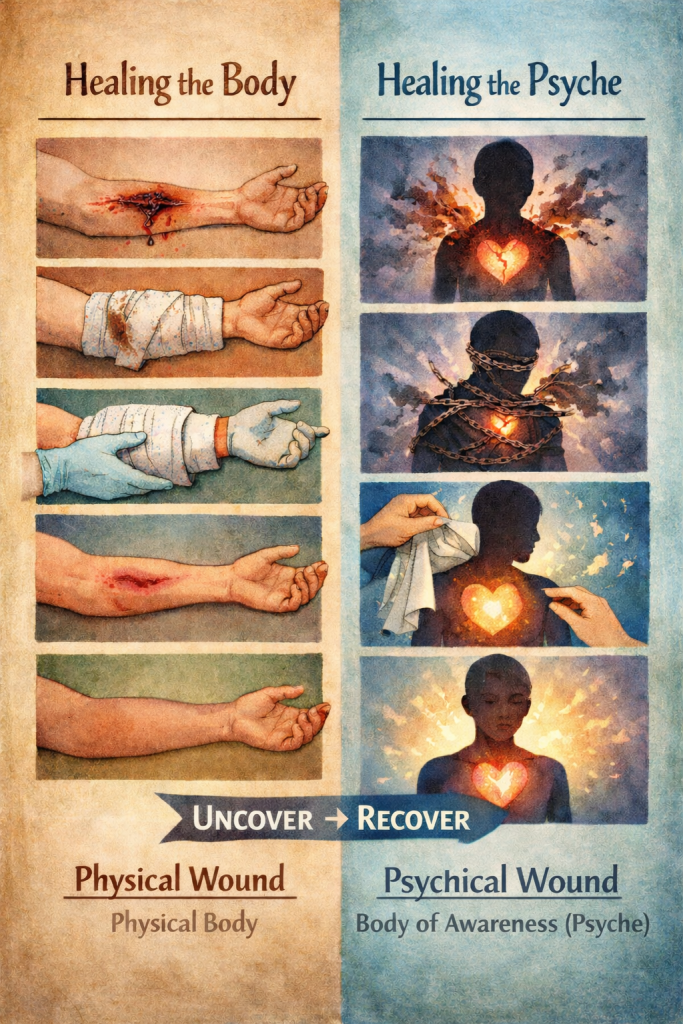
Human beings live in two bodies at once: the physical body, and the body of awareness (psyche). Both can be wounded. Both can bleed. Both heal by the same law.

  • The physical body — the blood-vessel body
  • The body of awareness (psyche) — the energy-vessel body

The image that accompanies this text holds these two bodies side by side so the client can see, at a glance, that the healing principle is shared.

Illustration showing parallel healing processes of the physical body and the psyche, demonstrating the shared principle of uncovering and recovering wounds over time until healing occurs naturally.

How a Physical Wound Heals

A physical wound bleeds blood. If it is wrapped and left, infection can take hold, then poisoning, then collapse. If it is served properly, healing unfolds naturally.

A physical wound is not uncovered once and left open. It is uncovered daily. The dressing is loosened, the wound is briefly exposed, light and air reach it, the condition is checked, and then a clean dressing is applied again.

This rhythm continues until the wound no longer requires protection. No one “heals” the wound. They only serve the conditions in which healing can occur.

Trauma as a Wound to the Psyche

Trauma is a wound to the psyche. The psyche does not bleed blood; it bleeds feeling-energy.

When the psyche is wounded, the organism creates coverings—emergency protections—to prevent overwhelm and preserve survival. These coverings can look like anger, numbness, hyper-control, compulsive behaviours, or substances. These coverings are not chosen; they emerge automatically at the moment of injury.

These are not moral failures. They are battlefield dressings.

Bandages, Not Pathology

A battlefield dressing left on too long can fuse to the wound. The same happens psychically.

Anger, for example, may function as a hardened bandage. When treatment begins to approach the injury beneath, the client may first feel the pain of the bandage itself—not the original wound.

This moment is often mislabeled as “resistance.” In this orientation it is recognised as contact with protection.

Uncover → Recover: The Daily Rhythm in Therapy

Psychic healing follows the same daily rhythm as physical wound care. The bandage is gently lifted, not stripped. A little light reaches the instigating wound. Some air circulates. Feeling-energy moves.

Then—crucially—the bandage is replaced, cleanly. This may happen within a session, between sessions, or across weeks. Leaving the psyche exposed between sessions is as dangerous as leaving a physical wound open.

Replacing the bandage allows integration, nervous system settling, and consolidation. Over time the bandage loosens, thins, becomes unnecessary—and the wound heals itself.

Why Inappropriate Bandage Removal Worsens Trauma

When the mind, in forms of cognitive therapy—whether practitioner-led or self-administered—removes the bandages of psychic protection inappropriately, using models that may work for less devastating symptom presentations than end-term addiction, the trauma can worsen and the addiction illness can intensify.

In this territory, “insight” can become a blade. Explanation can become exposure. Technique can become stripping. The result is not relief, but re-injury.

When the life story narrative is held in such a manner that it builds a container—so the person can see the story within a new attitude—and the bandages of habit are then moved in a paced way to uncover then recover the trauma, here the work serves the process rather than controlling the process, and the trauma begins to heal itself.

When it becomes necessary to view a nodal timeline of events in a sessional manner, the habitual behaviours have already started to shrink. This shrinkage reflects the healing process and the reduction in the size of the inner wounding.

The Proper Role of the Mind

The mind is not the healer. The mind is the attendant.

Its role is to build and protect the container, regulate the uncovering rhythm, ensure the bandage is replaced, and prevent interference with the organism’s natural healing process.

The mind serves best when it protects the process rather than attempts to control it.

When Timeline Work Becomes Safe

Only after the uncover → recover rhythm is established does timeline work become safe and useful. By then, behaviours have already begun to shrink, emotional charge is reduced, and curiosity can replace fear.

The story is no longer a trap. It becomes something that can be held and seen. The client works with their past, rather than being stuck in their past. They then truly work within a new awareness that connects inner and outer, past and future, factual and imagined, in an experience of equanimity.

Visual representation of a person integrating past experience through a new awareness, showing movement from injury toward stability and equanimity.

What the Client Is Invited to Understand

“You were wounded in two places. Both wounds follow the same law. We will not tear your protections away. We will tend them daily. Your system already knows how to heal.”

This restores dignity and removes blame. It replaces urgency with rhythm.

Closing

Uncover — then recover — again and again…

Until the wound no longer needs protection.

Written in HIAI collaboration — the qalam of Human and AI intelligence, the Unseen helping the Seen, both answering to the same Source.
Pandemic of stuck-addiction© 5

Sorry about the rather affected salaam folks, as always with me the overcoming of my inertia sometimes shows a bit too transparently 😉


Next video 6

Pandemic of stuck-addiction© 3


Next video 4

image

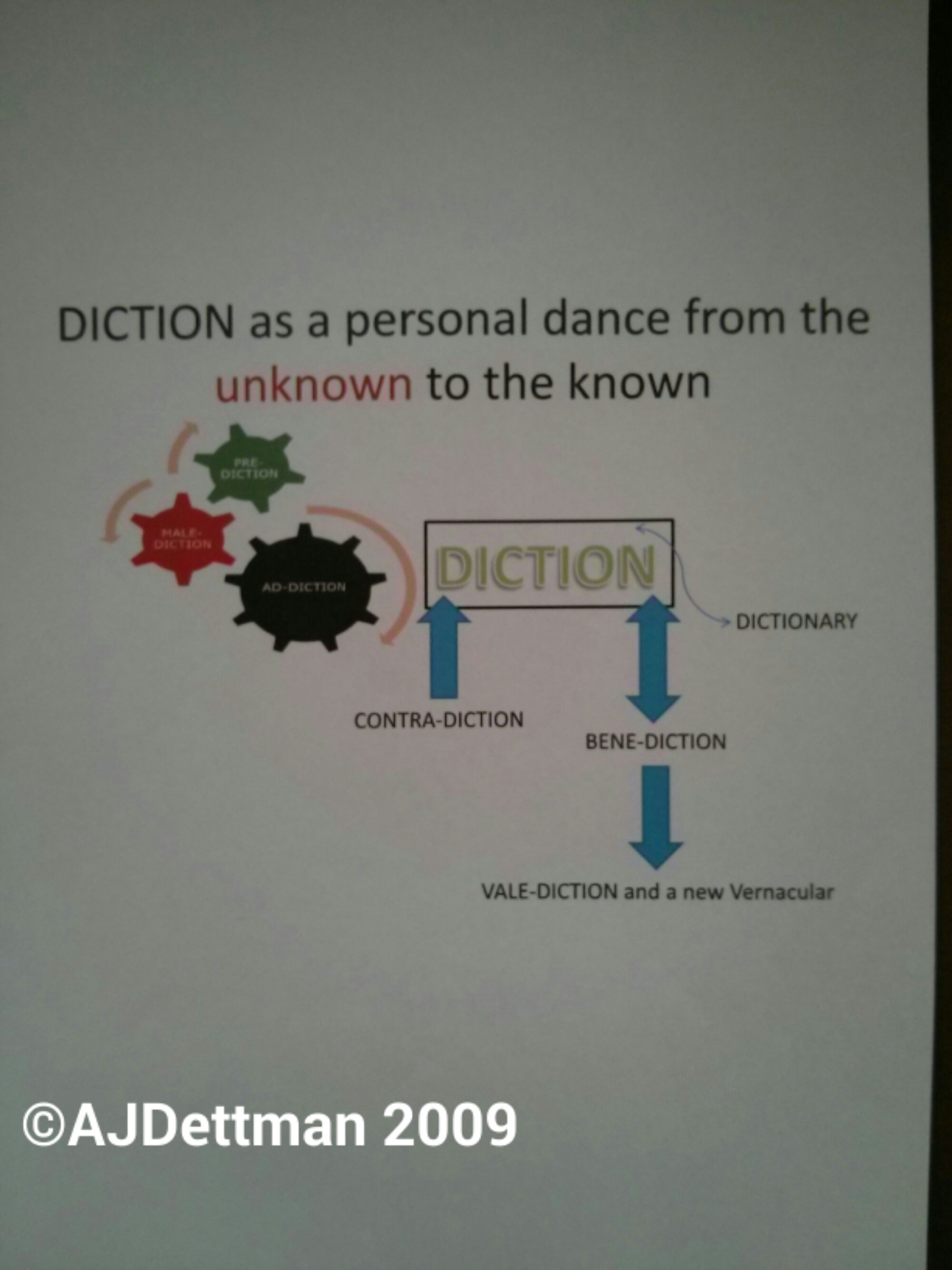
For more information upon ©diction-resolution

Unseen Government, the 356 and the weather.

image

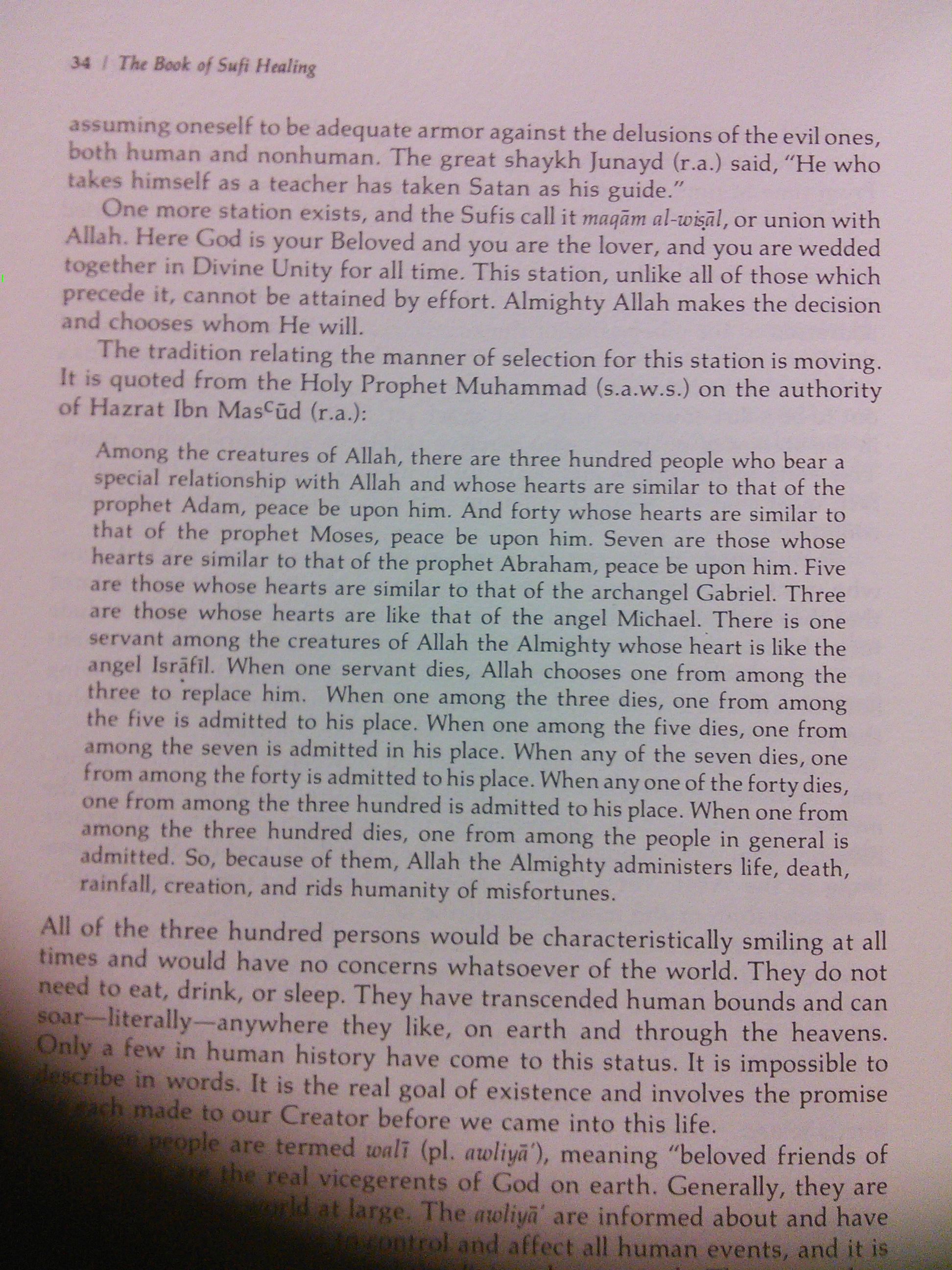
Page 34 The Book of Sufi Healing ISBN 0892813245

The Spiritual manages the material everywhere. The above extract states that the Unseen Government controls rainfall.

Messengers from the Unseen Government are trying and have tried to contact the material forces of government over the last twenty years to help them to assist the people under their governance to realign themselves simply with a more coherent spiritual relationship with the Invisible realm in a personal manner and the language to practically communicate this reorientation. Thus far all attempts to effectively help the UK government have failed.

The technology and sophistication of a culture has historically been an impediment to those cultures who could have been helped by a more timely reception of the messengers sent them by Those who manage the natural forces for Mother Earth.

There is a disease of stuck-addiction© that in its resolution is the portal of access to a personal and collective route toward a rebalancing of mortal energies and a new paradigm that is fit for purpose.

Initial indications

image

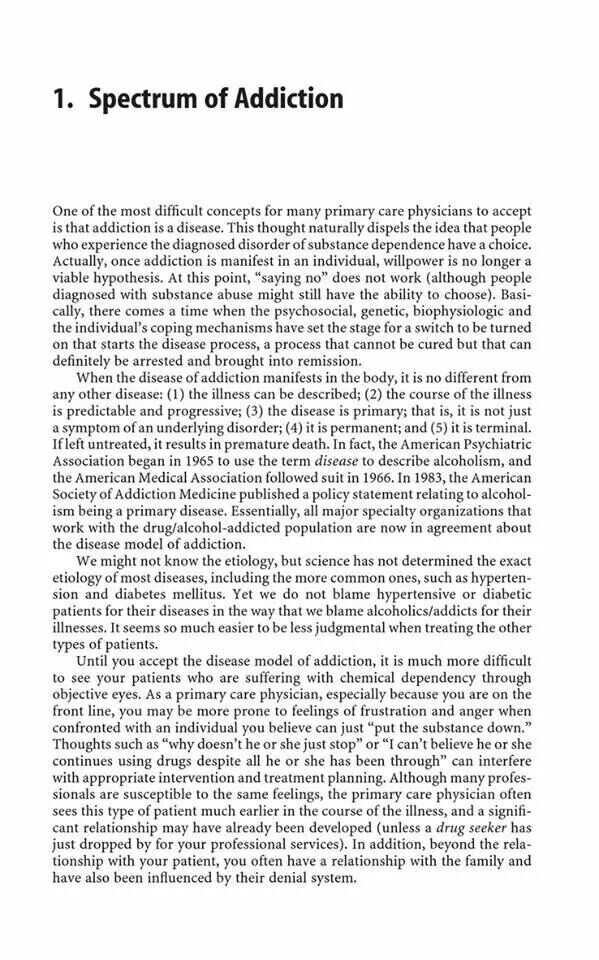
This extract from the book ‘Management of the Addicted Patient in Primary Care’ Pomm & Pomm, published by Springer in 2007, shows that concerns by the Met about healthcare published in a BBC story today are just the tip of an iceberg for the criminal justice system.

“Custody healthcare a ‘major problem’
28 January 2014 09:46” (BBC News)

As an addiction counsellor who has served in a prison rehab it became clear to me that in the region of 70% of inmates in prison in the UK and the US were there through crimes relating to drugs and alcohol.

UK society reflects the US and

“What funds terrorism, spawns crime, drives up health care costs, breaks up families, spreads AIDS, promotes unwanted teen pregnancy, and frustrates so many efforts to eliminate poverty?
What attribute do most victims of cancer, heart disease, emphysema, crippling bronchitis, accidents and violence share?
What’s the culprit in most assaults and homicides, incest, domestic violence, college date rape and campus racial incidents?
Substance abuse and addiction.
On any given day, 100 million Americans are taking some stimulant, antidepressant, tranquilliser or painkiller; smoking; inhaling from aerosol cans or glue bottles; or self medicating with alcohol or illegal substances like marijuana, cocaine, heroine, methamphetamines, hallucinogens, Ecstasy and other designer drugs.” pp 1 (High Society by Joseph A. Califano, Jr. 2007)

Many people end up in police custody where crimes were committed when the perpetrators have had no effective access to will power owing to their illness of addiction as is shown by Pomm & Pomm.

The law is prosecuted most effectively upon a premise that people are tried as if they have had access to will power and choice within their potential criminality.

Many people in prison may have been willfully misdiagnosed and therefore mistreated.

Many people who could be prosecuted and escape from justice because of a “too big to prosecute” Establishment fear, exhibit just how deep are the levels of stuck-addiction© that are infecting our culture.

Mastery

image

The mastery of any field is arrived at by the exercising of power through experimentation. The Master of the Unified Field arrives similarly and practically despite theories that predict the existence or otherwise of the Unified Field.

Creation is perfect now.

To approach any existential appearance that seems problematic without the courtesy of extending perfection to the Singularity first, renders any such approach tainted.

Per facio, through doing or making, is the Latin rootage of perfect. “Every day God is about a business”, is resourced from Islam and describes a Universal doing that is creation. “If it’s not practical it’s not spiritual”, is resourced from the discourse of the 12 Step recovery texts of the Narcotics Anonymous programme.

So there is a deep redemptive practicality about prayer and meditation. Spiritual principles of creativity make the Universe appear from the 90% Unseen that mystics call The Beloved and physicists describe as Dark Matter.

Practical solutions to any visible problem are waiting to gush forth from the Invisible when the place has been fully prepared for their reception.

That preparation is essentially one of clarifying the actual problem.

The problem facing cultural leaders presently is one of diction, their words are broken. The repair of words is a job for The Word, The Logos.

When you’re ready then …. diction resolution.

image

Black Friday

image

In the capitalisation of Christmas
Black Friday arises
The doom of dark pressure
To provide for the kids
The goods that will render
The pressure of peers
Into the spirit
Of a global
Corporate
Christmas
Cheer

Hurray

Free
Free
Free at last ….

Inconvenient medical insight.

image

This definition of addiction is correct and renders much of current practice in the UK medical and justice systems as erroneous and places large numbers of patients in the category of being willfully misdiagnosed.

This burns out medical workers and renders patients into a bewildered flock at the mercy of giant drug companies and the latest Internet fad.

Reference: http://link.springer.com/book/10.1007/978-0-387-71885-9/page/1